
Kushiel Books in Order
#
Title
Date
How to Read the Kushiel series
Best Read in Order
· Start with Book 1
Standalone stories, but characters and relationships develop across the series.
The series is best read in its published chronological order. It comprises interconnected trilogies that form a cohesive legacy: the first centers on Phèdre's rise and heroic deeds, the second follows Imriel's maturation and struggles with inheritance, and a third introduces a new protagonist whose story branches into unexplored territories while echoing earlier motifs. Character relationships evolve deeply over time, long-term consequences from early betrayals and alliances shape later conflicts, and the world's lore—its gods, politics, and cultures—unfolds organically. While individual volumes deliver grand, self-contained arcs with satisfying resolutions, the emotional depth, recurring figures, and cumulative revelations reward sequential reading. A standalone retelling from another character's perspective exists but enhances rather than replaces the main sequence.
About the Kushiel series
Series Premise
The core premise unfolds in Terre d'Ange, a nation blessed by the union of the Earth and the fallen angel Elua and his companions. The D'Angelines, descendants of these divine figures, live by the precept "Love as thou wilt," embracing a culture where pleasure, art, and sacred service intertwine with courtly politics and martial honor. The stories primarily follow marked individuals chosen by the angels—those bearing the "dart" of Kushiel (angel of punishment) or walking paths tied to Naamah (angel of desire) and Cassiel (angel of fidelity). At the heart is Phèdre nó Delaunay, born with a scarlet mote in her eye signifying Kushiel's favor, granting her the rare gift (and curse) of an *anguissette*: one who experiences pain as exquisite pleasure. Trained as a courtesan-spy in the Night Court and later under the noble Anafiel Delaunay, she becomes a masterful observer and player in deadly games of treason, invasion, and prophecy. Her journey expands across continents, involving espionage, forbidden love, divine quests, and the salvation of her homeland. Subsequent arcs shift to her adopted son Imriel, whose royal blood and traumatic past draw him into webs of conspiracy, personal redemption, and the burdens of power, while later tales introduce new heroines whose divine gifts propel fresh adventures in distant lands.
Main Characters
Phèdre nó Delaunay de Montrève anchors the early books as the brilliant, resilient protagonist—an *anguissette* whose flaw becomes her greatest strength. Marked by Kushiel, she wields unmatched powers of observation, memory, and endurance, transforming her body and pain into tools for survival and espionage. Her companion and eventual consort, Joscelin Verreuil, is a Cassiline Brother sworn to perfect fidelity and martial discipline; his internal conflict between vows and love for Phèdre provides profound emotional tension. Anafiel Delaunay serves as mentor and father figure, a nobleman whose own secrets propel Phèdre into the game of thrones. The formidable Melisande Shahrizai emerges as a recurring antagonist and complex foil—beautiful, manipulative, and dangerously intelligent, her schemes cast long shadows. In the second trilogy, Imriel nó Montrève de la Courcel, Phèdre's adopted son and a prince of the blood, takes center stage; haunted by his mother's treason and his own captivity, he grapples with identity, romance, and kingship. Supporting and recurring figures add depth: Queen Ysandre de la Courcel, whose rule Phèdre helps secure; loyal chevaliers and friends like the "Phèdre's Boys"; foreign rulers, priests, and warriors encountered on quests; and later heroines such as Moirin, whose gifts tied to Naamah lead her on journeys of self-discovery and cultural bridging. These characters recur with natural evolution, their loyalties and betrayals weaving a dense web of relationships across generations.
Setting
The setting is Terre d'Ange, a gloriously realized analogue of France infused with angelic grace—rolling vineyards, opulent palaces like the City of Elua, elegant salons, and the sacred Night Court where courtesans serve Naamah with ritualistic devotion. Beyond its borders, the saga ventures into a richly detailed alternate Europe and beyond: the intrigue-laden city-states of Caerdicca Unitas (inspired by Renaissance Italy), the harsh Skaldic tribes to the north, the mystical isle of Alba, the deserts and ancient mysteries of distant realms echoing the Middle East or Asia, and the frozen wilds or sun-baked empires encountered in later travels. Politics feel authentic and multifaceted, with royal successions, noble houses (such as the scheming Shahrizai), merchant guilds, and foreign alliances driving conflict. Magic is subtle—manifest in angelic marks, prophetic visions, or rare divine interventions—while everyday life pulses with courtly fashion, duels, festivals, and the constant undercurrent of divine oversight. The world feels lived-in and expansive, where beauty and brutality coexist, mirroring the characters' inner lives.
Tone & Themes
The tone is lush, sensual, and operatic, blending high-stakes intrigue with profound introspection and vivid sensuality. Carey's prose is elegant and immersive—poetic without excess, unflinching in its depiction of desire, violence, and ecstasy. Humor surfaces in wry observations, but the dominant mood is one of sweeping grandeur laced with melancholy and hard-won hope. Themes are richly layered: the sacred nature of consent and love in all its forms; the interplay of pain and pleasure as paths to enlightenment; destiny versus free will; the corrupting allure of power and the redemptive power of loyalty; cultural tolerance and the clash of civilizations; faith, sacrifice, and the search for divine purpose; and the complex navigation of identity, trauma, and agency. Sexuality is portrayed as holy rather than titillating, integrated into character growth and political maneuvering, while explorations of espionage highlight the personal cost of secrets and the blurred lines between duty and desire.
In the end, the Kushiel series stands as a masterful symphony of love, pain, and destiny that dares to treat sensuality as sacred and espionage as a form of prayer. Jacqueline Carey crafts a world where angels walk among mortals not as distant deities but as forces shaping flawed, passionate humans into unlikely saviors. It invites readers into a realm of glittering courts and shadowed alleys where every choice carries divine weight, and redemption emerges not despite suffering but through it. For those willing to surrender to its elegant prose and unflinching heart, the saga offers far more than adventure—it delivers a profound meditation on what it means to love freely, serve deeply, and rise above the fractures of fate. In Terre d'Ange, even the marked and the broken can rewrite history, leaving an indelible impression of beauty forged in fire and grace reclaimed from darkness.
FAQ
How many books are in the Kushiel series?
7 books
When will the next book in the series be released?
No new book in the series is currently scheduled. The latest book, Cassiel's Servant, was published in August 2023.
When was the most recent book released?
Cassiel's Servant was published in August 2023.
What was the first book in the series?
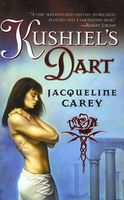
The first book in the series is Kushiel's Dart, published in June 2001.
What genre is the Kushiel series?
The series primarily falls into the Fantasy genre.
Do you need to read the Kushiel series in order?
It’s best to read the series in order. Each book has its own story, but ongoing character arcs and relationships develop across the series.
What is the Kushiel series about?
The core premise unfolds in Terre d'Ange, a nation blessed by the union of the Earth and the fallen angel Elua and his companions. The D'Angelines, descendants of these divine figures, live by the precept "Love as thou wilt," embracing a culture where pleasure, art, and sacred service intertwine with courtly politics and martial honor. The stories primarily follow marked individuals chosen by the angels—those bearing the "dart" of Kushiel (angel of punishment) or walking paths tied to Naamah (angel of desire) and Cassiel (angel of fidelity). At the heart is Phèdre nó Delaunay, born with a scarlet mote in her eye signifying Kushiel's favor, granting her the rare gift (and curse) of an *anguissette*: one who experiences pain as exquisite pleasure. Trained as a courtesan-spy in the Night Court and later under the noble Anafiel Delaunay, she becomes a masterful observer and player in deadly games of treason, invasion, and prophecy. Her journey expands across continents, involving espionage, forbidden love, divine quests, and the salvation of her homeland. Subsequent arcs shift to her adopted son Imriel, whose royal blood and traumatic past draw him into webs of conspiracy, personal redemption, and the burdens of power, while later tales introduce new heroines whose divine gifts propel fresh adventures in distant lands.
Is the Kushiel series finished?
The series does not currently have a new book scheduled.
More Series Like Kushiel
If you enjoyed Kushiel, here are more fantasy series to explore.