
Hercule Poirot Books in Order
#
Title
Date
Apr 1923
Nov 1923
Nov 1923
Dec 1923
Dec 1923
May 1936
Jan 1951
Jan 1951
Jan 1951
Jan 1951
Oct 1960
Oct 1960
Jan 1961
How to Read the Hercule Poirot series
Mostly Standalone
· Start Anywhere
Mostly standalone stories with recurring characters in a shared setting.
About the Hercule Poirot series
Series Premise
The series follows Hercule Poirot, a retired Belgian police officer turned private detective, who applies his methodical, psychology-based approach to unravel murders and other serious crimes that baffle Scotland Yard and local authorities. Whether investigating in English country houses, luxury trains, international settings, or modest homes, Poirot relies on observation of human nature, minute physical clues, and brilliant deductive reasoning to expose the guilty party, often gathering suspects for a dramatic final revelation where he lays bare the truth with theatrical flair.
The series can be read in almost any order, as most individual novels and stories are self-contained with their own complete mystery, cast of characters, and satisfying resolution. While publication (or chronological) order offers a gentle progression of Poirot's aging, occasional callbacks to earlier cases, and the subtle evolution of his world and supporting figures, jumping around poses no significant confusion or spoilers; readers frequently begin with whichever title appeals most and still enjoy the full brilliance of Christie's plotting.
Main Characters
Hercule Poirot is the undisputed star—a small, dapper Belgian with an enormous mustache, patent-leather hair, and an unshakable belief in his own genius. Fastidious, vain, and deeply courteous, he is also profoundly insightful into human psychology, able to see through lies and posturing to the truth beneath. His methods combine meticulous observation, knowledge of human nature, and theatrical denouements in which he gathers suspects to explain the crime in dazzling detail. Captain Arthur Hastings, Poirot's loyal, somewhat dim but good-hearted friend, narrates several early adventures, providing an admiring foil and a more conventional perspective that highlights Poirot's brilliance. Chief Inspector Japp of Scotland Yard appears frequently as a bluff, pragmatic policeman who grudgingly respects Poirot's results even as he chafes at his eccentricities. Miss Lemon, Poirot's efficient but occasionally scatterbrained secretary, and George, his impeccable valet, offer comic support and domestic grounding. Each case introduces a fresh cast of suspects—wealthy aristocrats, ambitious professionals, resentful relatives, cunning servants, glamorous actresses—whose motives, alibis, and secrets Poirot dissects with surgical precision.
Setting
The Poirot mysteries unfold across a richly varied yet distinctly Christie-esque world of interwar and mid-20th-century Britain and Europe. Classic English country houses with sprawling grounds, locked-room secrets, and weekend house parties form the backdrop for many of the most famous cases, while luxury settings—such as the Orient Express, transatlantic liners, fashionable London apartments, upscale Nile cruises, and elegant continental hotels—provide glamorous contrast. Poirot also investigates in more modest venues: suburban villas, village cottages, theatrical boarding houses, and even archaeological digs. The period detail is vivid yet unobtrusive—art deco interiors, post-war social shifts, emerging technologies, class distinctions, and the lingering influence of empire—creating an evocative atmosphere of elegance tinged with unease. The settings serve the puzzle: isolated locations heighten suspicion, opulent surroundings hide dark motives, and everyday spaces reveal unexpected depths.
Tone & Themes
Christie's tone in the Poirot series is elegant, witty, and deceptively light, masking the darkness of murder beneath a veneer of civility, social observation, and dry humor. The narratives move briskly with crisp dialogue, ironic commentary (often delivered through Poirot's self-satisfied pronouncements or Captain Hastings' bemused narration), and a sense of playful intellectual challenge that invites readers to match wits with the detective. Violence is kept off-stage or described with restraint; the focus remains on the puzzle, the psychology of motive, and the satisfaction of order restored. Poirot's eccentricities—his vanity, obsession with symmetry, love of luxury, and occasional moral reflections—add warmth and humor, while moments of genuine compassion or quiet outrage at human cruelty provide emotional depth without descending into grimness. The overall atmosphere is one of sophisticated entertainment: clever, civilized, and reassuringly optimistic in its belief that reason and truth will prevail.
The Hercule Poirot Mysteries remain a pinnacle of detective fiction for their dazzling ingenuity, unforgettable central character, and Christie's peerless ability to craft fair-play puzzles that surprise and satisfy in equal measure. Through countless cases solved by observation, psychology, and sheer intellectual brilliance, Poirot proves that order can be restored, truth uncovered, and justice served—even in a world full of deception and hidden motives. Whether read for the sheer pleasure of the whodunit, the joy of Poirot's personality, or the elegant portrait of a vanished era, the series delivers timeless entertainment and a reassuring belief in the power of reason. It is essential reading for anyone who loves mysteries—elegant, clever, and endlessly re-readable.
FAQ
How many books are in the Hercule Poirot series?
80 books total: 40 main + 25 extra stories + 15 companion books
When will the next book in the series be released?
No new book is currently scheduled. The latest book, Hercule Poirot's Casebook // Hercule Poirot's Complete Short Stories, was published in October 1984.
When was the most recent book released?
Hercule Poirot's Casebook // Hercule Poirot's Complete Short Stories was published in October 1984.
What was the first book in the series?
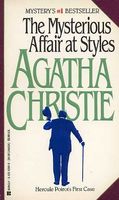
The first book in the series is The Mysterious Affair at Styles, published in October 1920.
What genre is the Hercule Poirot series?
The series primarily falls into the Private Investigator genre.
Do you need to read the Hercule Poirot series in order?
No, the books do not need to be read in order. Each story stands on its own, but recurring characters and the shared setting connect the series.
What is the Hercule Poirot series about?
The series follows Hercule Poirot, a retired Belgian police officer turned private detective, who applies his methodical, psychology-based approach to unravel murders and other serious crimes that baffle Scotland Yard and local authorities. Whether investigating in English country houses, luxury trains, international settings, or modest homes, Poirot relies on observation of human nature, minute physical clues, and brilliant deductive reasoning to expose the guilty party, often gathering suspects for a dramatic final revelation where he lays bare the truth with theatrical flair. The series can be read in almost any order, as most individual novels and stories are self-contained with their own complete mystery, cast of characters, and satisfying resolution. While publication (or chronological) order offers a gentle progression of Poirot's aging, occasional callbacks to earlier cases, and the subtle evolution of his world and supporting figures, jumping around poses no significant confusion or spoilers; readers frequently begin with whichever title appeals most and still enjoy the full brilliance of Christie's plotting.
Is the Hercule Poirot series finished?
The series does not currently have a new book scheduled.
More Series Like Hercule Poirot
If you enjoyed Hercule Poirot, here are more private investigator series to explore.