Genre guide

Mystery Books

Browse mystery books, authors, and series on FictionDB. Find popular series in order, reader-favorite authors, and related fiction categories.

Top Mystery Series

Start with popular mystery series, especially if you want connected books, recurring characters, or a clear reading order.
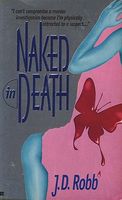
Popular Mystery Authors

Browse authors frequently associated with mystery books and series.

Popular Mystery Books

Explore popular mystery books from FictionDB’s genre data.

About Mystery

The mystery genre is a popular category of fiction centered on an unsolved puzzle, enigma, or crime -- most commonly a murder or other serious offense -- that must be investigated and resolved by the end of the story. Below you will find the strict definition of a mystery, but at FictionDB the mystery and suspense terms have become interchangeable over time as we classify books.

At its heart, a mystery involves:
- A central question or secret (e.g., "Who committed the crime?" "How was it done?" or "Why?").
- Clues, red herrings (misleading hints), plot twists, and suspense to keep readers guessing.
- A protagonist -- often a detective (professional, amateur, or private investigator) -- who gathers evidence, interviews suspects, and uses logic, deduction, or intuition to uncover the truth.
- A satisfying resolution where the mystery is explained, the culprit revealed, and order is restored.

Key Characteristics:
- Suspense and tension built through uncertainty, rather than constant high-stakes action.
- A closed circle of suspects (common in classic mysteries), each with motive, means, and opportunity.
- Fair play: Clues are presented to the reader so the solution feels logical and earned, not arbitrary.
- Themes often explore justice, human nature, morality, deception, and the triumph of reason over chaos.

Mystery is highly diverse, with many overlapping subgenres:
- Classic/Traditional/Whodunit -- Puzzle-focused, often in a confined setting (e.g., Agatha Christie's country house murders).
- Cozy Mystery -- Light-hearted, low-violence, amateur sleuths (often female), humor, and small-town or themed settings (e.g., baking or cats involved); no graphic content.
- Hardboiled/Noir -- Gritty, cynical detectives, urban corruption, moral ambiguity, and tougher realism (e.g., Raymond Chandler, Dashiell Hammett).
- Police Procedural -- Realistic focus on law enforcement methods, investigations, and bureaucracy.
- Locked-Room -- The crime seems physically impossible (e.g., murder in a sealed room).
- Historical Mystery -- Set in the past, blending period details with sleuthing.
- Legal Thriller/Mystery -- Centered on courtroom drama or lawyers uncovering truths.
- Others include psychological, supernatural-tinged, or international/espionage-tinged mysteries.

The genre emphasizes intellectual engagement: Readers are invited to play along as "armchair detectives," piecing together the puzzle alongside (or ahead of) the character. The term "whodunit" (short for "who done it?") is a classic descriptor for many mysteries.

Mysteries often overlap with related genres like thriller (more action-oriented, higher stakes, less puzzle focus), suspense (builds dread without necessarily resolving a crime puzzle), or crime fiction (may emphasize the criminal's perspective or the act itself).

In short, if a book hooks you with an intriguing unsolved question, drops clever clues, and delivers a clever, earned reveal, it's firmly in the mystery genre -- one of the most enduring and reader-beloved categories in literature!