
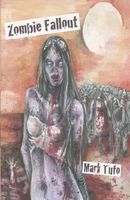
Zombie Fallout Books in Order
About the Zombie Fallout series
Series Premise
The premise of the Zombie Fallout series centers on the sudden collapse of modern society following the spread of a deadly infection that transforms people into violent, relentless undead creatures. As the outbreak rapidly escalates, infrastructure fails, governments crumble, and communities are forced to confront the reality that the world they once knew has vanished. Survival becomes the primary objective, but the struggle extends far beyond simply avoiding the infected.
The story follows a group of survivors who must navigate a dangerous new reality where threats arise from both the undead and the living. As they move through a world that grows increasingly unpredictable, they must secure resources, defend safe spaces, and confront ethical dilemmas about trust, leadership, and survival. Relationships become both a strength and a vulnerability, as emotional attachments motivate the characters to protect one another but also create risks in a brutal environment.
The books are best read in chronological order because the characters’ journeys and the evolving world build directly upon earlier events. While each installment contains its own conflicts and challenges, the overarching narrative and character development depend heavily on understanding how previous experiences shape later decisions.
Main Characters
At the heart of the story is Michael Talbot, a former Marine and devoted family man whose perspective drives much of the narrative. Michael begins the series as an ordinary individual confronted with extraordinary circumstances. Although he possesses military training, he is not portrayed as an invincible hero. Instead, his strengths lie in his determination to protect his loved ones and his ability to adapt under pressure.
Michael’s personality is defined by humor, self-awareness, and a strong sense of responsibility. He often reflects on his own fears and doubts, acknowledging that survival is not simply about physical strength but also about mental resilience. His commentary provides much of the story’s humor, but it also reveals the emotional burden he carries as he attempts to keep his family safe.
A central part of Michael’s motivation comes from his family. His wife and children represent the emotional core of the story, reminding readers that survival is not merely about enduring the apocalypse but about preserving the relationships that give life meaning. Protecting them becomes his primary goal, shaping many of the decisions he makes throughout the series.
Another important figure in Michael’s life is his brother, Tommy Talbot, whose personality often contrasts with Michael’s. Tommy tends to approach situations with a more impulsive or adventurous mindset, creating moments of tension as well as humor. Despite their differences, the bond between the brothers adds depth to the narrative and highlights the importance of family loyalty in a hostile world.
The group of survivors gradually expands to include friends, allies, and other individuals encountered along the way. These characters contribute different skills, perspectives, and personalities to the community. Some bring practical abilities that help the group survive, while others challenge the protagonist’s assumptions about trust and leadership.
One particularly notable relationship is between Michael and BT, a close friend whose calm demeanor and moral clarity provide a stabilizing influence within the group. BT’s presence emphasizes themes of loyalty, faith, and ethical responsibility, often offering guidance during moments of uncertainty.
Setting
The setting of the series is a post-apocalyptic version of contemporary society, primarily within the United States. As the outbreak spreads and civilization collapses, familiar environments—suburban neighborhoods, highways, military installations, and rural communities—become transformed into dangerous and uncertain territories.
Early in the story, the setting reflects the chaotic initial stages of the outbreak. Communities struggle to understand what is happening, and everyday locations quickly become battlegrounds for survival. As communication networks fail and governments lose control, survivors must rely on their own resourcefulness rather than institutional support.
As the narrative progresses, the characters travel through a variety of landscapes that reflect different aspects of the post-apocalyptic world. Urban areas often represent the highest levels of danger due to dense populations of the infected, while rural environments offer temporary refuge but also present challenges such as isolation and limited resources.
Safe havens become critical elements of the setting. Survivors attempt to establish fortified locations where they can rebuild a sense of stability and protect themselves from external threats. These spaces often serve as centers of community, allowing characters to form alliances and develop strategies for long-term survival.
However, even these safer environments are rarely permanent. The series frequently explores how fragile security can be in a world where both the undead and hostile human groups pose constant risks. The shifting nature of the setting reinforces the idea that survival requires adaptability and vigilance.
The setting also reflects the broader collapse of social order. Without functioning institutions, traditional systems of law, leadership, and cooperation must be reinvented by those who remain. Characters must determine how to build new communities and decide what values should guide their actions in a world where rules have largely disappeared.
Tone & Themes
One of the defining features of the series is its distinctive tonal balance. While the story takes place in a bleak post-apocalyptic setting filled with danger, loss, and horror, the tone frequently incorporates humor and wit. This combination creates a narrative atmosphere that feels both intense and relatable.
Much of the humor emerges from the protagonist’s perspective and commentary on events. His sarcastic observations, playful self-deprecation, and candid reflections provide a counterbalance to the grim reality of the zombie apocalypse. Instead of diminishing the seriousness of the situation, the humor often highlights the absurdity of the world the characters now inhabit.
The tone also shifts fluidly between action, suspense, and emotional reflection. Moments of intense danger—such as encounters with the undead or conflicts with hostile survivors—are interwoven with quieter scenes that explore the characters’ fears, hopes, and evolving relationships. This pacing allows the narrative to maintain tension while still giving readers space to understand the psychological toll of survival.
Another important tonal element is realism. The characters frequently struggle with exhaustion, grief, and moral uncertainty. They must confront difficult decisions about who to trust, how far to go in protecting loved ones, and what sacrifices are necessary to ensure survival. These dilemmas add depth to the story and prevent it from becoming purely action-driven.
Over time, the tone gradually evolves as the characters gain experience and adapt to their environment. What begins as confusion and panic transforms into determination and resilience. However, the series never fully abandons its sense of vulnerability; the characters remain aware that survival is fragile and that the world remains unpredictable.
The Zombie Fallout series by Mark Tufo offers a distinctive take on the zombie apocalypse through its blend of horror, humor, and deeply personal storytelling. By focusing on the experiences of one family and their extended circle of allies, the narrative transforms a familiar genre into an exploration of resilience, loyalty, and the enduring importance of human connection.
Through its conversational narrative voice and character-driven approach, the series emphasizes that survival is about more than simply avoiding danger. It involves maintaining hope, preserving relationships, and finding meaning in a world that has been irrevocably changed.
Ultimately, the story highlights the capacity of ordinary individuals to rise to extraordinary challenges. Even in the face of relentless threats and uncertainty, the characters continue to adapt, support one another, and search for a future beyond mere survival. The result is a compelling and emotionally engaging series that blends action and reflection while exploring what it truly means to endure when civilization falls.
FAQ
20 books total: 18 main + 2 extra stories
No new book is currently scheduled. The latest book, Altered Destinies, was published in August 2022.
Altered Destinies was published in August 2022.
The first book in the series is Zombie Fallout, published in March 2010.
The series primarily falls into the Dystopian genre.
The premise of the Zombie Fallout series centers on the sudden collapse of modern society following the spread of a deadly infection that transforms people into violent, relentless undead creatures. As the outbreak rapidly escalates, infrastructure fails, governments crumble, and communities are forced to confront the reality that the world they once knew has vanished. Survival becomes the primary objective, but the struggle extends far beyond simply avoiding the infected. The story follows a group of survivors who must navigate a dangerous new reality where threats arise from both the undead and the living. As they move through a world that grows increasingly unpredictable, they must secure resources, defend safe spaces, and confront ethical dilemmas about trust, leadership, and survival. Relationships become both a strength and a vulnerability, as emotional attachments motivate the characters to protect one another but also create risks in a brutal environment. The books are best read in chronological order because the characters’ journeys and the evolving world build directly upon earlier events. While each installment contains its own conflicts and challenges, the overarching narrative and character development depend heavily on understanding how previous experiences shape later decisions.
The series does not currently have a new book scheduled.