
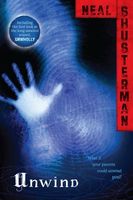
Unwind Dystology Books in Order
How to Read the Unwind Dystology series
Read in order—each book builds directly on the previous one.
The Unwind Dystology is intended to be read in the order in which it was written. Unlike episodic series where each story stands alone, this narrative unfolds as a continuous and evolving arc. The events of earlier installments directly influence the political climate, character relationships, and social movements that develop later.<br /> <br /> Each stage of the series builds upon previous discoveries and consequences. Characters who begin as isolated fugitives gradually become part of larger efforts to expose and challenge the unwinding system. Their actions ripple outward, influencing public opinion, government responses, and the strategies of those who defend the status quo.<br /> <br /> Reading the series sequentially allows readers to experience the escalating tension and the widening scope of the story. What begins as a desperate attempt to survive gradually becomes a broader struggle over the moral foundations of society itself.
About the Unwind Dystology series
Series Premise
At the center of the Unwind Dystology lies a controversial practice known as unwinding. In this imagined future, society has legalized the disassembly of teenagers between certain ages, allowing parents or authorities to send them away to have their bodies harvested for transplantation. The official justification is that the individuals do not technically “die,†since every part of them continues living within other people.
This practice emerges from a fragile political compromise following a devastating social conflict over reproductive rights. In an attempt to satisfy opposing sides, lawmakers create a system where children cannot be terminated before birth but may later be unwound during adolescence. Over time, the process becomes embedded in society, supported by institutions, industries, and cultural acceptance.
The series follows several teenagers who become targets of unwinding for different reasons. Some are sent away by parents who see them as troublesome or unwanted. Others are chosen by institutions that view them as expendable. Faced with the loss of their autonomy—and ultimately their existence—they escape and attempt to survive in a world where they are officially considered living property.
As the story unfolds, these young fugitives encounter underground networks that resist the unwinding system, as well as powerful organizations determined to preserve it. Their journeys gradually reveal how deeply the practice has shaped society and how difficult it is to challenge a system that many people accept as normal. Through their struggle, the series examines whether individuals can change a system that seems both legal and deeply entrenched.
Main Characters
The story revolves around several central protagonists whose paths intertwine as they attempt to escape unwinding.
Connor Lassiter is impulsive, stubborn, and fiercely determined to survive. Initially marked for unwinding because of behavioral problems, Connor evolves into a leader whose courage inspires others.
Risa Ward is intelligent and pragmatic, raised in a state facility where children are evaluated based on their usefulness to society. Her resourcefulness and emotional resilience make her an essential partner in the struggle for survival.
Lev Calder begins as a deeply religious boy raised to believe that being unwound is a noble sacrifice. His journey challenges everything he has been taught, forcing him to question the values that shaped his identity.
Setting
The world of the Unwind Dystology is a futuristic version of the United States shaped by the consequences of the unwinding compromise. Much of society appears familiar: cities operate normally, schools function, and families live ordinary lives. Yet beneath this surface lies a disturbing system that quietly determines the fate of many adolescents.
The protagonists spend much of their time on the run, traveling through a variety of environments that reveal different aspects of this society. Hidden shelters, remote camps, secret transportation routes, and industrial facilities connected to unwinding all become part of their journey. Each location exposes another layer of the system, from its bureaucratic foundations to the industries that profit from it.
This contrast between ordinary life and institutionalized cruelty creates a powerful atmosphere. The world feels recognizable, yet deeply unsettling, emphasizing how easily extreme practices can become normalized.
Tone & Themes
The tone of the Unwind Dystology is tense, thought-provoking, and emotionally intense. Neal Shusterman balances fast-paced action with moments of reflection, allowing readers to feel both the physical danger faced by the characters and the deeper ethical questions underlying the story.
One of the most prominent themes is the definition of human identity. If a person’s body can be divided among many recipients, what happens to the concept of the self? The series repeatedly asks whether identity resides in the body, the mind, or something more intangible.
Another key theme is the moral complexity of societal compromise. The unwinding system emerges from an attempt to resolve a bitter ideological conflict, yet the solution creates its own form of injustice. By exploring how ordinary citizens rationalize or ignore the system, the series highlights the dangers of accepting harmful policies simply because they appear practical or legally sanctioned.
The story also explores individual agency and resistance. Many characters begin by feeling powerless within the system that condemns them. Over time, however, they discover that change often begins with individuals willing to challenge widely accepted norms.
Finally, the series examines empathy and shared humanity. As characters from different backgrounds interact, they begin to see each other not as labels—delinquents, unwanted children, or political symbols—but as individuals with hopes, fears, and dreams.
The Unwind Dystology stands as one of the most provocative dystopian series in young adult literature. Through a chilling premise and deeply human characters, Neal Shusterman explores the consequences of a society that attempts to solve ethical conflict through technological compromise.
What makes the series powerful is not only its suspenseful storytelling but also its willingness to confront difficult questions about identity, autonomy, and the value of life. By placing young characters at the center of these debates, the narrative emphasizes the courage required to challenge systems that seem immovable.
In the end, the story becomes a testament to the resilience of individuals who refuse to accept injustice as inevitable. Through their determination to survive and seek change, the characters illuminate the enduring truth that even in the most controlled societies, the human spirit remains capable of resistance, compassion, and transformation.
FAQ
5 books
No new book is currently scheduled. The latest book, Unbound, was published in December 2015.
Unbound was published in December 2015.
The first book in the series is Unwind, published in November 2007.
The series primarily falls into the Dystopian genre.
Yes, the series should be read in order. The books follow a continuous story, starting with Unwind.
At the center of the Unwind Dystology lies a controversial practice known as unwinding. In this imagined future, society has legalized the disassembly of teenagers between certain ages, allowing parents or authorities to send them away to have their bodies harvested for transplantation. The official justification is that the individuals do not technically “die,†since every part of them continues living within other people. This practice emerges from a fragile political compromise following a devastating social conflict over reproductive rights. In an attempt to satisfy opposing sides, lawmakers create a system where children cannot be terminated before birth but may later be unwound during adolescence. Over time, the process becomes embedded in society, supported by institutions, industries, and cultural acceptance. The series follows several teenagers who become targets of unwinding for different reasons. Some are sent away by parents who see them as troublesome or unwanted. Others are chosen by institutions that view them as expendable. Faced with the loss of their autonomy—and ultimately their existence—they escape and attempt to survive in a world where they are officially considered living property. As the story unfolds, these young fugitives encounter underground networks that resist the unwinding system, as well as powerful organizations determined to preserve it. Their journeys gradually reveal how deeply the practice has shaped society and how difficult it is to challenge a system that many people accept as normal. Through their struggle, the series examines whether individuals can change a system that seems both legal and deeply entrenched.
The series does not currently have a new book scheduled.