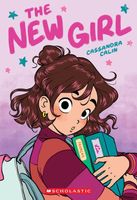
The New Girl Books in Order
About The New Girl series
Series Premise
The series follows Cassandra (a semi-autobiographical version of the author), a shy, introverted, slightly anxious teenage girl who moves to a new town and starts at a new high school. She struggles with all the classic challenges of being "the new girl": making friends, fitting in, surviving the social hierarchy, dealing with mean girls, navigating crushes, handling embarrassing moments, and figuring out who she is amid peer pressure and high-school chaos. Each volume covers roughly one school year (freshman, sophomore, junior), chronicling Cassandra's daily life, small victories, mortifying failures, and gradual growth in confidence and self-acceptance. The stories are told in short, episodic comic strips (usually 1–4 pages each) that jump between school drama, home life, inner thoughts, daydreams, and exaggerated inner-monologue reactions. There is no overarching villain or big mystery—the "conflict" is everyday teenage life: mean comments, failed presentations, bad hair days, trying to talk to a crush, friend drama, family awkwardness, and the constant fear of being judged. The humor comes from hyper-relatable exaggeration of these small humiliations and the gap between Cassandra’s anxious inner world and what actually happens.
Main Characters
Cassandra (Cass) — Protagonist and narrator. 14–17 across the series (freshman to junior). Shy, introverted, anxious, artistic, and self-deprecating. Constantly overthinks everything, catastrophizes minor embarrassments, and worries about fitting in. Loves drawing, reading, cute things, and daydreaming. Slowly gains confidence and learns to stand up for herself.
- Cassandra’s parents — Mom and Dad. Loving but occasionally embarrassing/clueless. Mom is supportive and talkative; Dad is more laid-back and dad-jokey.
- Cassandra’s little brother — Annoying, loud, messy, and constantly invading her space—classic younger sibling.
- The friend group — Rotating cast of classmates and eventual friends (e.g., Lia, Maya, Avery in later books). Some are kind, some are fake, some are mean, some become true friends.
- MacKenzie (or other mean girls) — The recurring popular/mean-girl archetype. Pretty, confident, and often cruel (in a realistic middle-school way).
- The crush(es) — Various boys (especially Liam in early books) who are cute but usually oblivious or unattainable.
- Teachers and school staff — Exaggerated but relatable authority figures who are either clueless, strict, or unexpectedly kind.
Setting
Contemporary suburban North America (very strongly implied to be Canada, likely Ontario/Quebec area based on cultural references, school system, spelling, and subtle clues). The world is a typical modern middle-class high school and neighborhood:
- A large public high school with lockers, cafeteria, gym, art room, auditorium, and the usual social cliques
- Cassandra’s house — a suburban home with her parents and younger brother
- Local hangouts — malls, coffee shops, parks, sleepover locations
- Seasonal settings — back-to-school chaos, Halloween, Christmas, Valentine’s Day, prom season, summer vacation
The art style is clean, colorful, expressive, and highly relatable—simple character designs, exaggerated facial expressions, lots of inner-thought captions, and a very modern teen aesthetic (phones, social media, texting, memes).
Tone & Themes
Self-deprecating, brutally honest, hilarious, and ultimately warm and empowering. Cassandra Calin’s tone is very much that of a real teenager’s private diary + exaggerated webcomic comedy. The narration is sarcastic, overly dramatic, and full of teenage angst (“I’m literally going to die,†“Everyone hates me,†“This is the worst day of my lifeâ€), but it’s always affectionate and never cruel. The humor is cringe-heavy and gross-out at times (sweaty palms, period panic, body insecurity, embarrassing bodily functions), but it is deeply relatable and never mean-spirited. The books are laugh-out-loud funny for anyone who remembers middle/high school awkwardness, yet they are surprisingly kind and gentle—Cassandra is hard on herself, but the overall message is one of self-acceptance, growth, and the realization that everyone feels like a mess sometimes. It is comforting, validating, and quietly hopeful—perfect for readers who want funny, honest stories about being a teenager without toxic positivity or heavy moralizing.
The New Girl series is a hilarious, honest, and deeply relatable love letter to middle-school awkwardness and the journey of figuring out who you are. Through Cassandra’s self-deprecating diary entries, cringe-filled moments, and gradual growth, Rachel Renée Russell (and Calin’s webcomic influence) capture the universal teenage experience—friend drama, crushes, embarrassment, self-doubt, and the slow, messy process of learning to like yourself. With its colorful, expressive art, laugh-out-loud humor, and gentle message that everyone feels like a dork sometimes, the series remains a perfect companion for tweens and teens (and nostalgic adults) navigating the chaos of growing up. A modern classic that makes readers laugh, cringe, feel seen, and ultimately smile at the truth that being a little awkward is part of being human.
FAQ
How many books are in The New Girl series?
2 books
When will the next book in the series be released?
No new book in the series is currently scheduled. The latest book, First Crush: A Graphic Novel, was published in May 2026.
When was the most recent book released?
First Crush: A Graphic Novel was published in May 2026.
What was the first book in the series?
The first book in the series is The New Girl: A Graphic Novel, published in June 2024.
What genre is The New Girl series?
The series primarily falls into the Graphic Novel genre.
What is The New Girl series about?
The series follows Cassandra (a semi-autobiographical version of the author), a shy, introverted, slightly anxious teenage girl who moves to a new town and starts at a new high school. She struggles with all the classic challenges of being "the new girl": making friends, fitting in, surviving the social hierarchy, dealing with mean girls, navigating crushes, handling embarrassing moments, and figuring out who she is amid peer pressure and high-school chaos. Each volume covers roughly one school year (freshman, sophomore, junior), chronicling Cassandra's daily life, small victories, mortifying failures, and gradual growth in confidence and self-acceptance. The stories are told in short, episodic comic strips (usually 1–4 pages each) that jump between school drama, home life, inner thoughts, daydreams, and exaggerated inner-monologue reactions. There is no overarching villain or big mystery—the "conflict" is everyday teenage life: mean comments, failed presentations, bad hair days, trying to talk to a crush, friend drama, family awkwardness, and the constant fear of being judged. The humor comes from hyper-relatable exaggeration of these small humiliations and the gap between Cassandra’s anxious inner world and what actually happens.
Is The New Girl series finished?
The series does not currently have a new book scheduled.
More Series Like The New Girl
If you enjoyed The New Girl, here are more graphic novel series to explore.