
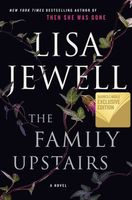
The Family Upstairs Books in Order
About The Family Upstairs series
Series Premise
The saga begins with the discovery of a mysterious scene in a grand Chelsea house: three dead adults arranged in a suicide pact, a well-cared-for baby left alive, and two children vanished, setting off a decades-long ripple of secrets, survival, and reckoning. Through alternating timelines and shifting viewpoints, the narrative uncovers the toxic, controlling influence that drew disparate people into a shared household, the psychological manipulation that destroyed lives, and the enduring consequences for the surviving children as they grapple with identity, guilt, and the search for truth in adulthood.
The series should be read in publication order. The first book establishes the core mystery and introduces key survivors, while the second serves as a direct sequel that picks up threads, follows the aftermath, and resolves lingering questions about the characters' fates and the full scope of the past events. Order matters significantly—reading sequentially avoids major spoilers, builds emotional investment in the survivors' journeys, and delivers the intended payoff for the interconnected narrative—though the first book stands alone as a complete thriller.
Main Characters
Libby Jones — A central figure in the first book, a young woman who inherits a mysterious Chelsea house on her 25th birthday, only to discover her true origins and the horrors tied to her birth family. Practical, curious, and resilient, she becomes the entry point for unraveling the past.
- Lucy Lamb — One of the surviving children from the original household, now a struggling single mother living on the fringes, haunted by memories and protective instincts. Resourceful and scarred, her perspective reveals the long-term trauma of survival.
- Henry Lamb — The other surviving sibling, whose narrative voice offers a complex, often unreliable view of events. Charismatic yet deeply troubled, his recollections blend nostalgia, guilt, and obsession.
- Supporting survivors and figures — Other characters from the original household (including children and adults drawn into the orbit) provide fragmented viewpoints that gradually piece together the truth.
- Antagonists and influences — The charismatic, manipulative leader of the household group and the toxic dynamics he fostered, whose presence lingers as psychological threat even after death.
Setting
The primary setting is London, spanning the late 1980s/early 1990s for the formative events and the present day (late 2010s/early 2020s) for the aftermath. The original crimes unfold in a once-grand, now-decaying Chelsea townhouse on Cheyne Walk—an opulent but claustrophobic space that becomes a prison of control and isolation. Later timelines extend to Paris, rural France, and other locations where survivors have fled or hidden, contrasting the stifling urban mansion with open yet haunted spaces. The settings feel vivid and symbolic: London's fashionable streets mask dark secrets, while the house itself—creaking floors, locked doors, hidden rooms—embodies entrapment and memory.
Tone & Themes
Jewell's tone is dark, atmospheric, and deeply unsettling, creating a creeping sense of dread through unreliable narrators, fragmented memories, and the gradual revelation of horrifying truths. The stories balance chilling psychological tension with poignant moments of resilience, empathy for damaged characters, and a quiet undercurrent of hope amid trauma. There's no graphic gore, but the emotional and psychological horror—manipulation, cult dynamics, childhood neglect—feels visceral and lingering. The prose is elegant yet accessible, with shifting perspectives that add layers of mystery and sympathy, resulting in a tone that is both haunting and compulsively readable.
Lisa Jewell's Family Upstairs series masterfully weaves a chilling tale of cult-like control, childhood horror, and adult reckoning, delivering psychological suspense that lingers long after the final page. Through multiple timelines and voices, it examines how trauma echoes across decades while celebrating the strength of survivors who seek truth and healing. The two-book arc stands as a standout in domestic thriller fiction—dark, twisty, and emotionally resonant—perfect for readers who crave intelligent, character-driven mysteries with haunting atmosphere. It leaves a powerful impression: some houses hold secrets that refuse to stay buried, but facing them can finally set the living free.
FAQ
2 books
No new book is currently scheduled. The latest book, The Family Remains, was published in August 2022.
The Family Remains was published in August 2022.
The first book in the series is The Family Upstairs, published in November 2019.
The series primarily falls into the Mystery genre.
The saga begins with the discovery of a mysterious scene in a grand Chelsea house: three dead adults arranged in a suicide pact, a well-cared-for baby left alive, and two children vanished, setting off a decades-long ripple of secrets, survival, and reckoning. Through alternating timelines and shifting viewpoints, the narrative uncovers the toxic, controlling influence that drew disparate people into a shared household, the psychological manipulation that destroyed lives, and the enduring consequences for the surviving children as they grapple with identity, guilt, and the search for truth in adulthood. The series should be read in publication order. The first book establishes the core mystery and introduces key survivors, while the second serves as a direct sequel that picks up threads, follows the aftermath, and resolves lingering questions about the characters' fates and the full scope of the past events. Order matters significantly—reading sequentially avoids major spoilers, builds emotional investment in the survivors' journeys, and delivers the intended payoff for the interconnected narrative—though the first book stands alone as a complete thriller.
The series does not currently have a new book scheduled.