I Survived Graphic Books in Order
#
Title
Date
About the I Survived Graphic series
Series Premise
Each graphic novel retells one of the “I Survived†chapter book stories, placing a fictional young protagonist (usually a child or teen) at the center of a major real-life disaster. The child witnesses and survives the event—experiencing fear, loss, courage, and resourcefulness—while the narrative weaves in accurate historical details. The disasters covered include natural calamities (earthquakes, hurricanes, wildfires, tsunamis, shark attacks), man-made tragedies (Titanic sinking, 9/11 attacks, Pearl Harbor bombing), and wartime horrors (Nazi invasion, Battle of D-Day, American Revolution battles). The stories emphasize resilience: the young heroes face overwhelming danger but persevere through quick thinking, bravery, family bonds, or help from others. The graphic novel format enhances the premise by showing the chaos visually—collapsing buildings, raging fires, rising floodwaters, or advancing armies—while keeping the focus on the human element. Nonfiction backmatter (facts, photos, author notes) follows each book, providing context and reinforcing that the events really happened.
Main Characters
Each book features a different fictional child or teen protagonist (boys and girls of various ages and backgrounds) who serves as the viewpoint character. They are ordinary kids caught in extraordinary circumstances:
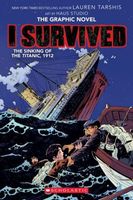
- George Calder (Titanic, 1912) — a curious boy exploring the ship with his family.
- Chet Roscow (Shark Attacks of 1916) — a boy visiting his uncle at the Jersey Shore.
- Max Rosen (Nazi Invasion, 1944) — a Jewish boy hiding from the Nazis in Poland.
- Josh and Holly (California Wildfires, 2018) — cousins fleeing wildfires.
- Other protagonists include kids during Pearl Harbor, Hurricane Katrina, D-Day, the San Francisco earthquake, the Japan tsunami, and more.
The children are relatable and brave: they worry about family, feel fear, show kindness, and use quick thinking to survive. Adults (parents, teachers, rescuers) are often present but frequently separated or overwhelmed, putting the kids in the role of active survivors.
No single recurring main character ties all books together—the strength of the series is the variety of young protagonists across different times and disasters.
Setting
The settings are the real historical locations of major disasters, vividly recreated in graphic novel panels. Each book transports readers to a different time and place:
- Early 20th-century ocean liners (Titanic)
- 1916 New Jersey shore (shark attacks)
- 2005 New Orleans during Hurricane Katrina
- 1941 Pearl Harbor
- 1906 San Francisco during the earthquake
- 1944 Normandy during D-Day
- 2018 California wildfires
- 2011 Japan tsunami
- 1776 American Revolution battles
- 1935 Hindenburg disaster
- 1986 Chernobyl nuclear accident
- And others (Nazi-occupied Poland, Pompeii eruption, etc.)
The art brings these settings to life: crowded ship decks, burning cities, flooded streets, war-torn beaches, and chaotic evacuations. The historical accuracy is strong—period clothing, architecture, technology, and environmental details are faithfully depicted, helping young readers visualize the events. The graphic format excels at showing scale (collapsing buildings, massive waves, advancing armies) while keeping the focus on the child protagonist’s personal experience.
Tone & Themes
The tone is gripping, emotional, and ultimately hopeful—serious historical fiction adapted for young readers with sensitivity and age-appropriate intensity. The stories do not shy away from the terror of disasters (destruction, loss, fear, injury, death), but the violence and horror are never gratuitous or overwhelming. The art style is realistic yet softened—characters’ expressions convey panic and bravery without excessive gore, and the pacing uses dynamic panels to build tension while keeping the focus on survival and human spirit. The narratives balance dread with inspiration: the protagonists endure unimaginable hardship but find inner strength, help others, and survive against the odds. Themes of courage, empathy, community, and hope run throughout. The books are respectful of historical tragedy while empowering young readers to see that even in the darkest moments, ordinary kids can be heroes. The tone is never preachy or condescending; it trusts children to handle real history with guidance, making the series both educational and emotionally resonant.
Lauren Tarshis’s I Survived Graphic Novels bring the bestselling chapter book series to vivid, full-color life, adapting true historical disasters into powerful, accessible stories of courage and survival. Through different young protagonists facing everything from the Titanic’s sinking to wildfires, tsunamis, D-Day, and more, the books show that ordinary children can find bravery in the worst moments and that hope endures even in tragedy. With dynamic artwork, clear storytelling, and respectful handling of real events, the graphic novels make history feel immediate and personal while delivering age-appropriate suspense and inspiration. They are perfect for reluctant readers, visual learners, and anyone who wants to experience history through the eyes of kids who lived it. The series is a triumph of educational storytelling—proving that even the most terrifying events can be met with resilience, compassion, and the will to survive. As each new graphic novel arrives, it continues to teach young readers that history is not just dates and facts—it is people, and people can be heroes.
FAQ
How many books are in the I Survived Graphic series?
10 books
When will the next book in the series be released?
No new book in the series is currently scheduled. The latest book, I Survived the Destruction of Pompeii, AD 79: The Graphic Novel, was published in September 2024.
When was the most recent book released?
I Survived the Destruction of Pompeii, AD 79: The Graphic Novel was published in September 2024.
What was the first book in the series?
The first book in the series is I Survived the Sinking of the Titanic, 1912: The Graphic Novel, published in February 2020.
What genre is the I Survived Graphic series?
The series primarily falls into the Historical genre.
What is the I Survived Graphic series about?
Each graphic novel retells one of the “I Survived†chapter book stories, placing a fictional young protagonist (usually a child or teen) at the center of a major real-life disaster. The child witnesses and survives the event—experiencing fear, loss, courage, and resourcefulness—while the narrative weaves in accurate historical details. The disasters covered include natural calamities (earthquakes, hurricanes, wildfires, tsunamis, shark attacks), man-made tragedies (Titanic sinking, 9/11 attacks, Pearl Harbor bombing), and wartime horrors (Nazi invasion, Battle of D-Day, American Revolution battles). The stories emphasize resilience: the young heroes face overwhelming danger but persevere through quick thinking, bravery, family bonds, or help from others. The graphic novel format enhances the premise by showing the chaos visually—collapsing buildings, raging fires, rising floodwaters, or advancing armies—while keeping the focus on the human element. Nonfiction backmatter (facts, photos, author notes) follows each book, providing context and reinforcing that the events really happened.
Is the I Survived Graphic series finished?
The series does not currently have a new book scheduled.
More Series Like I Survived Graphic
If you enjoyed I Survived Graphic, here are more historical series to explore.