Richard Jury Books in Order
#
Title
Date
About the Richard Jury series
Series Premise
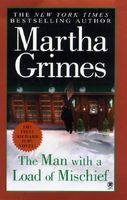
At its heart, the Richard Jury series follows the investigations of Detective Superintendent Richard Jury, a Scotland Yard officer tasked with unraveling complex murders and mysteries across England and occasionally beyond. The core premise revolves around Jury's methodical pursuit of justice, often starting with a seemingly innocuous or bizarre crime that spirals into revelations about hidden pasts, family secrets, and human frailties. A distinctive feature is that each novel is named after a real or fictional British pub, which frequently serves as a central location or symbolic element in the plot—tying into themes of community, isolation, and the undercurrents of everyday life. The narratives typically begin with a murder or disappearance that draws Jury away from his London base. For instance, in the inaugural novel, The Man with a Load of Mischief, Jury probes a string of killings in the village of Long Piddleton, where strangers are found dead in local pubs, uncovering long-buried village scandals. Subsequent books build on this formula but introduce variations: The Old Fox Deceiv'd involves identity deception and inheritance disputes in a foggy coastal village, while The Anodyne Necklace features a severed finger as a clue in a baffling crime scene. As the series progresses, plots grow more ambitious, incorporating international elements, such as in The Horse You Came In On, set partly in Baltimore, or The Lamorna Wink, which explores Cornish folklore and disappearances. Recurring motifs include the interplay between past and present, with crimes often linked to World War II traumas, lost loves, or suppressed village histories. Children and animals frequently play pivotal roles, outsmarting adults and providing key insights—adding layers of whimsy to the suspense. Jury's investigations are collaborative, relying on amateur sleuths and local eccentrics rather than solo heroism, emphasizing community and intuition over forensic science. Later books, like The Winds of Change (Jury's darkest case involving a missing girl) and The Old Success (a body washing up on a Cornish coast), delve deeper into psychological thriller territory, exploring themes of loss, identity, and redemption. Overall, the premise evolves from straightforward village mysteries to multifaceted tales that probe the human condition, all while maintaining a puzzle-like structure that challenges readers to piece together clues alongside Jury.
Main Characters
The Richard Jury series thrives on its richly drawn ensemble, with recurring characters whose personalities and relationships drive the narratives as much as the plots. At the center is Richard Jury, a handsome, chestnut-haired Scotland Yard superintendent in his forties (noted as 43 in The Dirty Duck), known for his kindness, attractive smile, and perpetual bad luck in love. Orphaned during WWII—his RAF pilot father lost in combat and mother killed in a London bombing—Jury's melancholic demeanor stems from a harsh group home upbringing, making him empathetic yet guarded.
His closest ally is Melrose Plant, a cultured aristocrat (formerly Lord Ardry, Earl of Caverness) who renounced his titles due to family scandals and lives in Long Piddleton. Plant assists Jury with his intellect and resources, often envying Jury's charm while providing comic aristocratic flair. Sergeant Alfred Wiggins, Jury's dependable aide, is a hypochondriac whose ailments add humor, yet his reliability shines in crises.
Brian Macalvie, the intense Divisional Commander of Devon and Cornwall Constabulary, recurs as a professional counterpart, bringing sharp investigative skills to joint cases. In Long Piddleton, Lady Agatha Ardry, Plant's meddlesome aunt, embodies nosy interference, while Marshall Trueblood (antiques dealer), Diane DeMorney (astrology columnist), and Joanna Lewes (romance novelist) form a quirky village clique that aids (or hinders) probes.
Jury's Islington neighbors include Mrs. Wassermann, a Holocaust survivor who sees Jury as a protector; Stan Keeler, a jazz guitarist; and Carole-anne Palutski, a vibrant young woman drawn to Jury romantically. At Scotland Yard, Chief Superintendent Racer is a pompous boss, offset by secretary Fiona Clingmore and the clever office cat Cyril. Love interests like Vivian Rivington, Polly Praed (a mystery writer), and others appear sporadically, highlighting Jury's romantic woes. Children and animals, such as orphan Zoe in The Case Has Altered or Benny and his dog Sparky in The Blue Last, often steal scenes with their ingenuity. This vibrant cast evolves over the series, fostering deep reader attachment through their interplay of loyalty, eccentricity, and growth.
Setting
The settings in the Richard Jury series are integral to its charm, predominantly unfolding in the picturesque yet shadowy landscapes of England, where quaint villages and historic pubs conceal deadly secrets. London serves as Jury's professional hub, with New Scotland Yard and his modest Islington flat providing urban anchors amid the chaos of investigations. However, much of the action shifts to rural idylls, such as the Northamptonshire village of Long Piddleton, home to Melrose Plant's estate, Ardry End—a recurring locale buzzing with gossip and intrigue.
Pubs are not mere backdrops but symbolic hearts of the stories, each novel titled after one, like the foggy, windswept inn in The Old Fox Deceiv'd or the bustling Stratford establishment in The Dirty Duck. These venues evoke a sense of community warmth juxtaposed with isolation, often set against moody weather—chilling fogs, stormy coasts, or snowy Christmases—that amplifies the suspense. Regional diversity adds flavor: Devon and Cornwall feature prominently in books involving Divisional Commander Brian Macalvie, with rugged cliffs and folklore-infused villages in The Lamorna Wink or The Old Success.
Occasional forays abroad expand the scope, such as Baltimore in The Horse You Came In On or New York in later tales, but these serve to highlight Jury's British roots. Grimes' American perspective lends an affectionate, slightly romanticized view of England, capturing its class divides, historical echoes (especially WWII remnants), and natural beauty. This immersive setting not only grounds the mysteries but also explores themes of place and belonging, making the environment a character in its own right.
Tone & Themes
The tone of the Richard Jury novels is a masterful fusion of melancholy introspection, witty humor, and atmospheric suspense, creating an engaging yet poignant reading experience. Grimes infuses her stories with a moody undercurrent, reflecting Jury's personal demons—his wartime orphanhood and string of failed romances—which lend a somber depth to even the lightest plots. This melancholy is balanced by sharp, sardonic wit, often delivered through eccentric supporting characters whose banter provides comic relief amid the grim discoveries. Early books, such as Jerusalem Inn (a tense Christmas mystery) and Help the Poor Struggler, lean toward cozy mystery vibes with their village settings and quirky inhabitants, evoking a sense of nostalgic English charm. However, the tone darkens in mid-series entries like Rainbow's End and The Blue Last, where investigations unearth profound emotional scars and ethical dilemmas, blending thriller elements with literary introspection. Grimes' prose is elegant and descriptive, painting vivid pictures of foggy moors or dimly lit pubs, which heightens the suspense without resorting to graphic violence. Humor arises from character foibles: Sergeant Wiggins' hypochondria or Melrose Plant's aristocratic pretensions spark laugh-out-loud moments, contrasting the gravity of murder. Recent installments, like The Knowledge (praised for its signature wit and sly plotting) and The Red Queen (a pub murder sparking village intrigue), maintain this balance but have drawn criticism for occasional perfunctory execution, as noted in reader discussions. Ultimately, the tone invites readers into a world that's intellectually stimulating, emotionally resonant, and delightfully entertaining, appealing to those who appreciate mysteries with heart.
The Richard Jury series by Martha Grimes endures as a testament to the power of character-driven mysteries, blending intricate puzzles with emotional depth across 26 novels. From its 1981 debut to the 2025 finale, it has captivated audiences with its evocative English settings, witty tone, and memorable ensemble, influencing the genre while reflecting Grimes' literary prowess. Whether exploring village secrets or personal heartaches, the series invites reflection on justice and humanity, ensuring its legacy as a cozy yet profound escape for mystery enthusiasts.
FAQ
How many books are in the Richard Jury series?
26 books
When will the next book in the series be released?
No new book in the series is currently scheduled. The latest book, The Red Queen, was published in July 2025.
When was the most recent book released?
The Red Queen was published in July 2025.
What was the first book in the series?
The first book in the series is The Man With a Load of Mischief, published in August 1981.
What genre is the Richard Jury series?
The series primarily falls into the Police Procedural genre.
What is the Richard Jury series about?
At its heart, the Richard Jury series follows the investigations of Detective Superintendent Richard Jury, a Scotland Yard officer tasked with unraveling complex murders and mysteries across England and occasionally beyond. The core premise revolves around Jury's methodical pursuit of justice, often starting with a seemingly innocuous or bizarre crime that spirals into revelations about hidden pasts, family secrets, and human frailties. A distinctive feature is that each novel is named after a real or fictional British pub, which frequently serves as a central location or symbolic element in the plot—tying into themes of community, isolation, and the undercurrents of everyday life. The narratives typically begin with a murder or disappearance that draws Jury away from his London base. For instance, in the inaugural novel, The Man with a Load of Mischief, Jury probes a string of killings in the village of Long Piddleton, where strangers are found dead in local pubs, uncovering long-buried village scandals. Subsequent books build on this formula but introduce variations: The Old Fox Deceiv'd involves identity deception and inheritance disputes in a foggy coastal village, while The Anodyne Necklace features a severed finger as a clue in a baffling crime scene. As the series progresses, plots grow more ambitious, incorporating international elements, such as in The Horse You Came In On, set partly in Baltimore, or The Lamorna Wink, which explores Cornish folklore and disappearances. Recurring motifs include the interplay between past and present, with crimes often linked to World War II traumas, lost loves, or suppressed village histories. Children and animals frequently play pivotal roles, outsmarting adults and providing key insights—adding layers of whimsy to the suspense. Jury's investigations are collaborative, relying on amateur sleuths and local eccentrics rather than solo heroism, emphasizing community and intuition over forensic science. Later books, like The Winds of Change (Jury's darkest case involving a missing girl) and The Old Success (a body washing up on a Cornish coast), delve deeper into psychological thriller territory, exploring themes of loss, identity, and redemption. Overall, the premise evolves from straightforward village mysteries to multifaceted tales that probe the human condition, all while maintaining a puzzle-like structure that challenges readers to piece together clues alongside Jury.
Is the Richard Jury series finished?
The series does not currently have a new book scheduled.
More Series Like Richard Jury
If you enjoyed Richard Jury, here are more police procedural series to explore.