Jane Austen Books in Order
#
Title
Date
How to Read the Jane Austen series
Best Read in Order
· Start with Book 1
Standalone stories, but characters and relationships develop across the series.
The series is best read in sequential order, as the books trace Jane’s life chronologically from her late twenties onward, allowing readers to follow her personal growth, evolving family dynamics, and the gradual development of her literary career alongside the mysteries. Each installment stands reasonably well on its own, with self-contained plots and satisfying resolutions, but recurring relationships, inside references to prior cases, and the steady march of time (including Jane’s health challenges in later volumes) create a rich, continuous arc. Reading chronologically enhances appreciation for subtle character development and the deepening emotional stakes, though newcomers can still enjoy any single title without feeling lost thanks to Barron’s skillful context and recaps.
About the Jane Austen series
Series Premise
The core premise casts Jane Austen herself as the central investigator. In each story, the young (or maturing) author encounters a suspicious death or scandal—often among the gentry, military circles, or her own extended acquaintance—while traveling, visiting family and friends, or navigating the social whirl of Regency England. Armed with her formidable powers of observation, ironic wit, and intimate knowledge of human character (honed by her writing), Jane pieces together clues, interviews suspects, and navigates the constraints of propriety and gender expectations to uncover the truth. The mysteries frequently intersect with real historical events or figures, such as naval officers, political intrigue, or the lingering shadows of the Napoleonic Wars, while Jane balances her sleuthing with her writing ambitions, family obligations, and occasional romantic temptations. The narratives are presented as entries from a secret journal discovered long after Austen’s death, lending an air of authenticity and intimacy.
Main Characters
Jane Austen herself serves as the compelling narrator and protagonist: intelligent, perceptive, and possessed of a quiet moral core, she approaches detection with the same analytical eye she brings to her novels. Her sharp tongue and dry observations provide much of the humor and insight, while her vulnerabilities—family pressures, financial concerns, health struggles in later books, and the ache of unspoken romantic longing—make her profoundly human. Recurring supporting characters enrich her world: her devoted sister Cassandra, who offers quiet counsel and occasional assistance; her clergyman brother James and other siblings whose lives intersect with the cases; various naval officers and gentlemen whose honorable (or not-so-honorable) intentions create romantic tension or suspicion; local gentry, physicians, and servants who populate the social landscape; and occasional historical figures who add authenticity without overshadowing the fiction. These characters form a lively ensemble, with family loyalty and village gossip providing both comfort and complication.
Setting
The setting is vividly realized Regency England, primarily the rural and coastal locales Austen knew well. Stories unfold in grand country manors and estates (such as Scargrave or other fictionalized great houses), bustling spa towns like Bath, naval ports, London’s fashionable squares, and, most frequently, the quiet beauty of Hampshire and Kent. Jane’s beloved family home at Chawton Cottage appears in several tales, providing a warm domestic anchor amid the intrigue. The atmosphere is richly atmospheric: candlelit ballrooms and drawing rooms where gossip flows as freely as tea, misty country lanes perfect for clandestine meetings, stormy seas echoing naval tensions, and the elegant restraint of polite society masking ambition, jealousy, and murder. Barron evokes the period with sensory precision—the rustle of silk gowns, the clatter of carriages, the scent of lavender and woodsmoke—while subtly weaving in historical details like wartime anxieties, social reform stirrings, and the rigid codes of gentility that both protect and entrap.
Tone & Themes
Tonally, the books are witty, stylish, and gently suspenseful, capturing Austen’s own sparkling irony and social satire while adding the tension of a traditional whodunit. Barron masterfully emulates Austen’s voice—elegant, observant, and laced with dry humor—creating prose that feels authentic yet accessible. The mood blends cozy intrigue with moments of genuine peril and poignant reflection, never descending into graphic violence or bleakness. Expect clever dialogue, social faux pas turned clues, and the quiet satisfaction of justice served with a side of sharp commentary on Regency hypocrisies. Thematically, the series explores the constraints and agency of intelligent women in a restrictive society, the blurred line between fiction and reality, the corrosive effects of gossip and reputation, the moral complexities of class and inheritance, and the redemptive power of truth and friendship. It celebrates intellect over convention, the courage to question appearances, and the idea that even the most refined drawing rooms can hide dark secrets, all while honoring Austen’s enduring themes of love, marriage, and self-knowledge.
In the end, the Jane Austen Mystery series by Stephanie Barron is a sparkling tribute to one of literature’s greatest minds, transforming the reserved observer of drawing-room dramas into a bold unravel-er of real-life mysteries. Barron reminds us that the same qualities that make great novels—keen perception, moral clarity, and a refusal to accept easy answers—also make an exceptional detective. These stories wrap readers in the elegance of Regency England while delivering clever puzzles, tender emotion, and the timeless pleasure of watching a brilliant woman outwit those who would underestimate her. For Janeites seeking new adventures for their favorite author, or for mystery lovers craving intelligent, character-driven tales with period charm, the series offers an irresistible escape—one where wit is the sharpest weapon, propriety the perfect disguise, and truth, however inconvenient, always finds its way to the page. Open the journal, step into Jane’s world, and discover that some mysteries are best solved with a cup of tea, a keen eye, and the quiet courage to see beyond society’s polished surface.
FAQ
How many books are in the Jane Austen series?
15 books
When will the next book in the series be released?
No new book in the series is currently scheduled. The latest book, Jane and the Final Mystery, was published in October 2023.
When was the most recent book released?
Jane and the Final Mystery was published in October 2023.
What was the first book in the series?
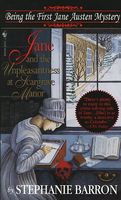
The first book in the series is Jane and the Unpleasantness at Scargrave Manor, published in April 1996.
What genre is the Jane Austen series?
The series primarily falls into the Historical Mystery genre.
Do you need to read the Jane Austen series in order?
It’s best to read the series in order. Each book has its own story, but ongoing character arcs and relationships develop across the series.
What is the Jane Austen series about?
The core premise casts Jane Austen herself as the central investigator. In each story, the young (or maturing) author encounters a suspicious death or scandal—often among the gentry, military circles, or her own extended acquaintance—while traveling, visiting family and friends, or navigating the social whirl of Regency England. Armed with her formidable powers of observation, ironic wit, and intimate knowledge of human character (honed by her writing), Jane pieces together clues, interviews suspects, and navigates the constraints of propriety and gender expectations to uncover the truth. The mysteries frequently intersect with real historical events or figures, such as naval officers, political intrigue, or the lingering shadows of the Napoleonic Wars, while Jane balances her sleuthing with her writing ambitions, family obligations, and occasional romantic temptations. The narratives are presented as entries from a secret journal discovered long after Austen’s death, lending an air of authenticity and intimacy.
Is the Jane Austen series finished?
The series does not currently have a new book scheduled.
More Series Like Jane Austen
If you enjoyed Jane Austen, here are more historical mystery series to explore.