Flavia de Luce Books in Order
#
Title
Date
About the Flavia de Luce series
Series Premise
The core premise centers on Flavia de Luce, an eleven-year-old chemistry prodigy living in a crumbling family estate, who repeatedly stumbles upon (or actively investigates) murders in her quiet village. Armed with her encyclopedic knowledge of poisons, laboratory skills honed in an abandoned Victorian lab, and a bicycle for getting around, she outthinks adults—particularly the local police—while unraveling motives tied to long-buried secrets, village grudges, family histories, and the lingering shadows of wartime England. The stories explore themes of loss, independence, sibling rivalry, and the blurred line between childhood innocence and adult understanding, as Flavia uses science and observation to expose killers amid a world that often underestimates her.
The series should be read in a particular order—ideally publication sequence—for the most rewarding experience, as Flavia's personal growth, family dynamics, and subtle ongoing arcs (including evolving relationships, revelations about her parents, and her own maturation) build progressively across the books. While each mystery is self-contained with its own victim, suspects, clues, and resolution, reading out of order risks missing emotional context, character development payoffs, and minor spoilers about home life or recurring figures. That said, the standalone nature of the individual cases allows new readers to dip in anywhere without confusion over the central puzzle, though starting from the beginning maximizes the series' charm and continuity.
Main Characters
Flavia de Luce: The brilliant, irrepressible protagonist and narrator; an eleven-year-old chemistry enthusiast with a passion for poisons and a talent for detection, fiercely independent, often mischievous, and deeply observant, yet capable of surprising tenderness beneath her tough exterior.
- Ophelia (Feely) and Daphne (Daffy): Flavia's two older sisters; musical, bookish, and frequently antagonistic toward Flavia, providing comic sibling rivalry and emotional complexity as the family navigates grief and dysfunction.
- Colonel Haviland "Havoc" de Luce: Flavia's widowed, philatelic-obsessed father; distant, eccentric, and emotionally reserved, haunted by the loss of his wife and the family's reduced circumstances.
- Dogger: The loyal, gentle butler-gardener-handyman at Buckshaw; a former military man suffering from shell shock, he serves as Flavia's quiet ally, protector, and confidant, offering wisdom and support in his understated way.
- Inspector Hewitt: The competent but somewhat exasperated local police detective; professional and methodical, he represents official authority that Flavia frequently outpaces, creating a dynamic mix of rivalry and reluctant respect.
Setting
The setting is vividly realized as 1950s rural England, primarily the fictional village of Bishop's Lacey in the countryside, where time seems to move slowly amid hedgerows, ancient churches, country lanes, and the grand but decaying family estate of Buckshaw. Buckshaw itself is a character in its own right—a sprawling, ivy-covered Victorian mansion with hidden rooms, a vast garden, overgrown greenhouse, and the treasured laboratory once belonging to Flavia's uncle—symbolizing faded aristocracy and the de Luces' genteel poverty. The village buzzes with post-war normalcy: vicarage teas, market days, traveling performers, church fêtes, and gossip that travels faster than Flavia's bicycle. The era is captured authentically—rationing echoes, old motorcars, no television dominance, and a society still recovering from the war—infusing the stories with nostalgic charm while providing a perfect stage for secrets and scandals among the locals.
Tone & Themes
The tone is delightfully witty, intelligent, and gently humorous, striking a perfect balance between cozy comfort and sharp-edged observation. Bradley's prose sparkles with Flavia's precocious, often sardonic first-person voice—full of dry commentary on adults' follies, gleeful descriptions of chemical reactions, and unapologetic delight in the macabre—creating an engaging, light-hearted feel even as murders occur. There's no graphic violence or despair; suspense arises from clever deduction, red herrings, and Flavia's resourceful sleuthing, tempered by poignant moments of vulnerability, family warmth, and quiet melancholy over loss. The overall atmosphere is optimistic and empowering, celebrating curiosity, resilience, and the joy of discovery, with humor derived from Flavia's deadpan insights, eccentric villagers, and sibling banter that keeps things fun and uplifting.
The Flavia de Luce Mystery series by Alan Bradley is a gem of contemporary cozy fiction, delivering intelligent, heartwarming mysteries through the unforgettable lens of its young heroine. With Flavia's razor-sharp mind, infectious enthusiasm for science, and unflinching honesty, the books offer clever puzzles, laugh-out-loud humor, and touching insights into family, loss, and growing up, all set against a beautifully evoked English countryside. The series stands out for its blend of classic detective tradition and modern emotional depth, making it a joy for both longtime mystery lovers and newcomers seeking something fresh and endearing. Whether savoring the chemistry of poisons or the chemistry of human connections, readers find themselves charmed by Flavia's world—a place where curiosity triumphs, justice prevails, and even the darkest secrets yield to the bright light of a brilliant young mind.
FAQ
How many books are in the Flavia de Luce series?
11 books total: 10 main + 1 extra story
When will the next book in the series be released?
No new book is currently scheduled. The latest book, The Golden Tresses of the Dead, was published in January 2019.
When was the most recent book released?
The Golden Tresses of the Dead was published in January 2019.
What was the first book in the series?
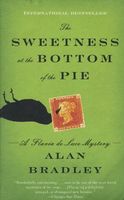
The first book in the series is The Sweetness at the Bottom of the Pie, published in February 2009.
What genre is the Flavia de Luce series?
The series primarily falls into the Cozy Historical Mystery genre.
What is the Flavia de Luce series about?
The core premise centers on Flavia de Luce, an eleven-year-old chemistry prodigy living in a crumbling family estate, who repeatedly stumbles upon (or actively investigates) murders in her quiet village. Armed with her encyclopedic knowledge of poisons, laboratory skills honed in an abandoned Victorian lab, and a bicycle for getting around, she outthinks adults—particularly the local police—while unraveling motives tied to long-buried secrets, village grudges, family histories, and the lingering shadows of wartime England. The stories explore themes of loss, independence, sibling rivalry, and the blurred line between childhood innocence and adult understanding, as Flavia uses science and observation to expose killers amid a world that often underestimates her. The series should be read in a particular order—ideally publication sequence—for the most rewarding experience, as Flavia's personal growth, family dynamics, and subtle ongoing arcs (including evolving relationships, revelations about her parents, and her own maturation) build progressively across the books. While each mystery is self-contained with its own victim, suspects, clues, and resolution, reading out of order risks missing emotional context, character development payoffs, and minor spoilers about home life or recurring figures. That said, the standalone nature of the individual cases allows new readers to dip in anywhere without confusion over the central puzzle, though starting from the beginning maximizes the series' charm and continuity.
Is the Flavia de Luce series finished?
The series does not currently have a new book scheduled.
More Series Like Flavia de Luce
If you enjoyed Flavia de Luce, here are more cozy historical mystery series to explore.