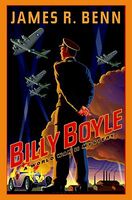
Billy Boyle World War II Books in Order
#
Title
Date
About the Billy Boyle World War II series
Series Premise
Billy Boyle, a young Irish-American detective from a family of Boston cops, is pulled from his civilian police work and commissioned as a U.S. Army lieutenant shortly after Pearl Harbor. Claiming a distant family connection to General Dwight D. Eisenhower (whom he calls "Uncle Ike"), Billy is assigned to serve as a special investigator for the Supreme Headquarters Allied Expeditionary Force, tasked with handling sensitive, discreet cases—murders, espionage, sabotage, black market dealings, and betrayals—that could impact the war effort if mishandled publicly. Traveling with the advancing Allied forces, Billy navigates complex investigations amid military hierarchy, wartime secrecy, and the chaos of combat zones, using his sharp cop instincts to uncover killers, spies, and traitors while grappling with the ethical ambiguities of war and the personal toll of constant danger.
The series should be read in order, as it follows a clear chronological progression through the major theaters and timelines of World War II, with Billy's rank, relationships, and personal growth evolving continuously across books—recurring elements like ongoing friendships, romantic threads, family references, and the cumulative effects of trauma and wartime experiences build meaningfully, making sequential reading essential for full emotional and narrative depth. While individual mysteries are self-contained enough to enjoy standalone, starting out of order would miss key character developments, historical context buildup, and the satisfying arc of Billy's maturation from reluctant soldier to seasoned wartime detective.
Main Characters
Billy Boyle: The first-person narrator and protagonist, a sharp, principled Boston Irish cop in his mid-20s who transitions from civilian detective to Army captain and Eisenhower's special investigator; resourceful, observant, and morally grounded, he relies on street smarts and intuition but grows increasingly burdened by the war's horrors, personal losses, and the weight of secrets he must keep.
- General Dwight D. Eisenhower: Billy's distant "Uncle Ike," the Supreme Commander who assigns him cases requiring discretion; portrayed as a strategic, humane leader who trusts Billy's abilities despite their tenuous family tie, serving as a mentor figure and source of high-stakes assignments.
- Major Samuel Harding: Billy's tough, no-nonsense commanding officer and frequent partner in investigations; a career soldier with a gruff exterior but underlying loyalty, he provides military expertise, wry banter, and steady support as Billy navigates dangerous inquiries.
Setting
The stories span the key fronts and pivotal moments of World War II, moving fluidly with the Allied advance from 1942 onward. Early books place Billy in England preparing for invasions, then shift to North Africa during Operation Torch, Sicily and Italy campaigns, the buildup to D-Day in the UK, Normandy and the liberation of France, the Battle of the Bulge, and later pushes into Germany and beyond. Settings include military headquarters, bombed-out cities, rural villages, POW camps, resistance networks, airbases, hospitals, and battlefields across Europe, with vivid, research-rich depictions of period details—rationing, blackouts, military bureaucracy, espionage tradecraft, and the contrasting landscapes from English countryside to North African deserts to war-torn European cities—anchoring each mystery in its specific historical and geographical moment.
Tone & Themes
Intelligent, atmospheric, and thoughtfully gritty, the series maintains a serious yet accessible tone that balances taut suspense with moments of dry humor, camaraderie, and quiet reflection. Investigations unfold with procedural realism—detailed clues, interrogations, and logical deduction—while the wartime setting infuses constant tension, moral gray areas, and the ever-present shadow of death and destruction. Benn avoids graphic excess but doesn't shy from the harsh realities of combat, betrayal, and loss, creating a mature, reflective mystery vibe that honors historical accuracy without descending into bleakness, often leavened by Billy's working-class wit and resilience.
The Billy Boyle World War II Mystery series masterfully weaves intricate, satisfying detective stories into the epic canvas of the Second World War, offering readers a front-row seat to history through the eyes of an everyman hero who confronts both criminals and the larger inhumanity of conflict. With its blend of authentic period detail, smart plotting, evolving character arcs, and thoughtful exploration of duty, loyalty, and survival, the saga remains a standout in historical mysteries—rewarding for history buffs, puzzle lovers, and anyone seeking intelligent, immersive wartime fiction that honors the past while delivering gripping, human-centered entertainment.
FAQ
How many books are in the Billy Boyle World War II series?
21 books
When will the next book in the series be released?
The next book in the Billy Boyle World War II series, The Ninth Circle, will be published in Sep-2026.
When was the most recent book released?
Bitter Wind was published in September 2025.
What was the first book in the series?
The first book in the series is Billy Boyle , published in September 2006.
What genre is the Billy Boyle World War II series?
The series primarily falls into the Historical Mystery genre.
What is the Billy Boyle World War II series about?
Billy Boyle, a young Irish-American detective from a family of Boston cops, is pulled from his civilian police work and commissioned as a U.S. Army lieutenant shortly after Pearl Harbor. Claiming a distant family connection to General Dwight D. Eisenhower (whom he calls "Uncle Ike"), Billy is assigned to serve as a special investigator for the Supreme Headquarters Allied Expeditionary Force, tasked with handling sensitive, discreet cases—murders, espionage, sabotage, black market dealings, and betrayals—that could impact the war effort if mishandled publicly. Traveling with the advancing Allied forces, Billy navigates complex investigations amid military hierarchy, wartime secrecy, and the chaos of combat zones, using his sharp cop instincts to uncover killers, spies, and traitors while grappling with the ethical ambiguities of war and the personal toll of constant danger. The series should be read in order, as it follows a clear chronological progression through the major theaters and timelines of World War II, with Billy's rank, relationships, and personal growth evolving continuously across books—recurring elements like ongoing friendships, romantic threads, family references, and the cumulative effects of trauma and wartime experiences build meaningfully, making sequential reading essential for full emotional and narrative depth. While individual mysteries are self-contained enough to enjoy standalone, starting out of order would miss key character developments, historical context buildup, and the satisfying arc of Billy's maturation from reluctant soldier to seasoned wartime detective.
Is the Billy Boyle World War II series finished?
The series is ongoing, with the next book currently scheduled.
More Series Like Billy Boyle World War II
If you enjoyed Billy Boyle World War II, here are more historical mystery series to explore.