Wagons West Books in Order
#
Title
Date
About the Wagons West series
Series Premise
The series begins in 1837 with the organization of one of the first large wagon trains of American settlers heading west to claim the Oregon Territory for the United States. The initial books follow this pioneering group as they depart from the East Coast (often Connecticut or New York), travel through Independence, Missouri (the jumping-off point for the Oregon Trail), and endure the grueling 2,000-mile journey across plains, mountains, rivers, and deserts to reach Oregon. The core premise is a multi-generational chronicle of westward expansion: each novel (or set of novels) advances the timeline and shifts focus to new characters—often children or grandchildren of earlier pioneers—who face fresh challenges in newly settled territories. The story arc covers: - The Oregon Trail era (1830s–1840s): wagon trains, Indian encounters, natural disasters, and the drive to secure the Pacific Northwest. - The settlement of California, Texas, Colorado, and other regions during the Gold Rush, Mexican-American War, and post-Civil War expansion. - Conflicts with Native American tribes, outlaws, harsh weather, and rival claimants. - Romantic and familial subplots: marriages, births, betrayals, and reconciliations amid frontier dangers. The overarching narrative traces the Holt family (and later branches) as they evolve from Eastern emigrants into Western pioneers, ranchers, miners, soldiers, and community builders. Each book stands somewhat alone but builds on the family tree, with recurring characters appearing across generations. Themes include manifest destiny, courage in adversity, the cost of ambition, and the forging of a new nation through sacrifice and perseverance.
Main Characters
The series is multi-generational, with a large, interconnected cast centered on the Holt family and their kin.
Michael "Whip" Holt is the dominant figure in the early books: a rugged, stoic wagonmaster and scout, chosen by President Andrew Jackson to lead the first major Oregon-bound train. Noble, quietly romantic, and fiercely protective, he embodies the classic Western hero.
Claudia Humphries (later Holt): a fiery, beautiful young widow who joins the first wagon train; strong-willed and passionate, she clashes with Whip but becomes his destined partner.
Cathy van Ayl: another key early heroine, a resilient pioneer woman who falls for Whip or another leader.
Later books introduce:
- Children and grandchildren of the original pioneers (e.g., Whip and Claudia's descendants).
- New protagonists: miners, ranchers, soldiers, and settlers who carry the family legacy forward.
Supporting characters include diverse pioneers—farmers, merchants, adventurers, women, children, Native Americans (often portrayed as antagonists or allies), outlaws, soldiers, and historical figures (Presidents, generals). The large cast allows for rich family sagas, with recurring figures appearing across generations.
Setting
The series spans the American West from the 1830s to the late 19th century, following the westward trails and settlement waves. The first several books focus on the Oregon Trail, beginning in the eastern United States (Connecticut, New York) and tracing the route through Independence, Missouri, across the Great Plains (Nebraska, Wyoming), over the Rocky Mountains, and into the fertile Willamette Valley of Oregon.
Subsequent volumes expand across the frontier:
- California during the Gold Rush.
- Texas during its Republic era and annexation.
- Colorado mining camps.
- The Pacific Northwest, Southwest deserts, and Great Plains.
Settings are vividly detailed: dusty wagon trails, roaring rivers, snow-covered mountain passes, buffalo herds, Indian villages, boomtowns, ranches, and military forts. The landscape is both majestic and merciless—vast prairies, towering Rockies, arid deserts, and lush valleys—serving as both backdrop and antagonist. Historical events (Oregon Trail migrations, Gold Rush, Indian Wars, Civil War aftermath) ground the stories in real history, though with romanticized flair.
Tone & Themes
The tone is epic, romantic, and unabashedly adventurous—classic 1970s–1980s mass-market Western saga with a sentimental, patriotic edge. The prose is straightforward, fast-paced, and dramatic, prioritizing action, emotion, and sweeping historical scope over literary subtlety. Expect vivid descriptions of hardship (starvation, disease, Indian attacks, blizzards) balanced by triumphant moments of survival, romance, and community-building. Romance is central and passionate: heroes are rugged, honorable men who protect and provide; heroines are spirited, resilient women who endure trials and often save the day. Sexual content is present but mild by modern standards—steamy embraces, implied intimacy, and romantic tension rather than explicit detail. The tone romanticizes the frontier experience: danger is thrilling, sacrifice is noble, and the American Dream endures despite tragedy. Humor is light—banter, stubborn pride, and ironic situations—while darker elements (violence, loss) are handled with a sense of inevitability and resilience. Overall, it's escapist and uplifting: the West is harsh but conquerable, and love and family prevail.
Dana Fuller Ross's (Noel Bertram Gerson's) Wagons West series is a sweeping, nostalgic epic of American westward expansion: 24 mass-market novels that chronicle the courage, romance, and hardship of pioneers forging a nation across the frontier. From the first Oregon Trail journey in 1837 to the settlement of California, Texas, and beyond, the books deliver grand adventure, passionate love stories, and multi-generational family drama against the majestic yet unforgiving American West. With its romanticized heroism, vivid landscapes, and steadfast belief in manifest destiny and human endurance, the series offers classic escapism—big, bold, and unapologetically entertaining. For readers who love epic Western sagas filled with trail dust, wagon trains, and enduring love, Wagons West remains a monumental, fondly remembered journey through the birth of the American West.
FAQ
How many books are in the Wagons West series?
24 books
When will the next book in the series be released?
No new book is currently scheduled. The latest book, Celebration!, was published in October 1989.
When was the most recent book released?
Celebration! was published in October 1989.
What was the first book in the series?
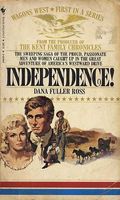
The first book in the series is Independence!, published in February 1979.
What genre is the Wagons West series?
The series primarily falls into the Historical genre.
What is the Wagons West series about?
The series begins in 1837 with the organization of one of the first large wagon trains of American settlers heading west to claim the Oregon Territory for the United States. The initial books follow this pioneering group as they depart from the East Coast (often Connecticut or New York), travel through Independence, Missouri (the jumping-off point for the Oregon Trail), and endure the grueling 2,000-mile journey across plains, mountains, rivers, and deserts to reach Oregon. The core premise is a multi-generational chronicle of westward expansion: each novel (or set of novels) advances the timeline and shifts focus to new characters—often children or grandchildren of earlier pioneers—who face fresh challenges in newly settled territories. The story arc covers: - The Oregon Trail era (1830s–1840s): wagon trains, Indian encounters, natural disasters, and the drive to secure the Pacific Northwest. - The settlement of California, Texas, Colorado, and other regions during the Gold Rush, Mexican-American War, and post-Civil War expansion. - Conflicts with Native American tribes, outlaws, harsh weather, and rival claimants. - Romantic and familial subplots: marriages, births, betrayals, and reconciliations amid frontier dangers. The overarching narrative traces the Holt family (and later branches) as they evolve from Eastern emigrants into Western pioneers, ranchers, miners, soldiers, and community builders. Each book stands somewhat alone but builds on the family tree, with recurring characters appearing across generations. Themes include manifest destiny, courage in adversity, the cost of ambition, and the forging of a new nation through sacrifice and perseverance.
Is the Wagons West series finished?
The series does not currently have a new book scheduled.
More Series Like Wagons West
If you enjoyed Wagons West, here are more historical series to explore.