The Vampire Chronicles Books in Order
#
Title
Date
About The Vampire Chronicles
Series Premise
The series chronicles the lives, memories, and philosophical reflections of immortal vampires who exist across centuries. The narrative is told through first-person accounts, interviews, memoirs, and confessions, creating a layered, multi-generational saga. The vampires are not mindless monsters but highly intelligent, emotional, and often tormented beings cursed with eternal life, bloodlust, and existential despair. The core mythology evolves over the series: - Vampires originate from ancient Egypt (around 4000 B.C.), created through a dark ritual involving the spirit Amel, who merges with a human queen (Akasha) to form the first vampire. - The bloodline spreads through bites and blood exchange, creating a global network of immortals. - Vampires possess enhanced strength, speed, healing, telepathy, flight (in some), and the ability to burn in sunlight or be destroyed by fire. - The central conflict involves the struggle between isolation and connection, the search for meaning in eternal life, the morality of feeding on humans, and the tension between individual vampires and the larger supernatural world (including ancient vampires, the Talamasca organization that studies the paranormal, and later threats from Atlantis and cosmic forces). The series follows the “vampire family tree†originating from Akasha and her consort Enkil, through their descendants (Lestat, Louis, Claudia, Armand, Marius, Pandora, etc.), and explores themes of immortality, love, power, religion, philosophy, and the human condition through the lens of undead beings who can never die.
Main Characters
Lestat de Lioncourt — The central figure and most iconic character. Charismatic, narcissistic, brilliant, and deeply lonely. French nobleman turned vampire in 1760; becomes the narrator of several books. Restless, rebellious, philosophical, and endlessly searching for meaning. The “brat prince†of vampires.
- Louis de Pointe du Lac — The melancholic narrator of *Interview with the Vampire*. Gentle, introspective, haunted by guilt over his vampiric nature and the death of Claudia. Lestat’s first companion.
- Claudia — The child vampire created by Lestat and Louis. Trapped in a child’s body forever; brilliant, ruthless, and tragically resentful. Her fate drives much of the early tragedy.
- Armand — Ancient vampire (born in 15th-century Kiev). Beautiful, tragic, manipulative, and deeply lonely. Leader of the Parisian vampire coven; later becomes a complex ally.
- Marius de Romanus — Roman vampire, mentor to Lestat and Armand. Keeper of the ancient vampire queen Akasha and her consort Enkil. Philosophical, cultured, and morally complex.
- Akasha — The Queen of the Damned, the first vampire. Ancient Egyptian queen who merged with a malevolent spirit; seeks to remake the world in her vision.
- Pandora, Mael, Khayman, Mekare and Maharet — Ancient vampires who appear in later books, adding layers to the mythology.
- David Talbot — Mortal Talamasca scholar who becomes a vampire and Lestat’s friend/confidant.
- Mona Mayfair — From the crossover *Mayfair Witches* series; appears in later books.
Setting
A richly detailed historical and contemporary world spanning centuries and continents. The series moves fluidly through time and place:
- 18th-century France (Paris, New Orleans, Auvergne) — the birth of Lestat, Louis, and Claudia; lavish balls, plague-ridden cities, colonial Louisiana.
- Ancient Egypt (flashbacks) — the origin of vampirism with Akasha and Enkil.
- Renaissance Italy — Marius’s era in Venice and Rome.
- 19th-century New Orleans — the decadent, decadent world of Louis, Lestat, and Claudia; French Quarter mansions, yellow fever epidemics, voodoo.
- 20th-century/Modern era — New Orleans, Miami, Paris, London, San Francisco, and global locations (including the Amazon, the Arctic, and the hidden realm of the vampires).
- Mythic and supernatural realms — the spirit world, the realm of the gods, Atlantis (in later books).
The atmosphere is gothic and opulent: candlelit salons, decaying mansions, moonlit cemeteries, grand theaters, and the constant presence of beauty intertwined with decay and death. New Orleans is the emotional heart of the series—humid, decadent, haunted, and alive with music, voodoo, and history.
Tone & Themes
Dark, lush, melancholic, philosophical, and intensely romantic—gothic horror infused with operatic emotion and existential questioning. Anne Rice’s tone is lyrical, sensual, and brooding: prose is rich, descriptive, and often poetic, with long passages of introspection, memory, and philosophical debate. Violence is vivid and sometimes brutal (feeding scenes, battles), but it is portrayed with a kind of tragic beauty rather than gore for shock value. The series is deeply romantic—love (both human and vampire) is obsessive, tragic, and eternal—while also exploring despair, loneliness, guilt, and the search for meaning. Humor is rare and ironic (Lestat’s occasional self-aware wit), and the tone remains serious and emotionally raw. It is seductive, tragic, and ultimately hopeful—immortality is a curse, but love, art, beauty, and connection can offer redemption. It is adult, sophisticated reading—haunting, passionate, and intellectually provocative.
The Vampire Chronicles is a lush, haunting, and profoundly influential epic of immortal love, despair, and redemption. Anne Rice redefined vampire fiction by making her creatures tragic, philosophical, and deeply human—eternal beings cursed with beauty, power, and unbearable loneliness. Through Lestat’s flamboyant rebellion, Louis’s quiet torment, Claudia’s tragic rage, and the vast mythology of Akasha, Marius, and the ancient bloodline, Rice crafted a saga that is both operatic and intimate, sensual and intellectual, dark and ultimately hopeful. Across 13 novels and companions, the series explores the human condition through the eyes of the undead—love as salvation, immortality as punishment, and the eternal search for meaning. A groundbreaking work that shaped modern vampire mythology and remains a towering achievement in dark fantasy and romantic literature. A mesmerizing, unforgettable journey into the heart of darkness and the light that can still be found there.
FAQ
How many books are in The Vampire Chronicles?
13 books
When will the next book in the series be released?
No new book is currently scheduled. The latest book, Blood Communion, was published in October 2018.
When was the most recent book released?
Blood Communion was published in October 2018.
What was the first book in the series?
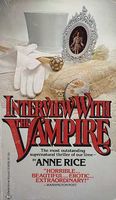
The first book in the series is Interview With the Vampire, published in May 1976.
What genre is The Vampire Chronicles?
The series primarily falls into the Horror genre.
What is The Vampire Chronicles about?
The series chronicles the lives, memories, and philosophical reflections of immortal vampires who exist across centuries. The narrative is told through first-person accounts, interviews, memoirs, and confessions, creating a layered, multi-generational saga. The vampires are not mindless monsters but highly intelligent, emotional, and often tormented beings cursed with eternal life, bloodlust, and existential despair. The core mythology evolves over the series: - Vampires originate from ancient Egypt (around 4000 B.C.), created through a dark ritual involving the spirit Amel, who merges with a human queen (Akasha) to form the first vampire. - The bloodline spreads through bites and blood exchange, creating a global network of immortals. - Vampires possess enhanced strength, speed, healing, telepathy, flight (in some), and the ability to burn in sunlight or be destroyed by fire. - The central conflict involves the struggle between isolation and connection, the search for meaning in eternal life, the morality of feeding on humans, and the tension between individual vampires and the larger supernatural world (including ancient vampires, the Talamasca organization that studies the paranormal, and later threats from Atlantis and cosmic forces). The series follows the “vampire family tree†originating from Akasha and her consort Enkil, through their descendants (Lestat, Louis, Claudia, Armand, Marius, Pandora, etc.), and explores themes of immortality, love, power, religion, philosophy, and the human condition through the lens of undead beings who can never die.
Is The Vampire Chronicles finished?
The series does not currently have a new book scheduled.
More Series Like The Vampire Chronicles
If you enjoyed The Vampire Chronicles, here are more horror series to explore.