
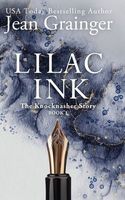
The Knocknashee Story Books in Order
How to Read The Knocknashee Story series
Standalone stories, but characters and relationships develop across the series.
The series is best read in sequential order. Although each volume delivers a satisfying emotional arc with its own focus on particular years or events during the WWII era, the overarching story forms a continuous saga spanning the late 1930s through the war years and their aftermath. Early books establish the initial correspondence, the characters’ inner worlds, and the peaceful rhythms of Knocknashee before the conflict intensifies. Later installments build directly on prior revelations, evolving relationships, wartime separations, and the long-term consequences of choices made under pressure. Reading chronologically preserves the gradual deepening of Grace and Richard’s bond, the accumulating emotional weight of historical events, and the subtle character growth that rewards investment in the full journey. The books remain accessible for those who dip in midway thanks to Grainger’s gentle recaps, but the richest experience comes from experiencing the full chronological flow.
About The Knocknashee Story series
Series Premise
The core premise centers on Grace Fitzgerald, a young woman living in the remote, Irish-speaking village of Knocknashee in County Kerry. Orphaned young and later afflicted by polio, Grace navigates a life marked by hardship, an indifferent older sister, and the simple rhythms of rural existence. Her world expands dramatically through a pen-pal correspondence that begins in the late 1930s with Richard Lewis, an ambitious American journalist from Savannah, Georgia. What starts as an unlikely transatlantic friendship—bridging cultural divides, oceans, and vastly different upbringings—deepens into profound emotional connection amid the rising tensions of pre-war Europe and the full horrors of the conflict. As letters cross the Atlantic carrying dreams, fears, news, and confessions, Grace and Richard’s bond becomes a lifeline. The stories follow Grace’s personal growth in her tight-knit community, her evolving relationships with family and neighbors, and the ripple effects of war that reach even this isolated village, while Richard’s experiences as a war correspondent expose him to danger, loss, and moral dilemmas far from home. The narrative explores how ordinary people find extraordinary strength through connection, community, and quiet acts of defiance against despair.
Main Characters
Grace Fitzgerald anchors the series as a compelling, multifaceted protagonist: fiery-haired, intelligent, and quietly determined despite physical challenges from polio and emotional scars from childhood loss. Her growth from isolated dreamer to resilient woman who finds purpose and love through correspondence forms the emotional heart. Richard Lewis, the thoughtful American journalist, serves as her counterpart—charismatic, principled, and increasingly entangled in the war’s moral complexities, his letters revealing a man of depth and vulnerability. Their evolving relationship, built on ink and imagination before reality intervenes, drives much of the narrative tension and tenderness. Supporting and recurring characters bring the village to life: Grace’s domineering older sister Agnes, whose indifference and eventual absence shape Grace’s path; a cast of warm-hearted neighbors, friends, and villagers who offer gossip, support, and comic relief; local figures tied to the church, school, or fishing trade who ground the community; and Richard’s family and colleagues in America, who add cultural contrast and later complications. These secondary players create a rich ensemble that underscores themes of found family and collective endurance.
Setting
The setting is vividly realized and integral to the emotional core. Knocknashee, a fictional yet authentic-feeling village in the Gaeltacht (Irish-speaking) region of County Kerry on the rugged Dingle Peninsula, provides a windswept, emerald-green haven of stone cottages, misty hills, fishing harbors, and close-knit community life. The landscape—dramatic cliffs, wild Atlantic waves, and ancient traditions—mirrors the characters’ inner storms while offering solace and continuity. Scenes unfold in humble homes, village shops, church gatherings, and the local school, where Irish language and customs add rich cultural texture. In contrast, glimpses of Richard’s world in Savannah evoke refined Southern elegance and journalistic hustle, heightening the sense of distance bridged by their letters. As war escalates, the setting expands to include the dangers faced by correspondents in Europe, while Knocknashee remains a touchstone of stability amid global chaos. The atmosphere feels alive with sensory details—the scent of peat fires, the lilt of Irish conversation, the taste of simple meals—and carries the quiet tension of a neutral nation watching the world burn from afar.
Tone & Themes
Tonally, the series offers a poignant blend of gentle warmth, quiet humor, and heartfelt poignancy. Grainger’s prose feels intimate and lyrical, evoking the cadences of Irish speech and the beauty of the landscape while never shying from the sorrow and uncertainty of wartime. Moments of everyday village life—conversations over tea, local gossip, small celebrations—provide lightness and humor that balance the heavier themes of separation, illness, grief, and moral complexity. The mood remains hopeful and resilient rather than bleak, celebrating human connection without sentimentality. Thematically, the books explore the sustaining power of friendship and love across vast distances, the resilience of ordinary people facing extraordinary times, the clash and enrichment of cultures, the long shadow of personal trauma (such as disability and family neglect), the ethics of journalism and truth-telling in war, community solidarity in the face of hardship, and the redemptive nature of forgiveness and chosen family. Grainger subtly examines Irish neutrality during WWII, the impact of global events on remote lives, and the idea that hope can be found in the written word, in small acts of kindness, and in the enduring human spirit.
In the end, the Knocknashee Story series by Jean Grainger stands as a tender, luminous tribute to the quiet heroism of those who endure history’s storms through the simple yet profound act of reaching across divides. Grainger reminds us that even in the darkest hours—when bombs fall and loved ones vanish—connection can illuminate the path forward, whether through a letter slipped into an envelope or a hand extended in a small Irish village. These stories wrap readers in the comforting rhythms of rural life while gently confronting the universal truths of love, loss, and resilience, leaving a lingering sense of hope that echoes long after the final page. For anyone who cherishes historical fiction rich in character, culture, and heart, Knocknashee offers an irresistible invitation to sit by the fire, share a cup of tea, and remember that the strongest bonds are often written not in headlines, but in the faithful ink of ordinary hearts.
FAQ
2 books
No new book in the series is currently scheduled. The latest book, Yesterday's Paper, was published in November 2024.
Yesterday's Paper was published in November 2024.
The first book in the series is Lilac Ink, published in July 2024.
The series primarily falls into the Historical genre.
It’s best to read the series in order. Each book has its own story, but ongoing character arcs and relationships develop across the series.
The core premise centers on Grace Fitzgerald, a young woman living in the remote, Irish-speaking village of Knocknashee in County Kerry. Orphaned young and later afflicted by polio, Grace navigates a life marked by hardship, an indifferent older sister, and the simple rhythms of rural existence. Her world expands dramatically through a pen-pal correspondence that begins in the late 1930s with Richard Lewis, an ambitious American journalist from Savannah, Georgia. What starts as an unlikely transatlantic friendship—bridging cultural divides, oceans, and vastly different upbringings—deepens into profound emotional connection amid the rising tensions of pre-war Europe and the full horrors of the conflict. As letters cross the Atlantic carrying dreams, fears, news, and confessions, Grace and Richard’s bond becomes a lifeline. The stories follow Grace’s personal growth in her tight-knit community, her evolving relationships with family and neighbors, and the ripple effects of war that reach even this isolated village, while Richard’s experiences as a war correspondent expose him to danger, loss, and moral dilemmas far from home. The narrative explores how ordinary people find extraordinary strength through connection, community, and quiet acts of defiance against despair.
The series does not currently have a new book scheduled.