
The Heroes of Olympus Books in Order
About The Heroes of Olympus series
Series Premise
After the Titan War, a new, even greater threat emerges: the primordial earth goddess Gaea is awakening, stirring giants and ancient forces to overthrow the Olympian gods and destroy humanity. A fresh group of demigods—some Roman, some Greek—must unite across divided camps, fulfill a dangerous prophecy, and prevent the rise of Gaea before she unleashes catastrophic destruction on the mortal world.
The series must be read in publication order (which aligns perfectly with the chronological story progression). Each book builds directly on the previous ones, with escalating stakes, evolving character relationships, major revelations about the prophecy, and consequences from earlier events that carry forward. Reading out of sequence would spoil critical plot twists, confuse character motivations and alliances, and diminish the emotional impact of the overarching quest—order matters significantly here.
Main Characters
Percy Jackson — The beloved son of Poseidon, now older and more seasoned, whose loyalty, bravery, and sarcasm remain central. He bridges the Greek and Roman worlds and carries the weight of past victories and losses.
- Annabeth Chase — Daughter of Athena, brilliant strategist and architect, fiercely intelligent and determined. Her relationship with Percy and her drive to understand the prophecy anchor much of the emotional core.
- Jason Grace — Son of Jupiter, a natural leader raised at Camp Jupiter. Honorable, disciplined, and burdened by expectations, he represents Roman values while discovering his place among Greeks.
- Piper McLean — Daughter of Aphrodite, gifted with charmspeak. Charismatic, empathetic, and initially insecure about her powers, she grows into a confident hero who values authenticity over appearance.
- Leo Valdez — Son of Hephaestus, the team's witty mechanic and fire-user. Resourceful, humorous, and secretly insecure, his inventions and humor provide levity and crucial solutions.
- Hazel Levesque — Daughter of Pluto, resurrected from the 1940s. Quietly powerful with earth and gem abilities, she carries trauma from her past life and a gentle, courageous heart.
- Frank Zhang — Son of Mars, a Canadian shapeshifter whose life is tied to a magical piece of firewood. Kind, loyal, and initially unsure of himself, he grows into a formidable warrior.
- Nico di Angelo — Son of Hades, a brooding, powerful demigod who navigates the Underworld and his own identity. His arc is one of the series' most poignant.
- Supporting cast — Returning Olympians (especially Poseidon, Zeus, Hera), camp leaders (Reyna, Clarisse), and new allies who enrich the world and stakes.
Setting
The series unfolds across a modern United States infused with Greek and Roman mythology, where ancient gods, monsters, and prophecies coexist with everyday life. Key locations include Camp Half-Blood (the Greek demigod training camp in Long Island, New York) and Camp Jupiter (the Roman equivalent hidden near San Francisco in the Bay Area), each reflecting their respective mythological traditions—Greek camp more free-spirited and artsy, Roman camp disciplined and militaristic. The quest takes characters across the continent and beyond: the skies above America, the depths of the Atlantic, the wilds of Alaska, the Mediterranean Sea, ancient Roman ruins, and ultimately into the heart of ancient Greece itself. The blend of contemporary landmarks (New York City, the Grand Canyon, Rome) with mythological overlays (monster-infested highways, enchanted seas, underground labyrinths) creates a vivid, immersive world that feels both familiar and wondrously dangerous.
Tone & Themes
Riordan's tone is fast-paced, witty, and emotionally resonant, balancing high-stakes adventure with irreverent humor, heartfelt friendships, and moments of genuine vulnerability. The narration (primarily third-person limited, rotating among multiple POV characters) is lively and accessible, packed with sarcastic quips, pop-culture references, and self-aware mythological commentary that keeps even the darkest moments from feeling too heavy. While the threats are genuinely apocalyptic and the losses are real, the overall mood remains hopeful and empowering: demigods face overwhelming odds but prevail through teamwork, loyalty, courage, and cleverness. The humor is sharp and kid-relatable (especially through certain characters' inner monologues), while the romance is sweet, awkward, and age-appropriate, making the series feel both exciting and emotionally satisfying.
Rick Riordan's Heroes of Olympus series masterfully expands his mythological universe into a grand, multi-perspective epic that balances apocalyptic stakes with humor, heart, and unforgettable character growth. By uniting Greek and Roman demigods against an ancient primordial threat, it explores themes of identity, belonging, prejudice, and the power of found family while delivering nonstop adventure and clever twists. The saga stands as a triumphant sequel that deepens the world and characters introduced in Percy Jackson, offering middle-grade readers (and adults) thrilling quests, emotional resonance, and the enduring message that heroes come in all forms—and that working together can save even the most broken worlds. Whether you're a longtime fan or new to Riordan's universe, Heroes of Olympus delivers a satisfying, hopeful conclusion to one of modern middle-grade fantasy's most beloved storylines.
FAQ
6 books total: 5 main + 1 companion book
No new book is currently scheduled. The latest book, The Blood of Olympus, was published in October 2014.
The Blood of Olympus was published in October 2014.
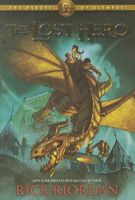
The first book in the series is The Lost Hero, published in July 2010.
The series primarily falls into the Science Fiction Adventure genre.
After the Titan War, a new, even greater threat emerges: the primordial earth goddess Gaea is awakening, stirring giants and ancient forces to overthrow the Olympian gods and destroy humanity. A fresh group of demigods—some Roman, some Greek—must unite across divided camps, fulfill a dangerous prophecy, and prevent the rise of Gaea before she unleashes catastrophic destruction on the mortal world. The series must be read in publication order (which aligns perfectly with the chronological story progression). Each book builds directly on the previous ones, with escalating stakes, evolving character relationships, major revelations about the prophecy, and consequences from earlier events that carry forward. Reading out of sequence would spoil critical plot twists, confuse character motivations and alliances, and diminish the emotional impact of the overarching quest—order matters significantly here.
The series does not currently have a new book scheduled.