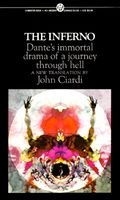

How to Read The Divine Comedy series
Must Read in Order
· Start with Book 1
Read in order—each book builds directly on the previous one.
The series must be read in its established order: Inferno, followed by Purgatorio, and concluding with Paradiso. The three parts form one continuous narrative and spiritual progression. Dante’s journey is linear and developmental; the lessons, imagery, and encounters in Hell provide the necessary foundation for the purgation in the second part and the transcendent vision in the third. Skipping or reading out of sequence would severely diminish the theological, emotional, and allegorical coherence, as each realm builds upon the previous one. The work is designed as a single poem in three canticles, not independent books.
About The Divine Comedy series
Series Premise
The core premise is an allegorical pilgrimage through the afterlife. The narrator, Dante himself, finds himself lost in a dark wood midway through life, symbolizing spiritual confusion and sin. Guided first by the Roman poet Virgil, he descends into Hell (Inferno), where he witnesses the eternal punishments of the damned, each calibrated to the nature of their sins. He then ascends the mountain of Purgatory, where repentant souls undergo purification to become worthy of heaven. Finally, he enters Paradise, guided by his beloved Beatrice, where he encounters the blessed souls in their spheres of heavenly light and ultimately experiences a direct vision of God. The journey serves as both a moral reckoning and a cosmic map, reflecting the consequences of human choices while illuminating the path from sin through repentance to divine love and understanding.
Main Characters
Dante (the pilgrim) is the central character and narrator, portrayed as a flawed but earnest seeker whose journey mirrors the reader’s own potential spiritual ascent. He begins fearful and confused, gradually gaining understanding, humility, and love. Virgil, the great Roman poet, serves as his wise and rational guide through Hell and most of Purgatory, representing human reason and classical virtue; his departure at the threshold of Paradise marks the limits of unaided intellect. Beatrice, Dante’s idealized beloved from his youth, appears as a radiant, divine figure who guides him through the heavenly spheres, embodying theology, grace, and sacred love. Recurring or notable supporting figures populate each realm: in Inferno, historical and mythological sinners such as Francesca da Rimini, Ulysses, and Count Ugolino illustrate specific vices; in Purgatorio, repentant souls like the proud, the envious, and the lustful undergo purification; in Paradiso, blessed souls including saints, theologians, emperors, and Dante’s own ancestors (such as Cacciaguida) offer wisdom and prophecy. Many real historical figures from Dante’s time appear, allowing pointed political and moral commentary.
Setting
The setting encompasses the entire medieval Christian cosmos. Inferno is a vast, funnel-shaped abyss beneath Jerusalem, descending in nine circles of increasing torment, from the relatively mild punishments of the virtuous pagans to the frozen depths where Satan is trapped. Purgatory is a mountain rising from the southern hemisphere, divided into terraces where souls cleanse specific sins through appropriate penances, culminating in the Earthly Paradise at its summit. Paradise consists of the nine celestial spheres (Moon, Mercury, Venus, Sun, Mars, Jupiter, Saturn, Fixed Stars, and Primum Mobile), each inhabited by blessed souls shining with varying degrees of divine light, culminating in the Empyrean — the timeless realm of pure divine presence beyond space and time. These realms are not merely locations but moral and spiritual states, vividly realized through Dante’s precise visual imagination and symbolic geography.
Tone & Themes
The tone evolves dramatically across the work. Inferno is vivid, dramatic, and often grotesque, filled with moral outrage, pity, and dark irony. Purgatorio shifts toward a more hopeful, reflective, and penitential mood, balancing suffering with the promise of redemption. Paradiso becomes increasingly luminous, philosophical, and ecstatic, moving toward intellectual rapture and ineffable mystery. Dante’s language is precise, musical, and richly symbolic, employing terza rima rhyme and dense layers of meaning. Themes are profound and multifaceted: the nature of sin and its consequences; free will and moral responsibility; the relationship between reason (embodied by Virgil) and faith (embodied by Beatrice); justice and divine mercy; the corrupting influence of politics and greed (especially Dante’s bitter critique of contemporary Florence and the Church); love as the driving force of the universe; and the soul’s gradual purification toward union with God. The poem also explores exile, the tension between earthly and heavenly citizenship, and the redemptive power of art and memory.
In the end, the Divine Comedy remains an astonishing achievement that maps the human condition with unmatched depth and imaginative power. Dante Alighieri created not merely a poem but a complete moral universe in which every soul finds its proper place according to its choices, loves, and failings. The work challenges readers to examine their own lives while offering a vision of hope: that through reason, repentance, and divine grace, even the lost and wandering can find their way toward light. Its influence echoes through centuries of literature, art, and thought, standing as a testament to the belief that poetry can encompass the full range of human experience — from the darkest abysses of sin to the brightest reaches of divine love. Reading it is to undertake a pilgrimage of the mind and spirit, emerging changed by the encounter with one man’s profound vision of justice, mercy, and the ordered beauty of creation.
FAQ
How many books are in The Divine Comedy series?
3 books
When will the next book in the series be released?
The Divine Comedy series does not have a new book scheduled.
When was the most recent book released?
Release information is not currently available.
What was the first book in the series?
First book information is not currently available.
What genre is The Divine Comedy series?
The series primarily falls into the Literary genre.
Do you need to read The Divine Comedy series in order?
Yes, the series should be read in order. The books follow a continuous story.
What is The Divine Comedy series about?
The core premise is an allegorical pilgrimage through the afterlife. The narrator, Dante himself, finds himself lost in a dark wood midway through life, symbolizing spiritual confusion and sin. Guided first by the Roman poet Virgil, he descends into Hell (Inferno), where he witnesses the eternal punishments of the damned, each calibrated to the nature of their sins. He then ascends the mountain of Purgatory, where repentant souls undergo purification to become worthy of heaven. Finally, he enters Paradise, guided by his beloved Beatrice, where he encounters the blessed souls in their spheres of heavenly light and ultimately experiences a direct vision of God. The journey serves as both a moral reckoning and a cosmic map, reflecting the consequences of human choices while illuminating the path from sin through repentance to divine love and understanding.
Is The Divine Comedy series finished?
The series does not currently have a new book scheduled.
More Series Like The Divine Comedy
If you enjoyed The Divine Comedy, here are more literary series to explore.