The Century Trilogy Books in Order
How to Read The Century Trilogy
Must Read in Order
· Start with Book 1
Read in order—each book builds directly on the previous one.
The series is best read in its published chronological order. The three books follow a clear historical timeline: the first covers the years leading up to and including the First World War, the second focuses on the interwar period and the Second World War, and the third spans the postwar era through the 1960s. While each volume can be enjoyed as a substantial standalone epic with its own dramatic arcs, the generational continuity, recurring characters, and long-term consequences of earlier events create powerful emotional resonance when read sequentially. The narrative builds cumulatively, with early choices and historical forces shaping later outcomes across decades.
About The Century Trilogy
Series Premise
The core premise follows the intertwined fates of five families across three generations: the aristocratic British Fitzherberts, the working-class Welsh Williamses, the German von Ulrichs, the Russian Peshkovs, and the American Dewars. Beginning in 1911 on the eve of the First World War, the story tracks how ordinary and extraordinary people navigate love, ambition, betrayal, and survival through the First World War, the Russian Revolution, the rise of fascism, the Second World War, the Cold War, and the social upheavals of the 1960s. The families’ paths cross repeatedly across continents, their personal choices and tragedies mirroring the larger forces reshaping the world. Through their eyes, readers witness the collapse of empires, the birth of new ideologies, the horrors of war, and the slow, uneven march toward greater freedom and equality.
Main Characters
The central characters belong to the five families whose lives intersect repeatedly. In the British branch, we follow the privileged Fitzherbert family alongside the working-class Williams family, whose members include coal miners, union organizers, and ambitious politicians. The German von Ulrich family represents the old European aristocracy confronting the rise of extremism. The Russian Peshkov brothers embody the hopes and brutal realities of the Soviet experiment. The American Dewar family provides a window into U.S. politics and diplomacy. Key recurring figures include strong-willed women who challenge societal norms, idealistic young men drawn into war, and pragmatic survivors who adapt to shifting realities. Supporting and recurring characters include politicians, soldiers, spies, lovers, and ordinary citizens whose personal stories illuminate larger historical forces. Many characters appear across multiple generations, allowing readers to witness how early decisions echo through time.
Setting
The setting spans the globe across the twentieth century, moving fluidly between Britain, Germany, Russia, the United States, and other locations as characters migrate, fight, or pursue their destinies. Key locations include the coal-mining valleys of Wales, the grand estates and political corridors of Edwardian England, the battlefields of the Western Front, revolutionary Petrograd, Nazi Berlin, wartime London, the beaches of Normandy, Cold War Washington, and the protest-filled streets of the 1960s. The settings are rendered with impressive historical accuracy and sensory detail, making readers feel the grit of coal mines, the elegance of aristocratic balls, the horror of trench warfare, and the optimism of postwar reconstruction. The changing landscapes mirror the century’s dramatic transformations.
Tone & Themes
The tone is sweeping, dramatic, and richly detailed, balancing grand historical events with intimate personal stories. Follett’s prose is clear, engaging, and highly readable, combining meticulous research with vivid, cinematic scenes. The mood shifts between hope and despair, triumph and tragedy, reflecting the turbulent century it portrays. Themes are profound and recurring: the impact of war on individuals and societies; the struggle for freedom, equality, and justice; the tension between love and duty; the corrupting influence of power and ideology; the resilience of the human spirit; and the idea that history is shaped not only by leaders but by the collective actions of ordinary people. The trilogy also explores class conflict, the changing role of women, the rise and fall of political systems, and the enduring power of family bonds amid global upheaval.
In the end, the Century Trilogy stands as a masterful testament to the power of ordinary lives caught in the currents of history. Ken Follett has created a vast, emotionally resonant tapestry that reminds us how the personal and the political are inseparably linked. Through love affairs, family betrayals, battlefield horrors, and quiet acts of courage, the trilogy reveals the human face of the twentieth century — its idealism and brutality, its progress and setbacks. For readers who enjoy epic historical fiction with rich character development and meticulous period detail, the series offers a deeply satisfying journey through one of the most consequential centuries in human history. It lingers like the memory of a long-forgotten letter or the echo of a distant battle — a powerful reminder that history is not merely dates and events, but the accumulated stories of people who loved, fought, suffered, and hoped. In its pages, we see that even the grandest movements of the world ultimately rest on the fragile, resilient hearts of individuals who simply tried to find their way forward. The trilogy affirms that while empires rise and fall, the human desire for freedom, connection, and meaning endures.
FAQ
How many books are in The Century Trilogy?
3 books
When will the next book in the series be released?
No new book is currently scheduled. The latest book, Edge of Eternity, was published in September 2014.
When was the most recent book released?
Edge of Eternity was published in September 2014.
What was the first book in the series?
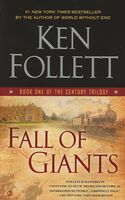
The first book in the series is Fall of Giants, published in October 2010.
What genre is The Century Trilogy?
The series primarily falls into the Historical genre.
Do you need to read The Century Trilogy in order?
Yes, the series should be read in order. The books follow a continuous story, starting with Fall of Giants.
What is The Century Trilogy about?
The core premise follows the intertwined fates of five families across three generations: the aristocratic British Fitzherberts, the working-class Welsh Williamses, the German von Ulrichs, the Russian Peshkovs, and the American Dewars. Beginning in 1911 on the eve of the First World War, the story tracks how ordinary and extraordinary people navigate love, ambition, betrayal, and survival through the First World War, the Russian Revolution, the rise of fascism, the Second World War, the Cold War, and the social upheavals of the 1960s. The families’ paths cross repeatedly across continents, their personal choices and tragedies mirroring the larger forces reshaping the world. Through their eyes, readers witness the collapse of empires, the birth of new ideologies, the horrors of war, and the slow, uneven march toward greater freedom and equality.
Is The Century Trilogy finished?
The series does not currently have a new book scheduled.
More Series Like The Century Trilogy
If you enjoyed The Century Trilogy, here are more historical series to explore.