
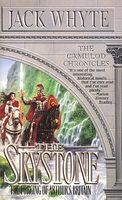
The Camulod Chronicles Books in Order
How to Read The Camulod Chronicles
Read in order—each book builds directly on the previous one.
The series is best read in its published chronological order. The books form one continuous, multi-generational narrative that spans several decades. Each volume advances the timeline, deepens the world-building, and develops the legacy of Camulod. While individual books contain self-contained arcs and satisfying resolutions, the emotional weight, character development, and historical progression build powerfully when read sequentially. The story is designed as a single, epic chronicle rather than disconnected adventures, so reading out of order significantly reduces the impact of the long-term consequences and the gradual emergence of Arthur.
About The Camulod Chronicles
Series Premise
The core premise is that the legend of King Arthur and Camelot has a basis in actual history. The series traces the rise of a Romano-British community called Camulod (a Latinized version of “Camelotâ€) as it struggles to preserve civilization, justice, and Roman values after the withdrawal of the Roman legions from Britain. The story begins with the establishment of a fortified colony by two visionary Roman officers and follows the multi-generational effort to build a stable society capable of resisting Saxon invaders and internal strife. Central to the saga is the creation of a professional cavalry force, the development of a code of honor, and the eventual birth and rise of Arthur as the leader who can unite the Britons. The narrative blends detailed military history, political intrigue, and personal drama to show how the Arthurian ideal could have emerged from the collapse of Roman Britain.
Main Characters
The central characters evolve across generations. The story begins with Publius Varrus and Caius Britannicus, two Roman officers who found Camulod and establish its guiding principles of justice, discipline, and protection of the weak. Their descendants and successors carry forward this vision, including Uther Pendragon and eventually Arthur himself. Supporting and recurring characters include skilled warriors, wise counselors, strong-willed women who influence politics and family life, and a diverse cast of Britons, Romans, Celts, and Saxons. Many characters appear across multiple books, allowing readers to witness the passage of time and the inheritance of ideals, burdens, and legacies.
Setting
The setting is post-Roman Britain in the 5th and early 6th centuries, a time of political fragmentation, Saxon invasions, and cultural transition. The heart of the story is the fortified colony of Camulod in the west of Britain (roughly corresponding to modern-day Wales and southwest England), which serves as a beacon of stability and Roman-influenced governance. The landscape is vividly rendered — rolling hills, dense forests, Roman roads falling into disrepair, ancient hill forts, and coastal settlements — creating a world that feels both majestic and precarious. The setting expands to include other regions of Britain, from the wild north to the embattled east, as well as occasional glimpses of continental Europe and the fading Roman Empire. The environment is not merely a backdrop but a constant influence on the characters’ lives, shaping their strategies, hardships, and hopes.
Tone & Themes
The tone is serious, epic, and grounded, with a strong sense of historical realism. Whyte’s prose is detailed and descriptive, often adopting a measured, almost documentary style that makes the ancient world feel tangible and lived-in. The mood is frequently somber and reflective, acknowledging the brutality and uncertainty of the era, but it is balanced by moments of hope, honor, and quiet triumph. Themes include the struggle to preserve civilization amid chaos; the tension between Roman order and Celtic independence; the importance of leadership, loyalty, and moral courage; the long-term consequences of war and political decisions; the blending of cultures and traditions; and the idea that legends are born from the cumulative efforts of many generations rather than a single heroic figure. The series also explores the cost of power, the nature of justice, and the human desire to create something lasting in the face of inevitable decline.
In the end, the Camulod Chronicles stands as a grand, thoughtful re-imagining of the Arthurian legend that feels both epic and intimately human. Jack Whyte has crafted a world where the seeds of Camelot are planted not through magic or destiny alone, but through the stubborn determination, moral courage, and hard work of generations of men and women who refused to let civilization collapse. The series offers more than adventure — it provides a profound meditation on leadership, legacy, and the fragile nature of hope in dark times. For readers who enjoy richly detailed historical fiction with a strong sense of realism and emotional weight, the saga is deeply satisfying. It lingers like the echo of a Roman trumpet across a misty British valley — noble, haunting, and a powerful reminder that great legends are built on the quiet sacrifices of those who came before. In its pages, we see that the dream of Camelot was never just about one king, but about the enduring human desire to create something better, even when the world seems determined to tear it down.
FAQ
9 books
No new book is currently scheduled. The latest book, The Eagle // The Eagles' Brood, was published in January 2005.
The Eagle // The Eagles' Brood was published in January 2005.
The first book in the series is The Skystone // Excalibur, published in February 1996.
The series primarily falls into the Historical genre.
Yes, the series should be read in order. The books follow a continuous story, starting with The Skystone // Excalibur.
The core premise is that the legend of King Arthur and Camelot has a basis in actual history. The series traces the rise of a Romano-British community called Camulod (a Latinized version of “Camelotâ€) as it struggles to preserve civilization, justice, and Roman values after the withdrawal of the Roman legions from Britain. The story begins with the establishment of a fortified colony by two visionary Roman officers and follows the multi-generational effort to build a stable society capable of resisting Saxon invaders and internal strife. Central to the saga is the creation of a professional cavalry force, the development of a code of honor, and the eventual birth and rise of Arthur as the leader who can unite the Britons. The narrative blends detailed military history, political intrigue, and personal drama to show how the Arthurian ideal could have emerged from the collapse of Roman Britain.
The series does not currently have a new book scheduled.