
Sword of Truth Books in Order
About the Sword of Truth series
Series Premise
The central premise revolves around the eternal struggle between freedom and tyranny, embodied by the conflict between Richard Cypher (later Richard Rahl), the Seeker of Truth, and various forces that seek to enslave or destroy individual liberty. Richard, an ordinary young woodsman from Westland, discovers he is the illegitimate son of Darken Rahl, the tyrannical ruler of D’Hara, and heir to immense magical power. He is forced to wield the Sword of Truth—a magical weapon that amplifies the wielder’s anger and righteousness—and becomes the prophesied figure who must stop the spread of evil and preserve free will. The world is divided by three ancient magical barriers: Westland (magic-free human lands), the Midlands (ruled by the Confessors and various kingdoms), and D’Hara (a brutal empire ruled by the Rahl family). The barriers begin to fail, unleashing chaos, war, and ancient evils. Richard’s journey takes him across continents, through wars, betrayals, and moral dilemmas as he learns to wield both the sword and his own magical abilities (Wizard’s First Rule: “People are stupid; they will believe almost anything they are told, especially if they want to believe it is trueâ€). The series expands into larger cosmic and philosophical conflicts: the struggle against the Imperial Order (a collectivist, anti-individual empire), the Keeper of the Underworld, the Chimes (magical beings that destroy magic), and ultimately the very nature of existence, choice, and reality. The books argue that individual freedom, reason, and self-interest are sacred, while collectivism, faith-based tyranny, and self-sacrifice lead to destruction.
Main Characters
Richard Cypher / Richard Rahl: The central protagonist—starts as a simple woods guide, becomes the Seeker of Truth, Lord Rahl, and eventually the most powerful wizard alive. Brilliant, moral, fiercely independent, and driven by an unshakable belief in individual liberty. He wields the Sword of Truth and learns to master both additive and subtractive magic.
- Kahlan Amnell: Mother Confessor of the Midlands—beautiful, powerful, and tragic. Her touch can enslave or destroy a person’s will, making intimacy dangerous. She is Richard’s great love, a woman of immense strength and duty who struggles with the burden of her power.
- Zeddicus Zu’l Zorander (Zedd): Richard’s grandfather—a First Wizard of the Midlands. Eccentric, powerful, mischievous, and deeply loving. He trains Richard in magic and serves as mentor and comic relief.
- Cara: A Mord-Sith—elite female warrior trained to torture and control others. Fiercely loyal to Richard after he frees her from her conditioning; becomes one of his closest protectors and friends.
- Supporting/recurring:
- Nicci — Former Sister of the Dark who becomes a complex ally and powerful sorceress.
- Rikka, Berdine, Raina — Other Mord-Sith who serve Richard.
- The Imperial Order leaders (Jagang, the Dreamwalker) and various villains who embody collectivist tyranny.
Setting
The world of the series is the world of the Three Lands—a medieval-inspired fantasy realm with magic, wizards, and monsters, but grounded in a consistent internal logic. The three main regions are:
- Westland — A magic-free zone created by ancient wizards to protect ordinary humans from magical tyranny. Thick forests, small villages, and the Hartland area where Richard grows up.
- Midlands — A patchwork of kingdoms ruled by the Confessors (women who can enslave a man’s will with a touch) and various rulers. Diverse landscapes: mountains, forests, cities, and the People’s Palace in D’Hara.
- D’Hara — A militaristic empire ruled by the Rahl family. Vast, harsh, and authoritarian, with the sprawling People’s Palace as its center.
The setting expands dramatically across the series: the Old World (ruled by the Imperial Order), the New World, the underworld, the Keeper’s realm, isolated islands, ancient ruins, and even other dimensions. The geography is detailed and functional—mountain passes, enchanted forests, frozen wastelands, and magical barriers shape the plot. The technology level is pre-industrial (swords, horses, castles), but magic is structured and rule-based (wizards’ rules, additive and subtractive magic, the Sword of Truth’s properties).
Tone & Themes
The tone is intense, passionate, and often preachy—epic fantasy with a strong philosophical agenda. Goodkind’s prose is straightforward and propulsive: long descriptive passages alternate with rapid action sequences and lengthy monologues about morality, freedom, and the evils of altruism. Violence is graphic and frequent—torture, rape, mass slaughter, dismemberment—but is portrayed as the inevitable result of evil ideologies rather than gratuitous. Sex scenes are explicit, often tied to themes of consent, dominance, and emotional vulnerability. The series is emotionally raw and polarizing: Richard’s speeches and moral lectures can feel heavy-handed or didactic, especially in later books, but they are delivered with genuine conviction. The tone is ultimately heroic and optimistic: individual will triumphs over collectivism, love conquers despair, and truth (embodied by the Sword) cuts through lies. It is empowering for readers who share the Objectivist worldview, frustrating for those who do not. The books are addictive—once the momentum builds, the sheer scale and stakes make them hard to put down.
Terry Goodkind’s Sword of Truth series is a monumental, polarizing epic fantasy that follows Richard Cypher/Rahl’s transformation from ordinary woodsman to the most powerful wizard alive, locked in a philosophical and literal war against tyranny and collectivism. Through Richard’s wielding of the Sword of Truth, his unbreakable love for Kahlan Amnell, and his alliance with Zedd, Cara, and others, the books explore freedom, reason, individual rights, and the dangers of altruism and faith-based oppression in a richly imagined world. With intense action, graphic violence, explicit romance, and lengthy moral lectures, the series delivers both thrilling adventure and a passionate Objectivist worldview. It is not subtle or understated—its message is bold, its stakes are apocalyptic, and its hero is uncompromising. Love it or hate it, the Sword of Truth remains a landmark in modern fantasy: a massive, unapologetic declaration that individual liberty is sacred, that evil must be fought without compromise, and that one man’s will can change the fate of the world.
FAQ
16 books total: 15 main + 1 extra story
No new book is currently scheduled. The latest book, Warheart, was published in November 2015.
Warheart was published in November 2015.
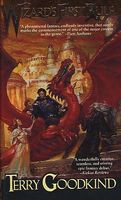
The first book in the series is Wizard's First Rule, published in August 1994.
The series primarily falls into the Fantasy genre.
The central premise revolves around the eternal struggle between freedom and tyranny, embodied by the conflict between Richard Cypher (later Richard Rahl), the Seeker of Truth, and various forces that seek to enslave or destroy individual liberty. Richard, an ordinary young woodsman from Westland, discovers he is the illegitimate son of Darken Rahl, the tyrannical ruler of D’Hara, and heir to immense magical power. He is forced to wield the Sword of Truth—a magical weapon that amplifies the wielder’s anger and righteousness—and becomes the prophesied figure who must stop the spread of evil and preserve free will. The world is divided by three ancient magical barriers: Westland (magic-free human lands), the Midlands (ruled by the Confessors and various kingdoms), and D’Hara (a brutal empire ruled by the Rahl family). The barriers begin to fail, unleashing chaos, war, and ancient evils. Richard’s journey takes him across continents, through wars, betrayals, and moral dilemmas as he learns to wield both the sword and his own magical abilities (Wizard’s First Rule: “People are stupid; they will believe almost anything they are told, especially if they want to believe it is trueâ€). The series expands into larger cosmic and philosophical conflicts: the struggle against the Imperial Order (a collectivist, anti-individual empire), the Keeper of the Underworld, the Chimes (magical beings that destroy magic), and ultimately the very nature of existence, choice, and reality. The books argue that individual freedom, reason, and self-interest are sacred, while collectivism, faith-based tyranny, and self-sacrifice lead to destruction.
The series does not currently have a new book scheduled.