
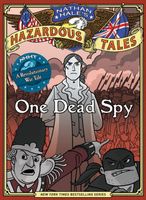
Nathan Hale's Hazardous Tales Books in Order
How to Read the Nathan Hale's Hazardous Tales series
Standalone stories, but characters and relationships develop across the series.
The series benefits most from being read in published order, though the individual historical tales themselves occur out of chronological sequence and can largely stand alone for casual enjoyment. The frame story featuring Nathan Hale and his executioners progresses subtly across the books, with evolving dynamics, running jokes, and occasional callbacks that reward sequential reading. Starting with the first book establishes the framing device and narrator voices, making later volumes richer. However, because each main story focuses on a self-contained historical episode with its own cast and context, readers can jump to topics of particular interest (such as a favorite war or event) without losing the plot. The ongoing narrator thread provides light continuity without demanding strict linearity.
About the Nathan Hale's Hazardous Tales series
Series Premise
At its core, the premise uses a clever frame narrative: the real-life Nathan Hale, the young American spy captured by the British during the Revolutionary War and sentenced to hang in 1776, delays his execution by spinning captivating “hazardous tales†from history. He claims that recounting these true stories of daring, disaster, ingenuity, and sacrifice will entertain and educate his captors long enough to buy time. Each volume dives into a different chapter of American (and occasionally related world) history, from Revolutionary War espionage and naval innovations to pioneer disasters, underground railroads, world wars, and daring expeditions. The tales highlight underdogs, unlikely heroes, catastrophic failures, and moments of profound courage, all grounded in meticulously researched facts while embracing the gruesome realities of war, disease, starvation, and betrayal.
Main Characters
The central narrator is the historical Nathan Hale himself—a earnest, optimistic young spy whose storytelling drive and patriotic spirit anchor the frame. He is joined by two British captors who provide comic contrast and commentary: the dour, skeptical Provost (a British officer overseeing the execution) and the enthusiastic, somewhat dim Hangman (often called E. Pluribus Hangman), whose interactions inject humor and tension as they react to the tales. In later volumes, additional narrators like Bill Richmond appear, expanding the framing cast. Each historical story features its own vivid ensemble of real figures brought to life: Revolutionary spies and generals such as George Washington, Ethan Allen, and Benedict Arnold; naval innovators and sailors in ironclad battles; desperate pioneers like those in the Donner Party; fearless conductors on the Underground Railroad including Harriet Tubman; defenders at the Alamo; World War I flying aces and soldiers; and explorers, journalists, or military leaders in later conflicts. Supporting characters range from ordinary soldiers and civilians caught in events to larger-than-life personalities whose decisions ripple through history. These figures recur only within their specific tales, but the consistent narrator trio ties everything together, creating a sense of an ongoing conversation across time.
Setting
The setting shifts dramatically with each volume, spanning centuries of American and related history. Early tales unfold amid the tense battlefields, forests, and colonial towns of the Revolutionary War era. Others transport readers to the ironclad naval clashes of the Civil War, the snow-choked Sierra Nevada mountains during the ill-fated Donner Party expedition, the muddy trenches and gas-filled battlefields of World War I, the secret networks of the Underground Railroad, the besieged Alamo, daring WWII bombing raids, or the frozen landscapes of Arctic exploration. The artwork adapts cleverly to each era—period clothing, weaponry, architecture, and environmental details feel authentic while remaining accessible and visually engaging. Whether depicting bustling 19th-century cities, remote frontiers, or war-torn skies, the environments serve as more than backdrops; they become active forces shaping the characters’ fates, from deadly winters to claustrophobic submarines or aerial dogfights.
Tone & Themes
The tone is energetic, irreverent, and darkly humorous, perfectly pitched for young readers who might otherwise find history boring. Nathan Hale’s cartooning style is expressive and dynamic, with exaggerated expressions, slapstick violence, and witty asides that soften grim subject matter without trivializing it. The books do not shy away from blood, death, or hardship—executions, massacres, frostbite, and battlefield carnage appear—but they balance horror with levity, educational asides, and moments of triumph. Themes run deep beneath the surface fun: the high cost of freedom and progress; human resilience in the face of overwhelming odds; the messy reality of heroism (few characters are flawless); the power of ingenuity, loyalty, and quick thinking; the impact of leadership decisions on ordinary lives; and the importance of remembering uncomfortable truths rather than sanitized legends. Subtle lessons about empathy, prejudice, and the long arc of history emerge organically through the stories.
In the end, the Nathan Hale's Hazardous Tales series stands as a brilliant reminder that history is anything but dusty—it is hazardous, hilarious, heartbreaking, and utterly human. Through sharp visuals, snappy dialogue, and unflinching honesty, Nathan Hale turns the gallows into a classroom and the classroom into an adventure, proving that even the most gruesome truths can captivate when told with heart and humor. For readers of any age who think history is just dates and dead people, these books deliver a shot of adrenaline straight to the imagination, leaving behind not just facts but a deeper appreciation for the courage, folly, and resilience that shaped the world we inhabit. Pick one up, and you might just find yourself stalling your own “execution†of boredom—one hazardous tale at a time.
FAQ
12 books
No new book in the series is currently scheduled. The latest book, Above the Trenches, was published in November 2023.
Above the Trenches was published in November 2023.
The first book in the series is Big Bad Ironclad!, published in August 2012.
The series primarily falls into the Historical genre.
It’s best to read the series in order. Each book has its own story, but ongoing character arcs and relationships develop across the series.
At its core, the premise uses a clever frame narrative: the real-life Nathan Hale, the young American spy captured by the British during the Revolutionary War and sentenced to hang in 1776, delays his execution by spinning captivating “hazardous tales†from history. He claims that recounting these true stories of daring, disaster, ingenuity, and sacrifice will entertain and educate his captors long enough to buy time. Each volume dives into a different chapter of American (and occasionally related world) history, from Revolutionary War espionage and naval innovations to pioneer disasters, underground railroads, world wars, and daring expeditions. The tales highlight underdogs, unlikely heroes, catastrophic failures, and moments of profound courage, all grounded in meticulously researched facts while embracing the gruesome realities of war, disease, starvation, and betrayal.
The series does not currently have a new book scheduled.