
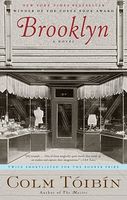
Eilis Lacey Books in Order
How to Read the Eilis Lacey series
Read in order—each book builds directly on the previous one.
The series should be read in order for maximum impact. The second book directly continues Eilis's life story, picking up roughly twenty years after the events of the first, with full knowledge of her earlier decisions, relationships, and compromises. While each novel delivers a complete emotional arc, the sequel's power lies in its contrast with the earlier one—seeing how youthful dilemmas resolve into midlife realities—and in the cumulative weight of Eilis's history. Reading sequentially preserves the gradual revelation of character and avoids diminishing the profound sense of continuity and consequence.
About the Eilis Lacey series
Series Premise
The core premise traces Eilis Lacey's evolution from a young woman in post-war Ireland to a middle-aged wife and mother in suburban America. In her early story, she leaves behind a stagnant life and close-knit family for opportunity in Brooklyn, navigating homesickness, cultural adjustment, unexpected romance, and a wrenching choice between two worlds that tests her loyalties and sense of self. Decades later, settled into marriage, family, and a close Italian-American community, a sudden revelation shatters the careful equilibrium she has built, forcing her to confront buried resentments, secrets, and the question of whether she can—or wants to—return to the Ireland she once fled. Through it all, TóibÃn examines how immigration reshapes identity, how marriages endure (or fracture) under unspoken pressures, and how the past inevitably resurfaces to demand reckoning.
Main Characters
Eilis Lacey (later Eilis Fiorello)
The central figure: intelligent, reserved, dutiful, and quietly determined. From a young woman pressured to emigrate, she grows into a composed yet inwardly restless wife and mother whose composure masks deep conflicts about home, love, and autonomy.
- Tony Fiorello
Eilis's Italian-American husband: warm, hardworking plumber from a large, boisterous family. Charming and devoted in youth, his later actions reveal flaws and vulnerabilities that complicate their long marriage.
- Rose Lacey
Eilis's older sister in Ireland: elegant, self-sacrificing, and instrumental in Eilis's emigration. Her influence lingers as a symbol of duty and unspoken family bonds.
- Jim Farrell
A significant figure from Eilis's Irish past: a local man whose presence in her early life—and reappearance later—stirs unresolved emotions and alternative paths not taken.
- Supporting and recurring figures
Setting
The settings contrast sharply yet feel intimately connected. The first phase unfolds in 1950s Enniscorthy, a modest Irish town of familiar streets, family homes, and economic stagnation, then shifts to vibrant, bustling Brooklyn—boarding houses, department stores, subway rides, Coney Island outings, and Italian-American neighborhoods alive with community and custom. The later story moves to 1970s Long Island suburbia: a tight-knit cul-de-sac of neighboring houses occupied by an extended Italian family, backyards, plumbing jobs, teenage children, and the quiet routines of middle-class American life. Ireland reenters as a place of return—familiar yet altered—highlighting the gulf between memory and reality.
Tone & Themes
The tone is measured, introspective, and deeply melancholic, with TóibÃn's precise, unadorned prose allowing quiet moments to carry immense force. There is little melodrama; instead, tension builds through internal conflict, subtle shifts in perception, and the accumulation of small, telling details. Themes revolve around belonging and exile, the cost of choices made under pressure, the persistence of homesickness even after decades away, marital fidelity and betrayal, family obligation versus individual desire, and the slow erosion—or reaffirmation—of identity in a new land. The narratives probe how women navigate limited options in mid-20th-century societies, how silence can be both protective and destructive, and how returning to origins can reveal how much one has changed.
In the end, the Eilis Lacey series lingers like the ache of a half-remembered song—subtle, haunting, and profoundly moving. Colm TóibÃn crafts a portrait of a life lived between two shores, where every choice carries quiet consequences and no return is ever truly simple. These books invite readers to sit with uncertainty, to feel the weight of what might have been, and to recognize the courage in ordinary endurance. Through Eilis's eyes, we see the slow, inevitable pull of time and place, and emerge with a deeper understanding of how we carry home within us, even when the world has moved on.
FAQ
2 books
No new book in the series is currently scheduled. The latest book, Long Island, was published in May 2024.
Long Island was published in May 2024.
The first book in the series is Brooklyn, published in May 2009.
The series primarily falls into the Historical genre.
Yes, the series should be read in order. The books follow a continuous story, starting with Brooklyn.
The core premise traces Eilis Lacey's evolution from a young woman in post-war Ireland to a middle-aged wife and mother in suburban America. In her early story, she leaves behind a stagnant life and close-knit family for opportunity in Brooklyn, navigating homesickness, cultural adjustment, unexpected romance, and a wrenching choice between two worlds that tests her loyalties and sense of self. Decades later, settled into marriage, family, and a close Italian-American community, a sudden revelation shatters the careful equilibrium she has built, forcing her to confront buried resentments, secrets, and the question of whether she can—or wants to—return to the Ireland she once fled. Through it all, TóibÃn examines how immigration reshapes identity, how marriages endure (or fracture) under unspoken pressures, and how the past inevitably resurfaces to demand reckoning.
The series does not currently have a new book scheduled.