Dunkirk Books in Order
#
Title
Date
About the Dunkirk series
Series Premise
The series revolves around the Littlefield family—a resilient, upper-middle-class British clan whose members become deeply involved in the war effort across various fronts. As the world plunges deeper into WWII, each sibling and key relative takes on distinct roles: one as an RAF fighter pilot defending British skies, another in special operations or intelligence, others aiding the French Resistance, serving in ground forces, or contributing through home-front efforts and later Allied offensives. The premise hinges on their unwavering commitment to defeating the Axis powers, even as personal sacrifices, betrayals, romances, and moral dilemmas mount. Starting from the chaos post-Dunkirk—when evacuation survivors regroup and Britain braces for the Luftwaffe—the narrative expands to encompass the Battle of Britain, North African campaigns, Pearl Harbor's ripple effects and America's entry, the invasion of Italy, D-Day and Normandy, the Battle of the Bulge, the liberation of France, and the final assaults on the German heartland (culminating in crossings of the Rhine). Historical events are faithfully depicted, often through the family's eyes, with threads of espionage, aerial combat, underground resistance, and large-scale military strategy. Overarching questions include survival, loyalty, the price of victory, and how ordinary individuals shape history amid extraordinary circumstances. The family unit serves as the emotional anchor, illustrating how war touches every aspect of life and demands courage from civilians and soldiers alike.
Main Characters
The series centers on the Littlefield family, whose members drive the multi-threaded plot:
- Jeremy Littlefield: Often highlighted as a central figure, an RAF pilot (likely Spitfire or Hurricane flyer) who embodies aerial heroism during the Battle of Britain and beyond. Resourceful, brave, and introspective, he faces intense combat and personal growth.
- Siblings and relatives (including brothers/sisters and possibly cousins or in-laws): One becomes involved in British intelligence/SOE (Special Operations Executive), parachuting into occupied Europe to support Resistance efforts; another may serve in ground forces or commando units during invasions; female family members contribute through nursing, code-breaking, or Resistance liaison roles. Their diverse assignments allow exploration of air, land, sea, and covert warfare.
- Supporting figures: Allies in the French Resistance (maquisards, local patriots), fellow RAF squadron mates, SOE operatives, American forces post-1941, German antagonists (Luftwaffe pilots, Gestapo officers), and love interests who add romantic and emotional layers.
The family dynamic—strained by separation, worry, and loss yet fortified by love and shared purpose—provides the emotional core, with each member's arc intersecting during major events.
Setting
The settings span the breadth of WWII's European (and occasionally Pacific-influenced) theaters, evolving with the war's progression. It begins in 1940 England—bomb-scarred airfields, blackout-lit London, coastal defenses, and the English Channel—during the tense months after Dunkirk and into the Battle of Britain. Subsequent books shift to dogfights over southern England, the deserts of North Africa, occupied France (with clandestine Resistance networks in villages and cities), the skies and battlefields of the Mediterranean, Normandy beaches and hedgerows in 1944, snowy Ardennes forests during the Bulge, liberated Paris, and finally the industrial Ruhr and Rhine regions of Germany in 1945.
Historical authenticity shines through detailed depictions of period technology (Spitfires and Messerschmitts, Enigma codes, SOE gadgets, tanks in desert warfare), wartime society (rationing, evacuees, blackout curtains), and key locations (RAF bases, French chateaus used as safe houses, Allied command posts). The multi-front approach creates a global yet intimate scope, contrasting the home front's quiet endurance with the chaos of combat zones.
Tone & Themes
The tone is earnest, patriotic, and emotionally resonant—heroic without descending into jingoism, gritty yet restrained. Jackson emphasizes valor, sacrifice, and unbreakable family ties while acknowledging the horrors of war: loss, fear, moral ambiguity, and the toll on individuals. Violence and suffering are portrayed realistically but not gratuitously; the focus remains on human resilience, acts of bravery, and moments of hope amid darkness. There's an uplifting undercurrent of determination and eventual triumph, tempered by poignant tragedy and the recognition that victory comes at immense cost. The narrative voice is straightforward and immersive, blending suspenseful action sequences with tender interpersonal moments, evoking classic WWII epics that celebrate Allied perseverance while honoring the era's complexities.
Lee Jackson's After Dunkirk series stands as a sweeping, meticulously researched tribute to the Allied effort in World War II, using the Littlefield family's odyssey to humanize one of history's most defining conflicts. Through nine interconnected novels, it captures the war's vast scale—from desperate defense to decisive offense—while grounding epic events in personal stakes, courage, and sacrifice. Readers drawn to character-focused historical fiction will appreciate the blend of thrilling action, authentic detail, and heartfelt drama, all delivered with restraint and respect for the era's real heroes. As the series marches toward VE Day and beyond, it ultimately affirms themes of unity, endurance, and the enduring power of family in the face of overwhelming adversity, making it a compelling, binge-worthy saga for WWII enthusiasts seeking both breadth and depth in their reading.
FAQ
How many books are in the Dunkirk series?
9 books
When will the next book in the series be released?
No new book in the series is currently scheduled. The latest book, Crossing the Rhine, was published in April 2026.
When was the most recent book released?
Crossing the Rhine was published in April 2026.
What was the first book in the series?
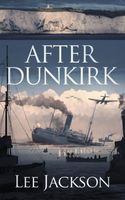
The first book in the series is After Dunkirk, published in September 2020.
What genre is the Dunkirk series?
The series primarily falls into the Historical genre.
What is the Dunkirk series about?
The series revolves around the Littlefield family—a resilient, upper-middle-class British clan whose members become deeply involved in the war effort across various fronts. As the world plunges deeper into WWII, each sibling and key relative takes on distinct roles: one as an RAF fighter pilot defending British skies, another in special operations or intelligence, others aiding the French Resistance, serving in ground forces, or contributing through home-front efforts and later Allied offensives. The premise hinges on their unwavering commitment to defeating the Axis powers, even as personal sacrifices, betrayals, romances, and moral dilemmas mount. Starting from the chaos post-Dunkirk—when evacuation survivors regroup and Britain braces for the Luftwaffe—the narrative expands to encompass the Battle of Britain, North African campaigns, Pearl Harbor's ripple effects and America's entry, the invasion of Italy, D-Day and Normandy, the Battle of the Bulge, the liberation of France, and the final assaults on the German heartland (culminating in crossings of the Rhine). Historical events are faithfully depicted, often through the family's eyes, with threads of espionage, aerial combat, underground resistance, and large-scale military strategy. Overarching questions include survival, loyalty, the price of victory, and how ordinary individuals shape history amid extraordinary circumstances. The family unit serves as the emotional anchor, illustrating how war touches every aspect of life and demands courage from civilians and soldiers alike.
Is the Dunkirk series finished?
The series does not currently have a new book scheduled.
More Series Like Dunkirk
If you enjoyed Dunkirk, here are more historical series to explore.