
Dexter Books in Order
How to Read the Dexter series
Standalone stories, but characters and relationships develop across the series.
The series is best read in its published chronological order. The books form a continuous narrative arc in which Dexter's character develops organically—his relationships mature, family dynamics shift with the introduction of children, personal stakes intensify, and long-term consequences from earlier actions reverberate through later stories. While individual cases often deliver self-contained thrills and resolutions, the emotional depth, recurring motifs like the Dark Passenger's influence, and cumulative character growth make sequential reading essential. Straying from the order would dilute the impact of Dexter's gradual humanization (or lack thereof) and the building tension around his increasingly precarious secrecy.
About the Dexter series
Series Premise
The core premise centers on Dexter Morgan, a blood spatter analyst for the Miami-Dade Police Department who harbors a monstrous secret: he is a highly functioning sociopath with an irresistible compulsion to kill. Guided by the "Harry Code"—a strict set of rules instilled by his adoptive father, a principled cop—Dexter only targets those who have escaped legal justice, such as murderers, rapists, and predators who prey on the innocent. By day, he maintains a carefully constructed facade of normalcy, complete with a girlfriend (later wife) and stepchildren, while by night he indulges his "Dark Passenger," the internal voice that drives his ritualistic slayings. Each installment thrusts Dexter into complex murder investigations where his professional expertise collides with his secret life, often forcing him to hunt more dangerous killers while evading suspicion from colleagues. Over time, the narrative deepens to explore Dexter's evolving personal world, including family responsibilities, romantic entanglements, the resurfacing of his traumatic past, and the growing complications of maintaining his double existence amid escalating threats, copycats, and internal doubts about his own nature.
Main Characters
Dexter Morgan commands the series as its charismatic yet chilling protagonist: a charming, intelligent, and meticulously organized man whose emotional flatness and ritualistic precision make him both fascinating and monstrous. His adoptive sister, Detective Debra Morgan, serves as a fiery, foul-mouthed recurring foil—her brash dedication to police work and genuine affection for Dexter create constant tension, as she unwittingly draws him deeper into cases while remaining oblivious (at least initially) to his true nature. Rita Bennett (later Morgan) embodies Dexter's attempt at normalcy: a kind but damaged woman with two children from a previous abusive marriage, whose relationship with Dexter evolves from convenient cover to something more complicated and domestic. The children, Astor and Cody, grow in significance as the saga progresses, inheriting subtle hints of darkness that force Dexter to confront his role as a mentor and father figure. Harry Morgan, though deceased, looms as a spectral influence through flashbacks and the Code he bequeathed. Supporting and recurring characters add rich texture: Sergeant Albert Doakes, the suspicious and intimidating colleague whose relentless scrutiny threatens Dexter's secrecy; Vince Masuoka, the quirky forensic technician and coworker who provides comic relief; Angel Batista (no relation), a cheerful medical examiner whose warmth contrasts the darkness; and a rotating cast of vicious antagonists—sadistic killers, cultish figures, and personal rivals—whose paths cross Dexter's in increasingly personal ways. Later arcs introduce deeper family revelations, including ties to Dexter's biological brother, further complicating his carefully constructed world.
Setting
The setting is vividly anchored in the sun-drenched, neon-lit underbelly of contemporary Miami, a city of stark contrasts that perfectly mirrors Dexter's duality. Steamy tropical heat, glittering waterways, bustling Cuban-influenced neighborhoods, and glittering nightlife provide a vibrant yet seedy backdrop where beauty and brutality coexist. Crime scenes range from opulent waterfront mansions to derelict warehouses and remote Everglades hideouts, while the sterile labs and chaotic bullpen of the Miami-Dade Police Department offer a grounded professional counterpoint. Occasional forays beyond the city—into suburban domesticity or more exotic locales—heighten the sense of a world closing in on Dexter's carefully balanced life, with the ever-present humidity and threat of hurricanes adding atmospheric pressure to the unfolding chaos.
Tone & Themes
The tone is gleefully dark, irreverent, and laced with black humor that borders on the absurd, delivered through Dexter's first-person narration—witty, detached, and delightfully self-aware. Lindsay's prose is crisp and propulsive, mixing graphic violence with playful wordplay and ironic observations that make even gruesome scenes oddly entertaining. Themes probe the nature of monstrosity and morality from an outsider's perspective: the thin line between justice and vigilantism, the psychological scars of childhood trauma, the performative nature of "normal" human emotions and relationships, the addictive pull of violence, and the question of whether a predator can ever truly change or find redemption. The stories grapple with cycles of abuse, the ethics of killing killers, and the isolating cost of living behind a mask, all while offering wry commentary on human hypocrisy and the human condition.
In the end, the Dexter series by Jeff Lindsay stands as a gleefully wicked plunge into the mind of a monster who believes himself a hero, delivering thrills, laughs, and uncomfortable questions in equal measure. It seduces readers with its clever premise and unflinching gaze at the darkness lurking beneath civilized facades, while never letting us forget the human (or inhuman) cost of playing god with other people's lives. For those who relish morally gray antiheroes and sharp, subversive storytelling, the saga offers a bloody good time—one that lingers like a carefully cleaned crime scene, polished on the surface yet haunted by what lies beneath. It reminds us that the most terrifying predators are often the ones who smile politely and blend seamlessly into our everyday world.
FAQ
8 books
No new book is currently scheduled. The latest book, Dexter is Dead, was published in July 2015.
Dexter is Dead was published in July 2015.
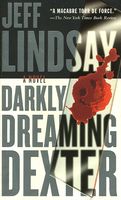
The first book in the series is Darkly Dreaming Dexter, published in July 2004.
The series primarily falls into the Police Procedural genre.
It’s best to read the series in order. Each book has its own story, but ongoing character arcs and relationships develop across the series.
The core premise centers on Dexter Morgan, a blood spatter analyst for the Miami-Dade Police Department who harbors a monstrous secret: he is a highly functioning sociopath with an irresistible compulsion to kill. Guided by the "Harry Code"—a strict set of rules instilled by his adoptive father, a principled cop—Dexter only targets those who have escaped legal justice, such as murderers, rapists, and predators who prey on the innocent. By day, he maintains a carefully constructed facade of normalcy, complete with a girlfriend (later wife) and stepchildren, while by night he indulges his "Dark Passenger," the internal voice that drives his ritualistic slayings. Each installment thrusts Dexter into complex murder investigations where his professional expertise collides with his secret life, often forcing him to hunt more dangerous killers while evading suspicion from colleagues. Over time, the narrative deepens to explore Dexter's evolving personal world, including family responsibilities, romantic entanglements, the resurfacing of his traumatic past, and the growing complications of maintaining his double existence amid escalating threats, copycats, and internal doubts about his own nature.
The series does not currently have a new book scheduled.