
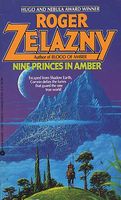
Chronicles of Amber Books in Order
How to Read the Chronicles of Amber series
Read in order—each book builds directly on the previous one.
The reading order matters significantly for full enjoyment, as the saga divides into two distinct cycles that build upon one another. The first five books form the Corwin Cycle, narrated by Prince Corwin as he rediscovers his heritage and navigates immediate crises. The subsequent five comprise the Merlin Cycle, shifting focus to his son and expanding the scope into deeper mysteries of Chaos and technology-magic fusion. While each book offers self-contained adventures and resolutions, the overarching story—family secrets, evolving relationships, and cosmic consequences—unfolds with greater resonance when read sequentially. Jumping in out of order risks missing crucial context about character motivations and the escalating stakes, though the vivid writing and brisk pacing make individual volumes accessible. Most readers and critics recommend experiencing the full arc in publication sequence for the richest tapestry.
About the Chronicles of Amber series
Series Premise
At its core, the series explores a grand cosmological conflict between Order and Chaos. Amber is the one true world of perfect reality and stability; all other universes—including our Earth—are mere “Shadows,†reflections cast by the tension between Amber and its antithesis, the Courts of Chaos. Members of Amber’s royal family possess the ability to walk through these Shadows, shaping them at will by subtle changes in perception, and to traverse vast distances via magical Trump cards that depict family members or locations. The central premise follows bitter rivalries within this dysfunctional, superhuman family as they vie for the throne of Amber while facing existential threats from Chaos, ancient curses, hidden paternities, and the enigmatic forces embodied by the Pattern (the symbol of Order in Amber) and the Logrus (the serpent of Chaos). Personal vendettas, shifting alliances, amnesia, and world-shaking wars intertwine as characters grapple with power, identity, loyalty, and the very nature of reality itself.
Main Characters
The royal family of Amber dominates the canvas, a sprawling, colorful brood of Oberon’s children—each with distinctive hair colors signaling their maternal lines, superhuman strength, endurance, and artistic talents. Corwin, the charismatic narrator of the first cycle, begins as an amnesiac in a Shadow hospital, gradually revealed as a brooding, poetic prince with a silver-and-black heraldic scheme, a gift for strategy, and a complex mix of cynicism and honor. His siblings form a volatile ensemble of rivals and occasional allies: the ambitious and treacherous Eric (black, red, and silver), the scholarly sorceress Fiona, the dashing Bleys, the sea-faring pirate Caine, the forest guardian Julian, the steadfast warrior Benedict (the eldest and greatest tactician), the trickster Random (who evolves into a key supporter and eventual king), and others like Deirdre, Florimel, and Brand. Their father, the enigmatic and often absent King Oberon, casts a long shadow. In the Merlin Cycle, the focus shifts to Merlin (son of Corwin and the Chaos princess Dara), a more tech-savvy, good-natured sorcerer who balances life as a computer programmer in Shadow Earth with royal duties. Recurring figures include the loyal yet roguish Random, the enigmatic Dworkin (creator of the Pattern and often mad prophet), various Chaos lords and ladies, and supporting characters like the lawyer Bill Roth or Merlin’s enigmatic acquaintances from Shadow. The family’s interactions crackle with tension—witty banter masking deadly plots, alliances fracturing over thrones or ancient grievances—making them feel vividly human despite their godlike abilities.
Setting
The setting is magnificently expansive yet intimately focused. At its heart lies the medieval-flavored kingdom of Amber, a jewel-like city of gleaming spires atop Mount Kolvir, overlooking a vast sea and the fabled Pattern in its depths—a labyrinthine design that grants those who walk it the power to traverse Shadow. Rebma, its underwater mirror city, and the Courts of Chaos—a shifting, surreal realm of constant flux, demons, and the Abyss—serve as polar opposites. Between them sprawl infinite Shadows: from shadowy Avalon-like realms of legend to modern Earth cities where characters have lived incognito for centuries. Travel through Shadow feels dreamlike and cinematic—altering details like tree species or road curves shifts one into entirely new worlds. Sensory richness abounds: the salty tang of Amber’s harbor, the electric buzz of the Pattern, the disorienting whirl of Chaos. Technology and magic coexist uneasily in later tales, with computers and guns appearing in Shadows alongside blades and sorcery, creating a unique tone that feels timeless yet playfully anachronistic.
Tone & Themes
Zelazny’s tone is sophisticated, fast-paced, and irreverent, laced with sharp humor, introspective monologues, and bursts of lyrical beauty. First-person narration gives an intimate, sometimes unreliable edge, blending hard-boiled cynicism with mythic grandeur. There is swordplay and sorcery aplenty, yet the emphasis lies on clever dialogue, psychological insight, and moral ambiguity rather than exhaustive world-building. Themes run deep: the corrosive effects of power and immortality on family bonds, the illusion of free will versus predestination, the tension between order and chaos in both society and the self, redemption through suffering, the search for identity amid forgotten pasts, and the blurred line between hero and anti-hero. Betrayal and reconciliation, the weight of paternal legacy, and the seductive danger of absolute power recur, all examined with philosophical nuance and a touch of existential flair. Romance appears sporadically—often passionate but secondary to survival and ambition—while questions of reality, perception, and creation add intellectual layers.
In the end, the Chronicles of Amber endures as a brilliant, addictive odyssey that reshaped fantasy by marrying high-concept cosmology with intimate, character-driven drama. Zelazny invites readers to walk the Pattern alongside princes and sorcerers, where every Shadow hides possibility and every family dinner risks apocalypse. The series leaves an indelible impression: a celebration of imagination’s power to shape reality, a cautionary tale about the price of immortality, and a rollicking good time filled with duels, deceptions, and dawning wonders. Whether you lose yourself in Corwin’s quest for redemption or Merlin’s dance between worlds, Amber offers a realm where the only constant is change—and where the greatest battles are often fought within the heart. Step through the Trump, walk the Pattern, and discover why this saga continues to cast its own infinite shadows across the genre.
FAQ
10 books
No new book is currently scheduled. The latest book, Prince of Chaos, was published in January 1991.
Prince of Chaos was published in January 1991.
The first book in the series is Nine Princes in Amber, published in January 1970.
The series primarily falls into the Fantasy genre.
Yes, the series should be read in order. The books follow a continuous story, starting with Nine Princes in Amber.
At its core, the series explores a grand cosmological conflict between Order and Chaos. Amber is the one true world of perfect reality and stability; all other universes—including our Earth—are mere “Shadows,†reflections cast by the tension between Amber and its antithesis, the Courts of Chaos. Members of Amber’s royal family possess the ability to walk through these Shadows, shaping them at will by subtle changes in perception, and to traverse vast distances via magical Trump cards that depict family members or locations. The central premise follows bitter rivalries within this dysfunctional, superhuman family as they vie for the throne of Amber while facing existential threats from Chaos, ancient curses, hidden paternities, and the enigmatic forces embodied by the Pattern (the symbol of Order in Amber) and the Logrus (the serpent of Chaos). Personal vendettas, shifting alliances, amnesia, and world-shaking wars intertwine as characters grapple with power, identity, loyalty, and the very nature of reality itself.
The series does not currently have a new book scheduled.