
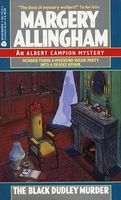
Albert Campion Books in Order
About the Albert Campion series
Series Premise
Albert Campion operates as a private consultant and adventurer in an England where crime often hides behind respectable facades—country houses, artistic circles, theatrical worlds, or wartime secrets. He is not a professional detective in the traditional sense but a resourceful gentleman who intervenes in mysteries when friends, acquaintances, or sheer circumstance draw him in. Early books portray him as a mysterious figure with underworld connections, willing to bend rules or pose as a harmless fool to uncover truth. As the series progresses, his role shifts toward more official collaboration with Scotland Yard (via Superintendent Stanislaus Oates and later Chief Inspector Luke), and his personal life deepens with marriage and fatherhood.
Each novel presents a standalone puzzle—murders, disappearances, thefts, or threats—often tied to family legacies, hidden identities, or societal pressures. Recurring motifs include ancient artifacts (chalices, daggers), eccentric households, psychological manipulation, and the clash between old-world tradition and modern threats (crime syndicates, espionage, postwar disillusionment). Campion's investigations reveal layers of deception, with solutions hinging on keen observation, psychological insight, and occasional physical daring. The overarching narrative traces Campion's maturation: from a detached, enigmatic operator in the 1920s–1930s to a more grounded family man confronting moral complexities in later works. Themes of loyalty, redemption, class tensions, and the fragility of civilization weave through the stories, culminating in reflective, character-driven tales.
Main Characters
Albert Campion: The protagonist—a tall, thin, fair-haired man in his thirties (at the start), bespectacled with a perpetually vague, foolish expression that masks sharp intellect and quiet authority. An alias (his real name and aristocratic background hinted but never fully revealed), he is resourceful, courageous, and deeply moral, often posing as an "Uncle Albert" figure—comforting yet formidable. He evolves from enigmatic adventurer to devoted husband and father.
- Magersfontein Lugg: Campion's manservant and former burglar—large, lugubrious, Cockney-accented, and endlessly complaining. Loyal despite grumbling, he provides comic relief, practical aid, and streetwise insight.
- Amanda Fitton (later Lady Amanda): Introduced as a spirited teenage inventor in Sweet Danger, she grows into Campion's love interest and wife—intelligent, adventurous, and independent. Their relationship adds warmth and equality.
- Supporting figures: Superintendent Stanislaus Oates (gruff Scotland Yard ally), Chief Inspector Charlie Luke (energetic later collaborator), various eccentric suspects and victims (artists, aristocrats, theater folk), and family members like Campion's son Rupert in later books.
Setting
The series is quintessentially English, rooted in interwar and mid-20th-century Britain, with vivid contrasts between rural idylls and urban grit. Early stories favor isolated country estates—sprawling mansions like Black Dudley or Mystery Mile's coastal hideaway—evoking classic locked-room or house-party mysteries amid fog-shrouded moors, ancient halls, and hidden passages.
London features prominently as Campion's base: his Bottle Street flat (above a police station) in Piccadilly Circus, bohemian artistic districts, theaters, and wartime blackouts. Later books expand to suburban enclaves, provincial towns, foggy docks, and rural Suffolk-like landscapes (inspired by Allingham's own Essex home). Settings serve the plot: opulent drawing rooms hide secrets, foggy streets enable shadowy pursuits, and wartime or postwar austerity adds realism and tension. Allingham's descriptions are atmospheric and precise—rain-slicked streets, flickering gaslights, the hum of society gatherings—creating a tangible sense of time and place that grounds the mysteries in everyday England.
Tone & Themes
The tone evolves remarkably across the series, reflecting Allingham's growth as a writer. Early entries are light, adventurous, and playful—almost thriller-like—with a touch of farce, eccentric characters, and high-spirited escapades. Campion's bland, affable demeanor and self-deprecating humor provide comic relief, while plots deliver fast-paced intrigue and clever twists.
Mid-series books (1930s–1940s) deepen into sophisticated Golden Age mysteries: atmospheric, witty, and psychologically astute, balancing suspense with elegant prose and subtle social satire. Violence remains off-page or restrained, focusing on deduction and character motives rather than gore. Later novels (1950s–1960s) adopt a darker, more introspective tone—exploring postwar trauma, moral ambiguity, urban decay, and human vulnerability—while retaining Allingham's trademark warmth, intelligence, and quiet optimism. Overall, the series is intelligent and entertaining, never grim or cynical, with humor arising from eccentric personalities, ironic observations, and Campion's wry commentary. It's reassuring yet intellectually satisfying, appealing to readers who enjoy puzzles wrapped in humane insight.
The Albert Campion Mysteries represent Margery Allingham at her finest—elegant, witty, and profoundly humane detective fiction that transcends its Golden Age roots. Through Campion's deceptively mild persona, Allingham explores deception, loyalty, and redemption with subtlety and charm, delivering puzzles that satisfy while offering lasting emotional resonance. The series rewards sequential reading for character growth and tonal evolution, from playful 1930s adventures to thoughtful postwar reflections. For fans of intelligent, character-rich mysteries—whether newcomers or longtime admirers—Campion remains an endlessly engaging companion, proving that the most unassuming sleuth can uncover the deepest truths.
FAQ
43 books total: 23 main + 20 extra stories
No new book is currently scheduled. The latest book, The Return of Mr. Campion, was published in October 1989.
The Return of Mr. Campion was published in October 1989.
The first book in the series is The Crime at Black Dudley // The Black Dudley Murder, published in January 1929.
The series primarily falls into the Mystery genre.
Albert Campion operates as a private consultant and adventurer in an England where crime often hides behind respectable facades—country houses, artistic circles, theatrical worlds, or wartime secrets. He is not a professional detective in the traditional sense but a resourceful gentleman who intervenes in mysteries when friends, acquaintances, or sheer circumstance draw him in. Early books portray him as a mysterious figure with underworld connections, willing to bend rules or pose as a harmless fool to uncover truth. As the series progresses, his role shifts toward more official collaboration with Scotland Yard (via Superintendent Stanislaus Oates and later Chief Inspector Luke), and his personal life deepens with marriage and fatherhood. Each novel presents a standalone puzzle—murders, disappearances, thefts, or threats—often tied to family legacies, hidden identities, or societal pressures. Recurring motifs include ancient artifacts (chalices, daggers), eccentric households, psychological manipulation, and the clash between old-world tradition and modern threats (crime syndicates, espionage, postwar disillusionment). Campion's investigations reveal layers of deception, with solutions hinging on keen observation, psychological insight, and occasional physical daring. The overarching narrative traces Campion's maturation: from a detached, enigmatic operator in the 1920s–1930s to a more grounded family man confronting moral complexities in later works. Themes of loyalty, redemption, class tensions, and the fragility of civilization weave through the stories, culminating in reflective, character-driven tales.
The series does not currently have a new book scheduled.