
A Libertus Mystery of Roman Britain Books in Order
Complete reading order for the Libertus Mystery of Roman Britain series.
#
Title
Date
About the Libertus Mystery of Roman Britain series
Series Premise
Libertus, a former Celtic slave freed and granted Roman citizenship, ekes out a living creating intricate mosaics in the bustling provincial town of Glevum (modern Gloucester) while reluctantly accepting commissions from wealthy patrons to solve mysteries, often murders or disappearances that the official authorities overlook or mishandle. His talent for spotting overlooked details—much like the symmetries in his mosaic designs—draws him into cases involving poisoned chalices, stolen artifacts, political intrigue, family betrayals, and crimes tied to the rigid Roman social hierarchy, where he must tread carefully to avoid offending powerful citizens or endangering his own fragile status.
The series is best read in publication order, as Libertus's personal circumstances evolve—his growing family, deepening ties to his patron Marcus Septimus, his adopted son Junio's maturation and eventual role in investigations, and subtle accumulations of backstory and recurring relationships—provide meaningful continuity, character development, and richer context for ongoing themes of loyalty and social mobility. That said, each installment functions as a self-contained historical mystery with its own complete investigation, distinct crime, fresh cast of suspects, and satisfying resolution, allowing readers to enjoy any book standalone without missing essential plot points or spoilers.
Main Characters
Longinus Flavius Libertus — The central protagonist and narrator: a middle-aged, shrewd mosaicist who survived enslavement and now enjoys fragile freedom as a citizen. Practical, resourceful, and quietly rebellious, he uses his puzzle-solving skills (honed from laying intricate floors) to crack cases, often with reluctant involvement driven by patronage or personal risk; his dry humor, moral compass, and Celtic perspective provide the series' distinctive voice.
- Junio — Libertus's adopted son: introduced as a young freedman, he matures across the series into a capable investigator in his own right, assisting his father and eventually taking center stage in later books. Loyal, observant, and increasingly skilled, Junio adds generational warmth and continuity.
- Marcus Septimus — Libertus's powerful patron: a wealthy Roman citizen and local official whose commissions frequently pull Libertus into danger. Arrogant yet fair-minded, Marcus represents the Roman elite, creating tension and opportunity in their unequal relationship.
Setting
The mysteries unfold in and around Glevum, a thriving Roman colonia in western Britannia during the reign of Commodus and early Severan emperors—a frontier province blending Roman engineering (forums, baths, villas, roads) with lingering Celtic traditions, misty landscapes, and rural isolation. Libertus's workshop and modest home sit amid the bustling streets of the town, while cases lead to grand villas of the elite, remote farmsteads, legionary forts, sacred groves, chariot races, and the surrounding countryside of forests, rivers, and marshes. The era's details—oil lamps, togas and tunics, slave markets, imperial decrees, and the constant presence of the legions—create a vivid, lived-in backdrop where cultural friction and everyday dangers heighten the tension.
Tone & Themes
The tone is measured, intelligent, and quietly atmospheric—suspenseful without melodrama, with a dry wit arising from Libertus's observant, slightly cynical narration and the absurdities of Roman bureaucracy and privilege. Rowe avoids gratuitous violence, focusing instead on deduction, social observation, and the slow unraveling of motives, creating an immersive, thoughtful reading experience that feels authentic to the era.
Themes explore the complexities of identity in a colonized land (Libertus's Celtic roots clashing with his Roman citizenship), the corrupting influence of power and patronage, justice versus expediency in a hierarchical society, family bonds and inheritance, the hidden lives of slaves and the lower classes, and the enduring human elements—greed, jealousy, loyalty—that transcend time and empire. The stories subtly critique Roman imperialism while celebrating resilience and ingenuity.
Rosemary Rowe's Libertus Mystery of Roman Britain series is a masterful, enduring celebration of historical crime fiction—intelligent puzzles set against the fascinating mosaic of empire, where every clue fits as neatly as a tessera in a floor. These books transport readers to a distant yet recognizable world of ambition, intrigue, and quiet heroism, with Libertus as the perfect guide: a man who sees patterns others miss and finds justice in the shadows of power. If you're drawn to atmospheric historical mysteries with authentic detail, sharp deduction, and a protagonist whose humanity shines through centuries, this series offers rich, rewarding immersion—step into Glevum's streets, and let Libertus lay the pieces before you.
FAQ
How many books are in the Libertus Mystery of Roman Britain series?
21 books
When will the next book in the series be released?
No new book in the series is currently scheduled. The latest book, Death Stalks Glevum, was published in March 2026.
When was the most recent book released?
Death Stalks Glevum was published in March 2026.
What was the first book in the series?
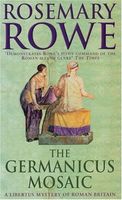
The first book in the series is A Germanicus Mosaic, published in March 1999.
What genre is the Libertus Mystery of Roman Britain series?
The series primarily falls into the Historical Mystery genre.
What is the Libertus Mystery of Roman Britain series about?
Libertus, a former Celtic slave freed and granted Roman citizenship, ekes out a living creating intricate mosaics in the bustling provincial town of Glevum (modern Gloucester) while reluctantly accepting commissions from wealthy patrons to solve mysteries, often murders or disappearances that the official authorities overlook or mishandle. His talent for spotting overlooked details—much like the symmetries in his mosaic designs—draws him into cases involving poisoned chalices, stolen artifacts, political intrigue, family betrayals, and crimes tied to the rigid Roman social hierarchy, where he must tread carefully to avoid offending powerful citizens or endangering his own fragile status. The series is best read in publication order, as Libertus's personal circumstances evolve—his growing family, deepening ties to his patron Marcus Septimus, his adopted son Junio's maturation and eventual role in investigations, and subtle accumulations of backstory and recurring relationships—provide meaningful continuity, character development, and richer context for ongoing themes of loyalty and social mobility. That said, each installment functions as a self-contained historical mystery with its own complete investigation, distinct crime, fresh cast of suspects, and satisfying resolution, allowing readers to enjoy any book standalone without missing essential plot points or spoilers.
Is the Libertus Mystery of Roman Britain series finished?
The series does not currently have a new book scheduled.
More Series Like A Libertus Mystery of Roman Britain
If you enjoyed A Libertus Mystery of Roman Britain, here are more historical mystery series to explore.