

Gideon Oliver Books in Order
#
Title
Date
About the Gideon Oliver series
Series Premise
The series follows Gideon Oliver, a distinguished professor of physical anthropology, who repeatedly finds himself drawn into murder investigations—often while on vacation, attending academic conferences, or even on his honeymoon—where ancient or recent skeletal evidence holds the key to solving the crime. Each story typically involves Gideon examining human remains (sometimes centuries old) to determine cause of death, identity, time since death, or other crucial details, revealing hidden motives, family secrets, or long-buried truths amid contemporary killings, archaeological digs, or historical incidents.
The series is best read in publication (or chronological) order to follow Gideon's personal life progression, his evolving relationships, and the subtle continuity of recurring characters and references. While each book presents a self-contained mystery with its own setup, investigation, forensic revelations, and resolution—allowing readers to enjoy any installment independently—the cumulative character development, occasional callbacks to past cases, and gradual changes in Gideon's circumstances (such as marriage and family) add depth and emotional resonance when read sequentially; out-of-order reading remains satisfying for the core puzzles but may miss some of the warmth in seeing his life unfold over time.
Main Characters
Gideon Oliver anchors the series as the brilliant, mild-mannered protagonist—a tall, scholarly professor in his thirties to fifties (aging naturally across the books) with a sharp intellect, encyclopedic knowledge of bones, and a quiet sense of humor. Often reluctant to get involved yet unable to resist a puzzle, he approaches cases methodically, using forensic anthropology to read stories from skeletons that others overlook. His wife Julie Oliver (introduced early and becoming a recurring presence) provides emotional grounding, wit, and occasional amateur assistance, evolving from supportive spouse to active partner whose common sense balances Gideon's academic focus. FBI Special Agent John Lau serves as a recurring ally—practical, no-nonsense, and appreciative of Gideon's expertise—facilitating official investigations and offering dry humor. Supporting casts vary by book: local police, archaeologists, family members tied to victims, suspects with hidden motives, and fellow academics who may aid or hinder. The ensemble emphasizes intellect over machismo, with relationships built on mutual respect and shared curiosity.
Setting
The series spans a wide array of exotic and culturally rich locations around the world, reflecting Gideon's academic travels and conference invitations. Stories unfold in diverse environments: ancient archaeological sites in Mexico or Egypt where skeletal remains surface during digs; remote Pacific islands, European villages, or rugged wilderness areas like the Olympic Peninsula; elegant Tuscan villas, Hawaiian retreats, or historic European cities. Settings often tie directly to the forensic puzzle—burial grounds, plane crash sites, old battlefields, or forgotten tombs—while contrasting the timelessness of bones with contemporary society. Vivid descriptions bring places to life: the misty forests of the Pacific Northwest, sun-drenched Mediterranean ruins, bustling international conferences, or isolated locales where isolation heightens drama. This globetrotting quality adds variety and authenticity, grounding the scientific elements in real-world anthropology while providing fresh backdrops for each investigation.
Tone & Themes
Elkins crafts a sophisticated, intelligent, and gently humorous tone that balances serious forensic science with wry wit and understated charm. The mysteries are intellectually engaging—relying on logic, deduction, and scientific method rather than graphic violence or high-octane action—while the prose sparkles with dry humor, clever dialogue, and occasional self-deprecating commentary from Gideon. Tension builds through puzzle-solving and the gradual unveiling of clues rather than relentless suspense or gore; deaths are treated respectfully, and the focus stays on unraveling the "how" and "why" behind them. Romantic elements (particularly Gideon's relationship with his wife Julie) add warmth and lightness, with banter that feels authentic and affectionate. Overall, the vibe is cerebral yet accessible—like a fascinating lecture from a witty professor—offering satisfying "aha!" moments, educational insights into anthropology, and a reassuring sense that reason and expertise can triumph over deception.
The Gideon Oliver Mystery series remains a standout in forensic fiction for its intelligent plotting, authentic scientific detail, and warm, witty portrayal of a thoughtful sleuth who turns bones into eloquent witnesses to truth. Aaron Elkins delivers consistently engaging tales that educate while entertaining, blending cerebral puzzles with human drama and exotic adventures that reward careful readers with satisfying revelations. Ideal for mystery lovers who appreciate brainy, low-violence procedurals with heart and humor, the series offers timeless enjoyment—proving that even the quietest evidence can speak volumes when examined by the right mind.
FAQ
How many books are in the Gideon Oliver series?
18 books
When will the next book in the series be released?
No new book is currently scheduled. The latest book, Switcheroo, was published in February 2016.
When was the most recent book released?
Switcheroo was published in February 2016.
What was the first book in the series?
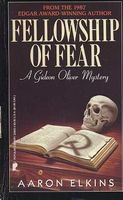
The first book in the series is Fellowship of Fear, published in October 1982.
What genre is the Gideon Oliver series?
The series primarily falls into the Amateur Sleuth genre.
What is the Gideon Oliver series about?
The series follows Gideon Oliver, a distinguished professor of physical anthropology, who repeatedly finds himself drawn into murder investigations—often while on vacation, attending academic conferences, or even on his honeymoon—where ancient or recent skeletal evidence holds the key to solving the crime. Each story typically involves Gideon examining human remains (sometimes centuries old) to determine cause of death, identity, time since death, or other crucial details, revealing hidden motives, family secrets, or long-buried truths amid contemporary killings, archaeological digs, or historical incidents. The series is best read in publication (or chronological) order to follow Gideon's personal life progression, his evolving relationships, and the subtle continuity of recurring characters and references. While each book presents a self-contained mystery with its own setup, investigation, forensic revelations, and resolution—allowing readers to enjoy any installment independently—the cumulative character development, occasional callbacks to past cases, and gradual changes in Gideon's circumstances (such as marriage and family) add depth and emotional resonance when read sequentially; out-of-order reading remains satisfying for the core puzzles but may miss some of the warmth in seeing his life unfold over time.
Is the Gideon Oliver series finished?
The series does not currently have a new book scheduled.
More Series Like Gideon Oliver
If you enjoyed Gideon Oliver, here are more amateur sleuth series to explore.