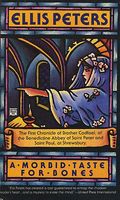
Brother Cadfael Books in Order
#
Title
Date
Sep 1991
Nov 1992
About the Brother Cadfael series
Series Premise
Brother Cadfael is a herbalist, healer, and gardener at Shrewsbury Abbey who, because of his wide experience of the world before entering the monastery at age 40, is frequently consulted when violent death occurs. He does not seek out mysteries; they find him—bodies appear in the abbey gardens, pilgrims die under suspicious circumstances, monks are murdered, or townspeople are killed in ways that threaten the peace of the community or the abbey’s reputation. Cadfael solves crimes using observation, knowledge of human nature, understanding of herbs and poisons, and a deep moral compass. He is not a detective in the modern sense; he works quietly, often without official sanction, guided by compassion and a desire for truth rather than punishment. His investigations frequently expose the gap between appearance and reality, the hypocrisy of the powerful, and the suffering of the innocent. The historical setting is integral: the Anarchy’s chaos—divided loyalties, opportunistic crimes, famine, banditry—creates fertile ground for murder, while Cadfael’s own past as a soldier and traveler gives him unique insight into both the secular and monastic worlds.
Main Characters
Brother Cadfael: The central protagonist—a Welshman in his mid-50s to early 60s across the series. Former soldier, sailor, crusader, and lover; entered the monastery at 40 after a full life. Short, sturdy, with a weathered face, bright dark eyes, and a tonsure. He is a skilled herbalist, healer, gardener, and observer of human nature. Wise, tolerant, skeptical of rigid dogma, and quietly compassionate. He solves crimes through observation, logic, and understanding of motive rather than accusation.
- Abbot Heribert (early books): Gentle, aging abbot who trusts Cadfael’s judgment.
- Prior Robert Pennant (later abbot): Ambitious, cold, and often antagonistic to Cadfael.
- Brother Mark: Young, earnest monk who assists Cadfael in the herb garden and investigations.
- Hugh Beringar: Sheriff of Shropshire from the second book onward—intelligent, fair-minded, and Cadfael’s closest secular ally and friend.
- Supporting/recurring: Various monks, townspeople, knights, ladies, Welsh borderers, and criminals who populate the richly textured world of 12th-century Shropshire.
Setting
The primary setting is Shrewsbury Abbey and the town of Shrewsbury in Shropshire, England, during the Anarchy (1135–1153), the civil war between King Stephen and Empress Matilda. Shrewsbury Abbey is a real Benedictine monastery, but Peters brings it to vivid life: the cloisters, herb garden, scriptorium, infirmary, chapter house, and the great church of St. Peter and St. Paul. Cadfael’s garden—filled with medicinal herbs, flowers, and vegetables—is a recurring place of peace and revelation.
The surrounding area is rural medieval England at its most evocative: the River Severn, the Welsh Marches, forests, villages, castles, and the dangerous roads where outlaws and armies roam. The historical detail is meticulous—seasonal rhythms, monastic routine, feudal obligations, coinage, clothing, weapons, food, medical practices, and the constant tension of civil war. The setting feels authentic and lived-in: mud, cold stone, candlelight, woodsmoke, the tolling of bells, and the ever-present threat of violence or famine.
Tone & Themes
The tone is contemplative, humane, and quietly compassionate—historical mystery with a strong moral and philosophical undercurrent. Peters writes with elegant restraint: violence is present but never sensationalized; murders are described factually, with attention to their human cost rather than gore. Suspense is built through character and motive rather than gore or cheap shocks. The prose is lyrical yet precise, filled with gentle irony, wry humor, and deep sympathy for the flawed, struggling people Cadfael encounters. Cadfael himself is the moral center: wise, tolerant, skeptical of dogma, and deeply aware of human frailty. He does not judge harshly; he seeks understanding and, where possible, mercy. The books are optimistic without being sentimental: good does not always triumph easily, justice is sometimes incomplete, but compassion, truth, and quiet courage endure. There is a profound sense of the sacredness of life and the dignity of ordinary people, even amid war and murder.
Ellis Peters’ Brother Cadfael series is a quiet masterpiece of historical mystery fiction—20 novels that combine meticulous medieval scholarship, gentle humor, profound compassion, and classic whodunit plotting in the shadowed cloisters and wild Welsh Marches of 12th-century England. Through Cadfael—a former soldier turned monk who heals bodies and souls while solving murders—the books explore timeless questions of justice, mercy, faith, hypocrisy, and the human capacity for both good and evil. With elegant prose, vivid period detail, and an unshakable moral center, the series offers intelligent, emotionally satisfying mysteries that never lose sight of the sacredness of life. Cadfael remains one of the most memorable detectives in literature: wise, tolerant, deeply humane, and quietly subversive. The books are a gift—read them slowly, savor the language, and let them remind you that even in a world of violence and power, compassion, observation, and a little herb garden wisdom can still light the way.
FAQ
How many books are in the Brother Cadfael series?
23 books total: 21 main + 2 companion books
When will the next book in the series be released?
No new book is currently scheduled. The latest book, Brother Cadfael's Penance, was published in December 1994.
When was the most recent book released?
Brother Cadfael's Penance was published in December 1994.
What was the first book in the series?
The first book in the series is The Pilgrim of Hate, published in January 1964.
What genre is the Brother Cadfael series?
The series primarily falls into the Historical Mystery genre.
What is the Brother Cadfael series about?
Brother Cadfael is a herbalist, healer, and gardener at Shrewsbury Abbey who, because of his wide experience of the world before entering the monastery at age 40, is frequently consulted when violent death occurs. He does not seek out mysteries; they find him—bodies appear in the abbey gardens, pilgrims die under suspicious circumstances, monks are murdered, or townspeople are killed in ways that threaten the peace of the community or the abbey’s reputation. Cadfael solves crimes using observation, knowledge of human nature, understanding of herbs and poisons, and a deep moral compass. He is not a detective in the modern sense; he works quietly, often without official sanction, guided by compassion and a desire for truth rather than punishment. His investigations frequently expose the gap between appearance and reality, the hypocrisy of the powerful, and the suffering of the innocent. The historical setting is integral: the Anarchy’s chaos—divided loyalties, opportunistic crimes, famine, banditry—creates fertile ground for murder, while Cadfael’s own past as a soldier and traveler gives him unique insight into both the secular and monastic worlds.
Is the Brother Cadfael series finished?
The series does not currently have a new book scheduled.
More Series Like Brother Cadfael
If you enjoyed Brother Cadfael, here are more historical mystery series to explore.