Wild Cards Books in Order
#
Title
Date
How to Read the Wild Cards series
Best Read in Order
· Start with Book 1
Standalone stories, but characters and relationships develop across the series.
The Wild Cards series is best experienced in sequential publication order, which closely tracks the internal chronology of the alternate timeline. Early volumes establish the virus's origins, key characters, and foundational events, while later books build on accumulated history, evolving societal attitudes, and ongoing character arcs. Although many installments function as mosaic novels or anthologies with self-contained episodes that can offer partial enjoyment out of sequence, reading progressively reveals richer layers of continuity, callbacks, and escalating consequences. Some later entries were crafted as accessible entry points for newcomers, but the full depth of political intrigue, personal rivalries, and world-altering crises emerges most powerfully when following the established flow.
About the Wild Cards series
Series Premise
The core premise hinges on the catastrophic release of an alien virus—originally a bioweapon from the planet Takis—unleashed over New York City in 1946. Designed to rewrite DNA, the virus proves devastatingly unpredictable on human subjects. Ninety percent of the infected die horribly, nine percent survive as Jokers with grotesque physical or mental mutations that render them societal outcasts, and a rare one percent emerge as Aces possessing genuine superhuman abilities. A tiny fraction gain minor, often useless powers dubbed Deuces. This "Wild Card" event irrevocably alters global history, injecting superpowered individuals into post-World War II society and sparking decades of prejudice, heroism, villainy, political maneuvering, and cultural upheaval. Stories span from the virus's immediate aftermath through the Cold War, civil rights struggles, and into modern eras, exploring how aces and jokers navigate fame, discrimination, government oversight, criminal enterprises, and existential threats while ordinary humans grapple with a world forever changed by the extraordinary.
Main Characters
No single protagonist dominates the vast ensemble, but several recurring figures anchor the sprawling narrative. Dr. Tachyon, a flamboyant Takisian exile and geneticist who arrives on Earth seeking to mitigate the virus's damage, brings aristocratic flair, guilt, and evolving alliances; his outsider perspective and medical expertise make him a pivotal, often conflicted presence. Golden Boy (Jack Braun), a golden-haired ace with super strength and invulnerability tainted by past betrayals during the McCarthy era, embodies the moral compromises of power. Peregrine, a winged ace and media personality, navigates fame, motherhood, and activism with grace and fire. Other standout aces include the telepathic and manipulative Puppetman, whose sinister influence drives major conflicts, and the enigmatic Croyd Crenson, known as the Sleeper, whose powers and appearance shift with each prolonged sleep cycle, making him a wildcard in every sense.
Setting
The primary setting unfolds in an alternate-history version of our world, centered on the United States but expanding globally. New York City, particularly the seedy, vibrant Jokertown district in Manhattan, serves as the emotional and narrative heart—a gritty enclave where jokers carve out community amid stigma, neon-lit streets pulse with vice and vitality, and aces rub shoulders with the powerful. From the gleaming corridors of Washington politics and Hollywood glamour to battle-scarred international locales visited during world tours or conflicts, the backdrop evolves with real-world decades. The virus reshapes events: altered Vietnam War dynamics, shifted civil rights movements, and modified celebrity culture all reflect the presence of aces and jokers. Environments range from sterile laboratories studying the virus to chaotic street-level skirmishes, lavish estates of the elite, and remote corners where ancient or alien influences linger. The world feels palpably lived-in, with meticulous alternate timelines that make the fantastic feel disturbingly plausible.
Tone & Themes
The tone is mature, cynical, and unflinchingly realistic, blending dark humor, visceral action, and moral ambiguity in a deconstructionist style reminiscent of Watchmen or a grounded X-Men narrative. Stories mix high-stakes adventure with intimate character studies, never shying from the ugly realities of power—physical, political, or psychological. Themes probe deep into prejudice and otherness, the corrupting influence of celebrity and authority, the blurred lines between hero and villain, the societal costs of discrimination against the visibly different, and the human cost of extraordinary abilities. The series examines redemption and responsibility, the allure and peril of vigilantism, xenophobia versus acceptance, and how trauma—personal or collective—shapes identity. It critiques media sensationalism, government overreach, and the commodification of difference, all while celebrating resilience, unlikely alliances, and the stubborn persistence of hope amid chaos.
In the end, the Wild Cards series stands as a masterful, multifaceted exploration of what happens when the impossible crashes into the everyday, forever fracturing society along lines of power and prejudice. George R.R. Martin and his fellow creators deliver a saga that is thrilling yet sobering, humorous yet heartbreaking, where superpowers amplify rather than solve human flaws. It reminds us that true heroism often lies not in flashy abilities but in the quiet courage to confront injustice, form unlikely bonds, and cling to decency in a world that rewards the ruthless. Stepping into this universe feels like wandering the crowded, neon-soaked streets of an altered New York—equal parts exhilarating and unsettling—where every card dealt by fate carries the potential for triumph, tragedy, or transformation. The series lingers long after the final page, challenging readers to question their own world's divisions and to recognize that, virus or no virus, we are all dealt hands that demand resilience, empathy, and the occasional bold gamble. In its pages, the extraordinary illuminates the profoundly ordinary struggles that bind us all.
FAQ
How many books are in the Wild Cards series?
32 books total: 31 main + 1 extra story
When will the next book in the series be released?
No new book in the series is currently scheduled. The latest book, Pairing Up, was published in July 2023.
When was the most recent book released?
Pairing Up was published in July 2023.
What was the first book in the series?
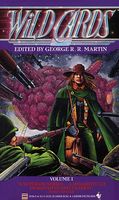
The first book in the series is Wild Cards, published in January 1987.
What genre is the Wild Cards series?
The series primarily falls into the Science Fiction genre.
Do you need to read the Wild Cards series in order?
It’s best to read the series in order. Each book has its own story, but ongoing character arcs and relationships develop across the series.
What is the Wild Cards series about?
The core premise hinges on the catastrophic release of an alien virus—originally a bioweapon from the planet Takis—unleashed over New York City in 1946. Designed to rewrite DNA, the virus proves devastatingly unpredictable on human subjects. Ninety percent of the infected die horribly, nine percent survive as Jokers with grotesque physical or mental mutations that render them societal outcasts, and a rare one percent emerge as Aces possessing genuine superhuman abilities. A tiny fraction gain minor, often useless powers dubbed Deuces. This "Wild Card" event irrevocably alters global history, injecting superpowered individuals into post-World War II society and sparking decades of prejudice, heroism, villainy, political maneuvering, and cultural upheaval. Stories span from the virus's immediate aftermath through the Cold War, civil rights struggles, and into modern eras, exploring how aces and jokers navigate fame, discrimination, government oversight, criminal enterprises, and existential threats while ordinary humans grapple with a world forever changed by the extraordinary.
Is the Wild Cards series finished?
The series does not currently have a new book scheduled.
More Series Like Wild Cards
If you enjoyed Wild Cards, here are more science fiction series to explore.