
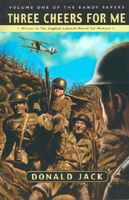
The Bandy Papers Books in Order
How to Read The Bandy Papers series
Read in order—each book builds directly on the previous one.
The series should be read in order—either publication or chronological, as they align closely—for the best experience. The books form a continuous autobiographical narrative, with each volume building on Bandy’s accumulating reputation, relationships, and escalating absurdity. Later installments reference earlier exploits, evolving character quirks, and recurring figures, so jumping around dilutes the running gags and the satisfying sense of watching one man’s lifelong catastrophe unfold. Start at the beginning to appreciate how Bandy’s early blunders snowball into legendary (if unintentional) heroism.
About The Bandy Papers series
Series Premise
The core premise follows Bartholomew Wolfe Bandy, a gawky, socially awkward, deeply earnest young Canadian from a strict Baptist family who stumbles into greatness (and disaster) during World War I. Starting as a medical student eager to do his bit, Bandy joins the infantry, then clumsily transitions to the Royal Flying Corps, where his natural talent for flying clashes spectacularly with his complete lack of social grace, common sense, and luck. Through sheer incompetence and improbable fortune, he becomes an ace pilot, rising through ranks amid dogfights, crashes, promotions, demotions, scandals, and romantic misadventures. The saga continues post-1918 into the Russian Civil War, peacetime aviation schemes, Hollywood escapades, and eventually World War II, with Bandy bobbing through history like a cork in a storm—always surviving catastrophe by the skin of his teeth, alienating superiors, charming (or bewildering) women, and emerging with yet another promotion or court-martial.
Main Characters
Bartholomew Wolfe Bandy (the protagonist/narrator)
The series’ heart: a tall, gangly, perpetually embarrassed Canadian with a high-pitched voice, moral earnestness, and astonishing bad luck. Brilliant in the air yet disastrous on the ground, he stumbles from disaster to improbable success, forever misunderstanding social cues while somehow winning medals and enemies in equal measure.
- Supporting and recurring figures
Setting
The setting spans the 20th century’s most tumultuous decades, beginning in the muddy trenches and skies of the Western Front during World War I—Sopwith Camels, dogfights over No Man’s Land, RFC messes, and English countryside billets. The narrative expands to revolutionary Russia (Siberian interventions, Bolshevik trains, Trotsky cameos), post-war Britain and Canada, Hollywood studios, Indian princely states (with maharajahs and air forces), and eventually the Second World War’s European theater. Locations shift from biplane cockpits and snowy Russian steppes to film sets and royal palaces, always rendered with affectionate detail and period authenticity.
Tone & Themes
The tone is uproariously funny, irreverent, and anti-heroic—dry British-Canadian humor laced with absurdity, self-deprecation, and gentle mockery of military pomposity, bureaucracy, and class snobbery. Jack never glorifies war; instead, he exposes its folly through Bandy’s wide-eyed innocence and perpetual mishaps. Themes include the randomness of fate and promotion in wartime, the clash between individual incompetence and institutional absurdity, the endurance of human dignity amid chaos, anti-authoritarianism, and the resilience of an ordinary man in extraordinary circumstances. Beneath the comedy lies a subtle anti-war sentiment: Bandy’s survival feels less like triumph than stubborn refusal to conform to the madness around him.
In the end, The Bandy Papers stands as a comic masterpiece—hilarious, humane, and quietly subversive. Donald Jack gives us a hero who triumphs not through bravery or brilliance alone, but through sheer, bewildered persistence in a world gone mad. These books roar with laughter while whispering something deeper: that absurdity may be the truest response to war’s insanity, and that an ordinary man, armed with nothing but innocence and dumb luck, can somehow endure—and even thrive—amid history’s greatest follies. Once Bandy crashes into your life, you’ll never look at military memoirs the same way again; you’ll just keep turning pages, cheering for the most gloriously inept hero ever to take to the skies.
FAQ
6 books
No new book is currently scheduled. The latest book, That's Me In The Middle, was published in September 2001.
That's Me In The Middle was published in September 2001.
The first book in the series is Three Cheers for Me , published in June 1973.
The series primarily falls into the General Fiction genre.
Yes, the series should be read in order. The books follow a continuous story, starting with Three Cheers for Me .
The core premise follows Bartholomew Wolfe Bandy, a gawky, socially awkward, deeply earnest young Canadian from a strict Baptist family who stumbles into greatness (and disaster) during World War I. Starting as a medical student eager to do his bit, Bandy joins the infantry, then clumsily transitions to the Royal Flying Corps, where his natural talent for flying clashes spectacularly with his complete lack of social grace, common sense, and luck. Through sheer incompetence and improbable fortune, he becomes an ace pilot, rising through ranks amid dogfights, crashes, promotions, demotions, scandals, and romantic misadventures. The saga continues post-1918 into the Russian Civil War, peacetime aviation schemes, Hollywood escapades, and eventually World War II, with Bandy bobbing through history like a cork in a storm—always surviving catastrophe by the skin of his teeth, alienating superiors, charming (or bewildering) women, and emerging with yet another promotion or court-martial.
The series does not currently have a new book scheduled.