
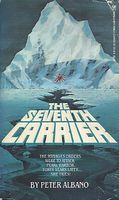

Seventh Carrier Books in Order
#
Title
Date
How to Read the Seventh Carrier series
Best Read in Order
· Start with Book 1
Standalone stories, but characters and relationships develop across the series.
The series is best read in sequential order. Although later books can be approached with some independence due to self-contained naval engagements, the overarching narrative builds continuously: the initial discovery and reactivation of the Yonaga, her first voyages and alliances, escalating international crises, repeated threats from the same antagonists, and the crew's gradual adaptation (or refusal to adapt) to the contemporary world. Character arcs, political fallout from prior actions, and the carrier's evolving reputation create momentum that rewards chronological reading. Skipping ahead risks missing key context about alliances, crew dynamics, and the accumulating consequences of the Yonaga's interventions, though the explosive action scenes still deliver standalone thrills.
About the Seventh Carrier series
Series Premise
The core premise is audaciously bold: in 1941, the massive Japanese aircraft carrier Yonaga—a fictional "seventh" vessel of the Pearl Harbor strike force—is trapped in Arctic ice while awaiting orders. Frozen for over four decades with her fanatically loyal crew in suspended animation-like preservation, the Yonaga emerges in the early 1980s, her crew still believing the war rages on and determined to complete their sacred mission. In a near-future world where a Chinese orbital defense system (or similar catastrophe) has rendered modern jets, missiles, and electronics unreliable, the Yonaga and her vintage World War II aircraft suddenly become the most potent weapons available. As radical forces—often led by a Libyan dictator or other terrorist states—unleash global chaos, the ancient carrier repeatedly sails forth as the free world's unlikely savior. Each installment throws the Yonaga into new battles against superior numbers, political betrayal, and technological obsolescence, while exploring the clash between samurai honor and modern realities.
Main Characters
The central figure is the Yonaga herself—an enormous, battle-scarred behemoth that functions almost as a character, her massive flight deck and hangar bays teeming with meticulously maintained Zeroes, Vals, and Kates. Commanding her is Admiral Hiroshi Fujita, a stern, tradition-bound officer whose unyielding bushido code drives the crew even as the modern world baffles him. Key American liaison and recurring hero is Ted "Trigger" Ross, a grizzled World War II veteran pilot pulled back into service; his pragmatic, wisecracking perspective bridges the cultural gap and provides much of the emotional grounding. Supporting and recurring characters include the Yonaga's dedicated executive officer and bridge crew, who embody varying degrees of fanaticism and pragmatism; American and Japanese political figures who alternately support or fear the carrier; and a rotating cast of antagonists—Libyan terrorists, Soviet agents, or radical statesmen—who underestimate the "ghost carrier" at their peril. International allies, rival officers, and civilian experts round out the ensemble, adding layers of intrigue and occasional comic relief through culture clashes.
Setting
The setting spans the globe but centers on the vast, unforgiving oceans that serve as the Yonaga's hunting grounds. Early stories unfold in the icy Arctic where the carrier is freed, then shift to the Pacific, Atlantic, and Mediterranean as she steams toward hotspots. Naval bases in Japan and the United States provide diplomatic tension, while exotic ports and contested sea lanes heighten the drama. The atmosphere crackles with salt spray, roaring engines, and the metallic tang of gunpowder; modern cities and radar screens contrast sharply with the carrier's wooden decks, Shinto rituals, and antique aircraft. This juxtaposition creates a unique alternate-history vibe where 1940s technology meets near-future threats, making every engagement feel both nostalgic and desperately urgent.
Tone & Themes
Tonally, the books pulse with old-school military adventure: fast-paced, larger-than-life, and unapologetically macho. Expect vivid depictions of aerial dogfights with Zero fighters and torpedo bombers, thunderous naval barrages, and tense bridge confrontations, all rendered with enthusiastic technical specificity. The mood mixes grim determination with boyish excitement, laced with moments of samurai stoicism and dry humor amid the carnage. Albano never shies from graphic violence or tragic losses, yet the overall tone remains heroic and triumphant rather than nihilistic. Thematically, the series grapples with the enduring power of duty and honor in a cynical age, the absurdity and necessity of unconventional warfare, cultural collision between 1940s Imperial Japan and 1980s geopolitics, the futility (and inevitability) of endless conflict, and the redemptive potential of old soldiers finding new purpose. It subtly questions blind loyalty and fanaticism while celebrating courage, camaraderie, and the idea that outdated tools can still strike decisive blows when wielded by resolute hands.
In the end, the Seventh Carrier series by Peter Albano roars across the waves like a thunderbolt from the past, proving that honor, steel, and propeller-driven courage can still turn the tide when the future hangs by a thread. Albano invites readers aboard a floating anachronism where samurai spirit meets missile-age madness, reminding us that sometimes the most improbable weapons are the ones that save the world. These tales deliver pure, unfiltered naval adrenaline—dogfights that sing, broadsides that shake the soul, and a crew that refuses to surrender even when the odds (and the calendar) scream otherwise. For enthusiasts of military fiction who relish alternate history, technical authenticity, and heroes who fight with yesterday's tools against tomorrow's tyrants, the series offers an unforgettable voyage. Climb aboard the Yonaga, feel the deck tremble under your feet, and discover why an old carrier, frozen in time, could become the last best hope for a frightened world—one glorious, smoke-filled sortie at a time.
FAQ
How many books are in the Seventh Carrier series?
9 books
When will the next book in the series be released?
No new book is currently scheduled. The latest book, Challenge of the Seventh Carrier, was published in March 1993.
When was the most recent book released?
Challenge of the Seventh Carrier was published in March 1993.
What was the first book in the series?
The first book in the series is The Seventh Carrier, published in January 1983.
What genre is the Seventh Carrier series?
The series primarily falls into the Action Adventure genre.
Do you need to read the Seventh Carrier series in order?
It’s best to read the series in order. Each book has its own story, but ongoing character arcs and relationships develop across the series.
What is the Seventh Carrier series about?
The core premise is audaciously bold: in 1941, the massive Japanese aircraft carrier Yonaga—a fictional "seventh" vessel of the Pearl Harbor strike force—is trapped in Arctic ice while awaiting orders. Frozen for over four decades with her fanatically loyal crew in suspended animation-like preservation, the Yonaga emerges in the early 1980s, her crew still believing the war rages on and determined to complete their sacred mission. In a near-future world where a Chinese orbital defense system (or similar catastrophe) has rendered modern jets, missiles, and electronics unreliable, the Yonaga and her vintage World War II aircraft suddenly become the most potent weapons available. As radical forces—often led by a Libyan dictator or other terrorist states—unleash global chaos, the ancient carrier repeatedly sails forth as the free world's unlikely savior. Each installment throws the Yonaga into new battles against superior numbers, political betrayal, and technological obsolescence, while exploring the clash between samurai honor and modern realities.
Is the Seventh Carrier series finished?
The series does not currently have a new book scheduled.
More Series Like Seventh Carrier
If you enjoyed Seventh Carrier, here are more action adventure series to explore.