
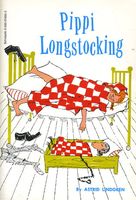
Pippi Longstocking Books in Order
How to Read the Pippi Longstocking series
Mostly standalone stories with recurring characters in a shared setting.
The series can be enjoyed whether read in order or as standalone stories, though sequential reading offers a gentle sense of progression. The original three full-length novels form the heart of the saga, with Pippi’s world expanding naturally from her arrival at Villa Villekulla to deeper explorations of friendship, family, and distant horizons. Later short stories and picture books add delightful vignettes without requiring strict chronology. Each book stands firmly on its own with self-contained adventures, vivid humor, and satisfying resolutions, making it easy for new readers to dive in anywhere. However, following the books in publication order reveals the subtle growth in Pippi’s confidence, her evolving bond with Tommy and Annika, and the recurring motif of her father’s possible return, enriching the emotional tapestry for devoted fans.
About the Pippi Longstocking series
Series Premise
The core premise revolves around Pippi Longstocking, a nine-year-old girl with fiery red hair worn in two tight braids that stick straight out, mismatched stockings, oversized black shoes, and freckles scattered across her nose. Orphaned after her mother died when she was a baby and her sea-captain father was lost at sea (though Pippi remains cheerfully convinced he is now a cannibal king on a distant island), Pippi lives independently in the ramshackle yet wonderful Villa Villekulla. She possesses superhuman strength—able to lift her own horse with one hand or bend iron bars—and a suitcase full of gold coins that funds her carefree lifestyle. With no adults telling her what to do, Pippi spends her days inventing wild games, hosting unexpected visitors, and embarking on spontaneous adventures. Her closest companions are the well-behaved siblings next door, Tommy and Annika Settergren, who are drawn into her chaotic, exhilarating world, experiencing everything from circus escapades and school mishaps to pirate dreams and birthday celebrations. The stories unfold as a series of episodic escapades rather than a single overarching plot, celebrating the freedom of childhood unburdened by convention.
Main Characters
Pippi Longstocking dominates every page as the ultimate free spirit: strong, kind-hearted, generous, and utterly fearless. She speaks her mind with delightful bluntness, invents wild stories about her past, and approaches life with irrepressible optimism. Her loyal companions are Tommy Settergren and Annika Settergren, the polite, well-raised siblings next door whose eyes widen with wonder at Pippi’s escapades; they provide grounding and emotional balance while secretly reveling in the freedom she offers. Supporting characters include Pippi’s beloved pets—Mr. Nilsson, her clever little monkey who wears a tiny hat, and her unnamed but mighty horse, which she casually lifts onto the porch. Occasional figures such as Pippi’s seafaring father (in dreams and hopes), local adults (teachers, policemen, and stuffy neighbors who disapprove of her independence), and visiting relatives or circus performers add color and mild conflict without ever dimming Pippi’s shine. The ensemble feels like a warm, eccentric family, with the village itself acting as a supportive backdrop.
Setting
The setting is a charming, timeless Swedish village that feels both cozy and full of possibility. Villa Villekulla itself is a character in its own right: a dilapidated yet magical old house with an overgrown garden, a veranda perfect for tea parties, and a kitchen where anything can happen. The neighboring homes of Tommy and Annika provide a contrast of orderly domesticity, while the local school, town square, circus grounds, and nearby woods serve as stages for Pippi’s antics. The atmosphere evokes mid-20th-century small-town Sweden—bicycle rides down quiet lanes, summer picnics, winter coziness, and the occasional excursion to the sea—infused with a sense of boundless adventure. The world feels safe yet thrilling, where a simple walk to the store can turn into a heroic rescue or a philosophical debate with a policeman.
Tone & Themes
Tonally, the books burst with exuberant, anarchic joy and playful absurdity. Lindgren’s prose is simple yet vivid, filled with deadpan humor, exaggerated situations, and Pippi’s wonderfully literal logic that turns adult propriety upside down. The mood is consistently light-hearted and empowering, never descending into darkness despite occasional scrapes or adult disapproval. Expect giggles from Pippi’s outrageous solutions to everyday problems and warm smiles from moments of genuine kindness. Thematically, the series champions radical freedom and individuality: Pippi lives exactly as she pleases, challenging rigid gender roles, adult authority, and societal norms about “proper†behavior for girls. It celebrates the power of imagination, the strength found in being true to oneself, the joy of unconditional friendship, and the idea that children are capable of remarkable things when given space to explore. Subtle undercurrents touch on resilience in the face of loss, the warmth of found family, and the notion that rules are sometimes meant to be questioned—especially when they stifle curiosity and fun.
In the end, the Pippi Longstocking series by Astrid Lindgren remains a radiant beacon of childhood liberation, inviting every reader to imagine a world where girls can be the strongest in the world, rules are optional, and every day holds the promise of extraordinary fun. Lindgren reminds us that true strength lies not just in muscles but in kindness, imagination, and the courage to live authentically. These stories wrap young hearts in laughter and wonder, teaching that it is perfectly fine—indeed, wonderful—to dance to your own tune, lift horses when necessary, and believe that lost fathers might return as kings. For children and the childlike at heart, Pippi offers an eternal invitation: step into Villa Villekulla, braid your hair sideways if you wish, and discover that the greatest adventures begin when you dare to be exactly who you are. In a world that often demands conformity, Pippi stands tall (and lifts her horse) as proof that freedom, friendship, and a suitcase of gold coins can make life gloriously, hilariously unforgettable.
FAQ
4 books
No new book is currently scheduled. The latest book, Pippi Longstocking's After-Christmas Party, was published in June 1996.
Pippi Longstocking's After-Christmas Party was published in June 1996.
The first book in the series is Pippi Longstocking, published in January 1950.
The series primarily falls into the General Fiction genre.
No, the books do not need to be read in order. Each story stands on its own, but recurring characters and the shared setting connect the series.
The core premise revolves around Pippi Longstocking, a nine-year-old girl with fiery red hair worn in two tight braids that stick straight out, mismatched stockings, oversized black shoes, and freckles scattered across her nose. Orphaned after her mother died when she was a baby and her sea-captain father was lost at sea (though Pippi remains cheerfully convinced he is now a cannibal king on a distant island), Pippi lives independently in the ramshackle yet wonderful Villa Villekulla. She possesses superhuman strength—able to lift her own horse with one hand or bend iron bars—and a suitcase full of gold coins that funds her carefree lifestyle. With no adults telling her what to do, Pippi spends her days inventing wild games, hosting unexpected visitors, and embarking on spontaneous adventures. Her closest companions are the well-behaved siblings next door, Tommy and Annika Settergren, who are drawn into her chaotic, exhilarating world, experiencing everything from circus escapades and school mishaps to pirate dreams and birthday celebrations. The stories unfold as a series of episodic escapades rather than a single overarching plot, celebrating the freedom of childhood unburdened by convention.
The series does not currently have a new book scheduled.