
Little House on the Prairie Books in Order
How to Read the Little House on the Prairie series
Standalone stories, but characters and relationships develop across the series.
The reading order is flexible but most rewarding when approached chronologically by the historical timeline of the characters rather than strict publication sequence. Starting with the Martha Years (earliest generation), followed by the Charlotte Years, then the Caroline Years, the original Little House books, and finally the Rose Years provides a satisfying generational flow. However, each sub-series functions well as a self-contained set, and readers can enjoy them independently or in any order without losing core understanding. The books share thematic and stylistic continuity with Wilder’s originals, so jumping between generations still feels cohesive.
About the Little House on the Prairie series
Series Premise
The core premise traces the Ingalls and Wilder family lines backward and forward in time. The Martha Years and Charlotte Years follow Laura’s great-grandmother and grandmother, depicting their childhoods in Scotland and early America. The Caroline Years focus on Laura’s mother, Caroline Quiner, as a young girl growing up in Wisconsin. The Rose Years (sometimes called the Rocky Ridge Years), written by Roger Lea MacBride, center on Laura’s only daughter, Rose, as she grows up on the family farm in the Ozarks of Missouri and later ventures into the wider world. Together, these stories create a rich tapestry of family history, showing how the same values of hard work, family loyalty, and adaptability passed down through generations amid changing times—from rugged frontier existence to early 20th-century rural life and beyond.
Main Characters
Main characters shift focus with each generation while maintaining strong familial connections. In the Martha Years, young Martha Morse (Laura’s great-grandmother) is a spirited Scottish girl learning independence and family duty. The Charlotte Years feature Charlotte Tucker, Laura’s grandmother, portrayed as a resourceful and observant child facing early American life. The Caroline Years center on Caroline Quiner (later Ingalls, “Maâ€), depicted as a capable, level-headed girl whose strength and practicality foreshadow her role in the original books. In the Rose Years, Rose Wilder (Laura’s daughter) emerges as the vibrant protagonist—a curious, independent, and sometimes headstrong girl growing into a young woman with big dreams, artistic leanings, and a restless spirit inherited from her parents. Laura Ingalls Wilder and Almanzo Wilder appear as loving but realistically imperfect parents in the Rose Years, providing continuity and warmth. Supporting and recurring characters include various family members across generations—siblings, parents, and grandparents—who offer guidance, conflict, or comic relief. Neighbors, teachers, and community figures add texture to each era, while animals and the natural world often serve as quiet companions or challenges. The extended family web creates a sense of legacy, with traits and stories echoing from one generation to the next.
Setting
The setting spans multiple American landscapes and time periods, creating a sweeping sense of historical movement. The Martha Years unfold in the Scottish Highlands with rugged hills, lochs, and traditional crofting life. The Charlotte Years shift to early 19th-century New England and Boston Bay, with coastal towns, bustling harbors, and growing settlements. The Caroline Years return to the wooded regions of Wisconsin, similar to the original Big Woods. The Rose Years are rooted in the hilly Ozark Mountains of Mansfield, Missouri, on Rocky Ridge Farm, where orchards, rocky soil, and rural simplicity dominate. These varied backdrops—from misty Scottish glens to sun-drenched Missouri apple trees—highlight the family’s migratory spirit and adaptation to new environments, with detailed depictions of seasons, weather, farming, and domestic routines that make each era feel authentic and alive.
Tone & Themes
The tone remains warm, observant, and gently realistic, echoing Wilder’s straightforward, sensory-rich style while adapting to each author’s voice. The prose is clear and evocative, filled with vivid details of daily life, nature, and family interactions. Hardships are portrayed honestly but with optimism and resilience, avoiding sentimentality. Themes echo and expand those of the original series: the pioneer virtues of self-reliance, ingenuity, and perseverance; the central importance of family bonds and love across generations; the beauty and challenges of rural life; the tension between tradition and progress; gratitude for simple pleasures amid scarcity; and the quiet strength of women and girls navigating societal expectations. The expanded books add layers of cultural heritage (Scottish roots), maternal perspectives, and the transition into modernizing America, while reinforcing messages of courage, community, and finding joy in everyday labor.
In the end, the Little House on the Prairie expanded universe enriches Laura Ingalls Wilder’s timeless stories by weaving a deeper family tapestry that spans oceans, continents, and centuries. These books honor the original pioneer spirit while revealing how the same values of courage, love, and perseverance sustained generations through Scotland’s hills, New England harbors, Wisconsin woods, Kansas prairies, and Missouri Ozarks. For readers who cherished Laura’s childhood adventures, the spin-offs offer comforting familiarity and fresh perspectives—gentle reminders that every family carries its own “little house†of memories, built with hard work, laughter, and unbreakable bonds. The saga leaves a lasting glow, like sunlight on a golden wheat field or the warm light of a lantern in a log cabin window, affirming that the pioneer heart endures not just in grand westward journeys but in the quiet, daily acts of building home and hope across time. It invites every reader to feel part of this enduring American family story, where resilience and affection turn ordinary lives into extraordinary legacies.
FAQ
71 books
No new book is currently scheduled. The latest book, Farmer Boy Goes West, was published in February 2012.
Farmer Boy Goes West was published in February 2012.
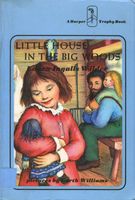
The first book in the series is Little House in the Big Woods, published in January 1932.
The series primarily falls into the Historical genre.
It’s best to read the series in order. Each book has its own story, but ongoing character arcs and relationships develop across the series.
The core premise traces the Ingalls and Wilder family lines backward and forward in time. The Martha Years and Charlotte Years follow Laura’s great-grandmother and grandmother, depicting their childhoods in Scotland and early America. The Caroline Years focus on Laura’s mother, Caroline Quiner, as a young girl growing up in Wisconsin. The Rose Years (sometimes called the Rocky Ridge Years), written by Roger Lea MacBride, center on Laura’s only daughter, Rose, as she grows up on the family farm in the Ozarks of Missouri and later ventures into the wider world. Together, these stories create a rich tapestry of family history, showing how the same values of hard work, family loyalty, and adaptability passed down through generations amid changing times—from rugged frontier existence to early 20th-century rural life and beyond.
The series does not currently have a new book scheduled.