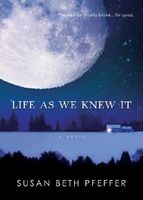

Life As We Knew It / The Last Survivors Books in Order
#
Title
Date
About the Life As We Knew It / The Last Survivors series
Series Premise
The inciting event is astronomical and irreversible: an asteroid collides with the Moon, knocking it out of its normal orbit and pushing it dramatically closer to Earth. This shift disrupts tides, triggers massive tsunamis, volcanic activity, earthquakes, and extreme weather patterns, while gravitational changes cause longer days, harsher seasons, and widespread infrastructure failure. Electricity grids collapse, food supplies vanish, transportation halts, and society fragments into isolated pockets of survivors struggling against starvation, disease, cold, and lawlessness.
The overarching premise follows the Evans family and interconnected characters as they navigate this new, unforgiving world over several years. The story begins with the immediate aftermath and progresses through escalating hardships: initial panic and resource hoarding, brutal winters without heat, famine, illness outbreaks, and eventual societal restructuring into enclaves of privilege versus desperate "grub" towns. Survival depends on preparation, adaptability, moral choices, and family bonds. A key thread traces how the catastrophe exposes human nature—selfishness versus sacrifice, despair versus determination—while characters grapple with grief, guilt, and the faint possibility of rebuilding. The series builds chronologically, with early books depicting the first year of chaos from different viewpoints, a middle book reuniting survivors, and the finale examining a stratified, post-disaster society years later, where privilege comes at a moral cost.
Main Characters
The Evans family forms the emotional core, with perspectives shifting across books:
- Miranda Evans: The primary narrator in the first book, a 16-year-old high school sophomore—practical, introspective, and resilient. Her journal entries capture the transition from ordinary teen concerns to survival mode. She grows into a quiet pillar of strength for her family.
- Laura Evans (Mom): A divorced, determined single mother who stockpiles supplies early and enforces strict rules. Resourceful and protective, she embodies maternal sacrifice.
- Matt Evans: Miranda's older brother, college-bound and steady, who returns home to help. He represents reliability and quiet leadership.
- Jonny Evans: The youngest brother, a baseball-loving teen who matures rapidly under pressure. In later books, his story explores privilege, guilt, and moral conflict.
- Alex Morales: A central figure in the second book, a 17-year-old in New York City who assumes responsibility for his two younger sisters after losing contact with his parents. Proud, devout, and fiercely protective, his arc highlights urban survival challenges.
- Supporting figures: Lisa (the stepmother), Gabriel (half-brother), and others like friends, neighbors, and enclave residents add layers—some offer aid, others highlight division and prejudice.
Setting
The series is anchored in the northeastern United States, primarily rural Pennsylvania for the Evans family, with significant portions in urban New York City and later a fictional stratified community. The initial catastrophe unfolds across the globe, but the stories stay intimate and localized.
In Pennsylvania, the family home in a small town near the Susquehanna River becomes a besieged refuge: a modest house where characters huddle in one room to conserve heat, melt snow for water, and guard dwindling canned goods. The landscape turns hostile—endless gray skies, volcanic ash dimming the sun, frozen rivers, and barren fields—mirroring the emotional desolation.
New York City offers a contrasting urban nightmare: crowded streets become death traps as disease spreads, bodies accumulate, and desperation breeds violence. Later books introduce "enclaves" like Sexton—secure, gated communities for the privileged with electricity, food, and protection—juxtaposed against surrounding "grub" towns of shanties and scavenging. The Moon looms unnaturally large and close in the sky, a constant visual reminder of the altered world, while seasonal extremes (prolonged winters, scorching summers) drive the plot and symbolize ongoing crisis.
Tone & Themes
The tone is somber, realistic, and unflinchingly grim, yet tempered by quiet resilience and glimmers of hope. Pfeffer avoids sensationalism—no graphic gore or over-the-top violence—but the books are emotionally harrowing, chronicling hunger, illness, death, and loss in stark, matter-of-fact detail. Narrated mostly in first-person journal entries, the prose feels raw and immediate: teenagers record mundane worries (school, crushes) that give way to desperate entries about rationing food, burying loved ones, or wondering if tomorrow will come.
There's no easy heroism or triumphant victories; survival is grinding, repetitive, and often heartbreaking. Moments of warmth—family closeness, small acts of kindness, shared laughter—provide relief and remind readers of what's worth fighting for. The tone evolves from shocked disbelief in the early days to weary endurance, then cautious hope, and finally a more cynical awareness of inequality. It's empowering in its focus on inner strength and moral integrity, but never sugarcoated: Pfeffer makes clear that catastrophe strips away illusions, forcing characters (and readers) to confront uncomfortable truths about privilege, prejudice, and human fragility.
Susan Beth Pfeffer's Life As We Knew It / The Last Survivors series stands as a powerful, unflinching exploration of apocalypse through a teenage lens—intimate, believable, and profoundly moving. By grounding global catastrophe in family dynamics and everyday details, Pfeffer creates a story that's less about spectacle and more about endurance, love, and the cost of survival. The books challenge readers to consider what truly matters when everything else is stripped away, delivering no easy answers but plenty of emotional truth. Concluding with a sobering look at a divided future, the series leaves a lasting impact: hope persists, but it's hard-won, fragile, and often bittersweet. For YA readers seeking realistic dystopia with heart, these novels offer a haunting, unforgettable journey through a world forever changed.
FAQ
How many books are in the Life As We Knew It / The Last Survivors series?
4 books
When will the next book in the series be released?
No new book is currently scheduled. The latest book, The Shade of the Moon, was published in August 2013.
When was the most recent book released?
The Shade of the Moon was published in August 2013.
What was the first book in the series?
The first book in the series is Life As We Knew It, published in October 2006.
What genre is the Life As We Knew It / The Last Survivors series?
The series primarily falls into the Science Fiction genre.
What is the Life As We Knew It / The Last Survivors series about?
The inciting event is astronomical and irreversible: an asteroid collides with the Moon, knocking it out of its normal orbit and pushing it dramatically closer to Earth. This shift disrupts tides, triggers massive tsunamis, volcanic activity, earthquakes, and extreme weather patterns, while gravitational changes cause longer days, harsher seasons, and widespread infrastructure failure. Electricity grids collapse, food supplies vanish, transportation halts, and society fragments into isolated pockets of survivors struggling against starvation, disease, cold, and lawlessness. The overarching premise follows the Evans family and interconnected characters as they navigate this new, unforgiving world over several years. The story begins with the immediate aftermath and progresses through escalating hardships: initial panic and resource hoarding, brutal winters without heat, famine, illness outbreaks, and eventual societal restructuring into enclaves of privilege versus desperate "grub" towns. Survival depends on preparation, adaptability, moral choices, and family bonds. A key thread traces how the catastrophe exposes human nature—selfishness versus sacrifice, despair versus determination—while characters grapple with grief, guilt, and the faint possibility of rebuilding. The series builds chronologically, with early books depicting the first year of chaos from different viewpoints, a middle book reuniting survivors, and the finale examining a stratified, post-disaster society years later, where privilege comes at a moral cost.
Is the Life As We Knew It / The Last Survivors series finished?
The series does not currently have a new book scheduled.
More Series Like Life As We Knew It / The Last Survivors
If you enjoyed Life As We Knew It / The Last Survivors, here are more science fiction series to explore.