
Fairacre Books in Order
Complete reading order for the Fairacre series.
How to Read the Fairacre series
Mostly standalone stories with recurring characters in a shared setting.
The reading order of the series is flexible and does not strictly matter, although following publication sequence offers the most satisfying experience. The books are largely episodic and self-contained, with each volume functioning like a year (or season) in village life, allowing readers to pick up any title and enjoy it independently without confusion. Some entries, such as those focusing on specific characters’ backstories or reminiscences, stand particularly well alone. However, sequential reading reveals subtle progression in the characters’ lives—aging, evolving relationships, and the gradual shifts in village dynamics—along with light callbacks and a deepening sense of familiarity with the community. Many readers happily dip in and out or reread favorites out of order, as the gentle, non-linear feel mirrors real village life rather than a serialized plot.
About the Fairacre series
Series Premise
The premise is deeply character-driven, with minimal overarching plot and no central mystery or crime to solve. Instead, the stories chronicle the everyday rhythms of life in a small English village through the eyes of its residents, particularly the village schoolmistress. Each book captures the passing seasons, school terms, church events, minor local dramas, and personal milestones of the inhabitants. While occasional external events—such as threats to close the village school, housing developments, or community fundraisers—provide gentle tension, the true focus lies in the inner lives, relationships, quirks, and quiet struggles of the characters. The narratives unfold like a series of interconnected vignettes or diary entries, emphasizing how ordinary people navigate joy, sorrow, gossip, kindness, and change in a close-knit community. Subtle social commentary on class, tradition, and modernization emerges naturally without overshadowing the human warmth at the core.
Main Characters
The central character is Miss Read herself, the unmarried village schoolmistress who narrates many of the stories with acerbic yet compassionate insight. Practical, independent, and occasionally exasperated by her duties, she serves as both participant and keen observer, revealing her own vulnerabilities, friendships, and quiet satisfactions. Her voice—wry, honest, and warmly human—anchors the series. Key supporting and recurring characters form an extended village family that brings the community to vivid life. Mrs. Pringle, the formidable and often complaining school cleaner with her bad leg and sharper tongue, provides comic relief and ongoing friction. Miss Dolly Clare, the elderly retired teacher and Miss Read’s dear friend, offers wisdom, reminiscences, and emotional depth, with her own backstory explored in dedicated volumes. Mr. Willet, the practical caretaker and handyman, adds reliability and local color. Other memorable figures include the vicar and his wife, the Coggs family from the poorer cottages, various pupils and their parents, friends like the sophisticated Amy, and a host of neighbors whose lives intertwine through school events, church activities, and daily encounters. The ensemble evolves gently over time, with children growing up, elders aging, and new arrivals occasionally stirring the pot, creating a rich tapestry of interconnected lives.
Setting
The setting is the fictional village of Fairacre in the English countryside, a quintessential rural community of cottages, a two-room village school, a parish church, a pub, and surrounding fields and woods. Located not far from the market town of Caxley, Fairacre embodies mid-20th-century English village life with its seasonal rhythms, class distinctions, and tight social web where everyone knows (or thinks they know) everyone else’s business. The landscape—hedgerows, meadows, ancient trees, and changeable weather—plays a vital supporting role, reflecting the characters’ moods and the slow march of the years. The village school serves as a central hub, along with the church, local shops, and private homes, creating an intimate stage where small events like a school concert, a harvest festival, or a neighbor’s illness carry communal weight. The atmosphere feels timeless yet grounded in post-war Britain, capturing both the charm of rural traditions and the subtle pressures of modernization.
Tone & Themes
The tone is warm, observant, wryly humorous, and gently nostalgic, written with elegant simplicity and a compassionate eye for human foibles. Miss Read’s prose is quietly lyrical, rich with sensory details of rural England—blooming gardens, muddy lanes, church bells, and the scent of woodsmoke—while avoiding sentimentality. Expect dry wit, affectionate irony, and moments of genuine tenderness balanced against the petty irritations and small triumphs of daily existence. The overall theme celebrates the enduring value of community, the beauty found in ordinary routines, the resilience of tradition amid gentle change, and the quiet dignity of everyday people. Stories explore themes of loneliness and companionship, the pleasures and burdens of duty, the passage of time and memory, forgiveness in small matters, and the idea that true contentment often lies in acceptance rather than grand ambition. There is subtle acknowledgment of hardship—poverty, illness, family tensions, or social constraints—but these are handled with restraint and hope, underscoring that village life, with all its imperfections, offers profound connection and belonging.
In conclusion, the Fairacre series by Miss Read remains a timeless literary haven for those seeking refuge in the gentle rhythms of English village life. With its deeply character-driven focus, affectionate humor, and compassionate gaze, the books celebrate the small joys and quiet struggles that bind a community together, reminding readers that fulfillment often resides in the familiar rather than the extraordinary. For fans of cozy, introspective fiction who appreciate strong sense of place, memorable personalities, and stories that honor everyday resilience, Fairacre offers enduring comfort and insight. Miss Read invites us to slow down, observe with kindness, and appreciate the beauty in ordinary days—proving that even in a modest village school or over a neighbor’s gate, profound human connections and quiet wisdom await. Whether visiting for a single season or lingering through many years, readers leave with a renewed appreciation for the simple pleasures of belonging and the enduring charm of a place like Fairacre.
FAQ
20 books
No new book is currently scheduled. The latest book, A Peaceful Retirement , was published in January 1996.
A Peaceful Retirement was published in January 1996.
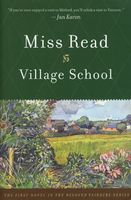
The first book in the series is Village School , published in January 1955.
The series primarily falls into the General Fiction genre.
No, the books do not need to be read in order. Each story stands on its own, but recurring characters and the shared setting connect the series.
The premise is deeply character-driven, with minimal overarching plot and no central mystery or crime to solve. Instead, the stories chronicle the everyday rhythms of life in a small English village through the eyes of its residents, particularly the village schoolmistress. Each book captures the passing seasons, school terms, church events, minor local dramas, and personal milestones of the inhabitants. While occasional external events—such as threats to close the village school, housing developments, or community fundraisers—provide gentle tension, the true focus lies in the inner lives, relationships, quirks, and quiet struggles of the characters. The narratives unfold like a series of interconnected vignettes or diary entries, emphasizing how ordinary people navigate joy, sorrow, gossip, kindness, and change in a close-knit community. Subtle social commentary on class, tradition, and modernization emerges naturally without overshadowing the human warmth at the core.
The series does not currently have a new book scheduled.