
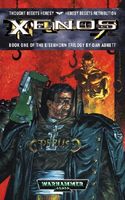
The Eisenhorn Trilogy Books in Order
How to Read the Eisenhorn Trilogy
Read in order—each book builds directly on the previous one.
The books are best read in order to fully appreciate Eisenhorn’s gradual transformation, the escalating consequences of his choices, and the deepening complexity of the threats he faces. The first novel establishes his methods, team, and worldview, while each subsequent volume builds directly on prior events, relationships, and moral compromises. There is a clear narrative and character arc that spans the trilogy. While each book delivers a self-contained investigation with satisfying resolution, the overarching story of Eisenhorn’s descent into radicalism and his evolving relationship with his own principles creates a richer, more impactful experience when read sequentially. Companion short stories and later sequels exist in the wider Eisenhorn/Ravenor universe, but the original trilogy stands powerfully on its own.
About the Eisenhorn Trilogy
Series Premise
The core premise follows Gregor Eisenhorn, a dedicated Inquisitor of the Ordo Xenos in the Imperium of Man. Tasked with protecting humanity from aliens, heretics, and daemonic forces, Eisenhorn operates in the shadowy margins of Imperial authority. The stories trace his journey from a principled, by-the-book investigator to a man willing to bend—and eventually break—the rigid rules of the Inquisition in pursuit of justice and survival. As he hunts dangerous psykers, xenos artifacts, and Chaos-tainted cults, Eisenhorn repeatedly confronts the terrifying realization that the greatest threats often come from within the Imperium itself. The trilogy explores how the constant exposure to corruption, moral compromise, and the horrors of the 41st millennium slowly erodes even the most steadfast servant of the Emperor, raising profound questions about loyalty, identity, and the price of power.
Main Characters
Gregor Eisenhorn is the compelling central figure: a tall, ascetic Inquisitor with a razor-sharp mind, unyielding will, and gradually eroding principles. He begins as a relatively idealistic servant of the Emperor but grows increasingly willing to use forbidden methods and xenos technology to achieve his goals. His small but loyal retinue forms the emotional core of the stories. Medea Betancore, his skilled pilot and surrogate daughter figure, brings competence and emotional warmth. Aemos, his elderly savant and advisor, provides scholarly insight and quiet loyalty. Harbinger (or “Fishâ€) and other agents add muscle and specialized skills. Later, Alizebeth Bequin, a perceptive and enigmatic woman with her own secrets, becomes a significant presence, challenging Eisenhorn both intellectually and emotionally. Antagonists and supporting figures include rival Inquisitors, daemonic entities, and powerful heretics who force Eisenhorn to question his own methods and beliefs. Recurring characters from the wider 40k universe occasionally appear, reinforcing the interconnected grimdark tapestry.
Setting
The setting is the vast, oppressive Imperium of Man in the 41st millennium, primarily across various planets and hive cities within the Scarus Sector and beyond. Abnett brings the grimdark universe to vivid life: sprawling, decaying hive cities teeming with billions of souls, ancient orbital stations, fog-shrouded feudal worlds, and the cold marble halls of Inquisitorial strongholds. The atmosphere is thick with incense, machine oil, and the ever-present threat of mutation or heresy. Sensory details abound—the oppressive weight of power armor, the acrid smell of promethium, the whisper of forbidden texts, and the distant roar of cathedral bells calling the faithful to prayer. The Imperium itself feels like a character: vast, bureaucratic, fanatical, and rotting from within, where a single accusation of heresy can destroy lives and entire worlds.
Tone & Themes
Abnett’s tone is dark, atmospheric, and relentlessly intelligent, blending hard-boiled detective fiction with gothic horror and military sci-fi. The prose is crisp and evocative, rich with sensory detail and layered dialogue that reveals character through subtext. There is a pervasive sense of dread and moral grayness, yet the writing never loses its humanity or moments of quiet dignity. Themes include the corrosive nature of power and absolute authority, the thin line between protector and tyrant, the psychological toll of fighting monsters (and becoming one), loyalty versus pragmatism, and the eternal struggle between order and chaos. The series examines how good intentions can lead to terrible compromises and asks whether the ends can ever truly justify the means in a galaxy where mercy is often a fatal weakness.
In the end, the Eisenhorn Trilogy by Dan Abnett is a masterful descent into the soul-crushing machinery of the Imperium, where one man’s fight for justice slowly transforms him into something darker and more dangerous. Abnett delivers a haunting portrait of a galaxy where hope is scarce and compromise is inevitable, yet human resilience and moral struggle still flicker in the void. Through Eisenhorn’s journey from rigid servant of the Emperor to a radical operating in the grayest of shadows, the series reminds us that the true horror of the 41st millennium is not the monsters without, but the ones we become while fighting them. These books grip you with their intelligence, atmosphere, and emotional weight, leaving a lasting impression long after the final page. Whether you are new to Warhammer 40,000 or a veteran of its grimdark wars, the Eisenhorn Trilogy offers a profoundly human story set against an inhuman backdrop—one that asks what any of us would sacrifice in the name of duty, and how much of ourselves we would lose along the way. Step into the Emperor’s service, keep your wits sharp, and prepare for a series that cuts as deep as any Inquisitor’s blade. In the darkness of the far future, Eisenhorn’s light may be dim, but it refuses to go out—and that stubborn spark makes all the difference.
FAQ
3 books
No new book is currently scheduled. The latest book, Hereticus, was published in August 2002.
Hereticus was published in August 2002.
The first book in the series is Xenos, published in May 2001.
The series primarily falls into the Science Fiction genre.
Yes, the series should be read in order. The books follow a continuous story, starting with Xenos.
The core premise follows Gregor Eisenhorn, a dedicated Inquisitor of the Ordo Xenos in the Imperium of Man. Tasked with protecting humanity from aliens, heretics, and daemonic forces, Eisenhorn operates in the shadowy margins of Imperial authority. The stories trace his journey from a principled, by-the-book investigator to a man willing to bend—and eventually break—the rigid rules of the Inquisition in pursuit of justice and survival. As he hunts dangerous psykers, xenos artifacts, and Chaos-tainted cults, Eisenhorn repeatedly confronts the terrifying realization that the greatest threats often come from within the Imperium itself. The trilogy explores how the constant exposure to corruption, moral compromise, and the horrors of the 41st millennium slowly erodes even the most steadfast servant of the Emperor, raising profound questions about loyalty, identity, and the price of power.
The series does not currently have a new book scheduled.