
Earth's Children Books in Order
How to Read the Earth's Children series
Standalone stories, but characters and relationships develop across the series.
The series demands to be read in its published chronological order. The books form a continuous, epic timeline that follows Ayla from childhood through motherhood and spiritual leadership, with character growth, relationships, and world-building accumulating layer by layer. Early volumes establish the Clan's rigid customs and Ayla's outsider status, while later ones deepen her integration into Cro-Magnon life and address long-term consequences of her actions and discoveries. Although individual books contain self-contained adventures or cultural immersions, the emotional arcs—particularly Ayla and Jondalar's evolving bond—and overarching themes of adaptation and legacy gain profound resonance when experienced sequentially. Reading out of order would diminish the impact of gradual revelations about human origins, the slow build of tension in social dynamics, and the satisfying progression of Ayla's remarkable journey.
About the Earth's Children series
Series Premise
The core premise traces the extraordinary life of Ayla, a young Cro-Magnon (anatomically modern human) girl orphaned by an earthquake and adopted by a clan of Neanderthals known as the Clan. Raised among people whose customs, communication, and worldview differ profoundly from her own, Ayla struggles to conform while developing exceptional skills in healing, hunting, and innovation. Exiled as a young woman for defying Clan traditions, she survives alone in a harsh wilderness, domesticating animals and honing her abilities before encountering Jondalar, a man of her own kind. Their passionate romance and shared journey across Ice Age Europe bring Ayla into contact with diverse Cro-Magnon groups, where she confronts prejudice, cultural clashes, spiritual mysteries, and her own unique gifts. The narrative expands from personal survival and coming-of-age to broader explorations of human migration, invention, ritual, and the dawn of complex societies, portraying Ayla as a bridge between ancient ways and emerging possibilities.
Main Characters
Ayla serves as the indomitable central protagonist: a golden-haired, blue-eyed Cro-Magnon woman of extraordinary intelligence, adaptability, and empathy. Orphaned and marked as different, she evolves from a traumatized child into a skilled healer, hunter, horsewoman, and spiritual leader whose inventions and insights challenge the status quo. Jondalar, the tall, skilled Zelandonii flint-knapper and traveler, becomes her devoted partner and co-protagonist. Handsome, emotionally complex, and initially shaped by his own cultural norms, he grows through love and shared adventures, providing emotional anchor and cultural bridge. Their daughter Jonayla emerges as a vital presence in later books, inheriting her mother's gifts and curiosity. Supporting and recurring characters add depth and continuity: Iza, the Clan's medicine woman who becomes Ayla's surrogate mother and mentor; Creb, the wise Mog-ur (spiritual leader) whose compassion contrasts with Clan rigidity; Broud, the antagonistic future leader whose resentment drives much early conflict; Durc, Ayla's son with the Clan, whose mixed heritage carries poignant stakes; and various Cro-Magnon figures such as the Mamutoi mammoth hunters (including the adoptive Mamut and vibrant friends like Deegie), the Zelandonii leaders like Marthona (Jondalar's mother), and spiritual figures encountered during travels. Animal companions—Whinney the horse, Racer her colt, and the cave lion Baby—recur as loyal extensions of Ayla's innovative spirit, symbolizing her unique bond with the natural world. These characters and groups recur or evolve across the saga, their interactions highlighting cultural exchanges and personal transformations.
Setting
The setting is the vast, untamed landscape of Ice Age Europe approximately 30,000 years ago, during a period of coexistence between Neanderthals and Cro-Magnons but before the peak of the last glacial maximum. Towering glaciers loom in the distance, while fertile river valleys, steppes teeming with mammoths, horses, and cave lions, dense forests, and limestone caves provide dramatic backdrops. Ayla's early life unfolds in the Clan's mountainous cave dwellings, where rituals and daily survival shape a close-knit, memory-based society. Her solitary years take place in a sheltered valley rich with resources, where she forges a life with her animal companions. Later travels carry the characters across plains, rivers, and mountain passes, encountering diverse groups in seasonal camps, mammoth-hunter settlements, riverine communities, and elaborate cave systems adorned with early art. The environment feels alive and unforgiving—harsh winters test endurance, animal migrations influence movement, and natural wonders like hot springs or painted caves carry spiritual weight—making the land itself a central force that shapes culture and destiny.
Tone & Themes
The tone is richly descriptive and immersive, balancing epic scope with intimate character moments. Auel's prose is detailed and sensory, evoking the raw beauty and brutality of prehistoric life through exhaustive research into archaeology, botany, zoology, and anthropology. Passages on herbal medicine, tool-making, hunting techniques, and spiritual rituals can feel almost documentary-like, yet they serve a deeply human story laced with wonder, grief, joy, and sensuality. Themes weave through every chapter: the resilience of the human spirit amid loss and displacement; the tension between tradition and innovation; cultural tolerance versus xenophobia; gender roles and female agency in patriarchal or matrilineal societies; the bonds of found family and romantic love; the interplay of memory, spirit, and survival; and humanity's capacity for both compassion and cruelty. Explicit romantic and sexual content, particularly from the second book onward, celebrates physical intimacy as natural and sacred, while explorations of prejudice highlight the costs of difference and the potential for understanding across divides.
In the end, the Earth's Children series endures as a monumental ode to humanity's dawn, where one woman's indomitable spirit illuminates the fragile bridges between past and future, difference and belonging. Jean M. Auel crafts an unforgettable epic that marries rigorous historical speculation with raw emotional truth, inviting readers to walk beside Ayla through ice-kissed plains and shadowed caves, feeling the bite of wind and the warmth of connection. It celebrates the quiet revolutions born of curiosity and courage, reminding us that survival is not merely endurance but the spark of invention, love, and understanding that propels our species forward. For those who lose themselves in its sweeping vistas and intimate heartaches, the saga leaves an indelible imprint—like ancient handprints on cave walls—affirming that even in the harshest ages, the human heart yearns to create, to connect, and to leave a lasting legacy upon the Earth.
FAQ
6 books
No new book is currently scheduled. The latest book, The Land of Painted Caves, was published in April 2011.
The Land of Painted Caves was published in April 2011.
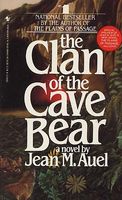
The first book in the series is The Clan of the Cave Bear, published in June 1980.
The series primarily falls into the Historical Adventure genre.
It’s best to read the series in order. Each book has its own story, but ongoing character arcs and relationships develop across the series.
The core premise traces the extraordinary life of Ayla, a young Cro-Magnon (anatomically modern human) girl orphaned by an earthquake and adopted by a clan of Neanderthals known as the Clan. Raised among people whose customs, communication, and worldview differ profoundly from her own, Ayla struggles to conform while developing exceptional skills in healing, hunting, and innovation. Exiled as a young woman for defying Clan traditions, she survives alone in a harsh wilderness, domesticating animals and honing her abilities before encountering Jondalar, a man of her own kind. Their passionate romance and shared journey across Ice Age Europe bring Ayla into contact with diverse Cro-Magnon groups, where she confronts prejudice, cultural clashes, spiritual mysteries, and her own unique gifts. The narrative expands from personal survival and coming-of-age to broader explorations of human migration, invention, ritual, and the dawn of complex societies, portraying Ayla as a bridge between ancient ways and emerging possibilities.
The series does not currently have a new book scheduled.