Corps Books in Order
#
Title
Date
About the Corps series
Series Premise
The core premise follows a tightly knit ensemble of U.S. Marine Corps officers and enlisted men—primarily from the pre-war China Marines through the Pacific campaigns of World War II and into Korea—as they face combat, espionage, leadership challenges, and the personal toll of war. The narrative tracks their careers, missions, and family lives across decades, highlighting the Marines' role in key operations (Pearl Harbor, Guadalcanal, the Gobi Desert, Inchon, Pusan) while exploring themes of duty, honor, loyalty, and the harsh realities of military service in a time of global upheaval.
The series should be read in a particular order—ideally publication sequence, which aligns closely with chronological progression—for the fullest experience, as the books form a continuous multi-generational epic with recurring characters, evolving relationships, and cumulative historical events that build across volumes. While individual novels contain self-contained missions or time periods with their own arcs and resolutions, reading out of order reduces the emotional impact of character development, family legacies, and the interconnected fates of the Marines.
Main Characters
Major Kenneth R. "Killer" McCoy: A central figure and charismatic Marine officer; a skilled, tough China Marine known for his knife-fighting prowess and loyalty, he rises through the ranks and embodies the series' core of duty and courage.
- Colonel Edward C. Banning: A key intelligence and leadership figure; wise, strategic, and respected, he navigates complex operations and provides moral grounding for the group.
- Major Malcolm "Pick" Pickering: A wealthy, daring Marine aviator; brave, irreverent, and skilled in the air, he adds flair and personal drama to the ensemble.
- Brigadier General Fleming "Flem" Pickering: Pick's father and a high-ranking Marine; influential in Washington and the Corps, he bridges field operations with strategic command.
- Master Gunner Ernie Zimmerman: A tough, reliable enlisted Marine; pragmatic and combat-hardened, he represents the backbone of the enlisted ranks.
Setting
The setting spans the late 1930s through the early 1950s, primarily focusing on the Pacific Theater of World War II and the Korean War, with early books rooted in pre-war China (Shanghai and the China Marines) and later volumes shifting to Pacific islands, the Gobi Desert, and Korean battlefields. Locations include Marine bases, warships, jungles, remote outposts, Washington D.C. for high-level strategy, and family homes in the U.S., evoking the era's global scope—from exotic foreign postings to brutal frontline combat. The environment feels authentic and immersive: humid jungles, frozen Korean hills, crowded transports, and tense command posts, all grounded in historical accuracy and the day-to-day realities of Marine life.
Tone & Themes
The tone is heroic, gritty, and patriotic, delivering intense military action with a strong sense of camaraderie, realism, and respect for the Marine Corps. Griffin's writing is straightforward and detailed, vividly depicting combat, strategy, and the emotional weight of war without excessive glorification or graphic excess. The narratives balance high-stakes battles and political intrigue with quieter moments of loyalty, humor (often dry or ironic from the characters), and personal reflection, creating an inspiring yet grounded portrayal of service. There's an underlying optimism in the Marines' resilience and moral code—good men doing hard things for a greater cause—tempered by the costs of war, making the series both thrilling and reflective.
The Corps series by W.E.B. Griffin stands as a monumental tribute to the United States Marine Corps, delivering a sweeping, multi-generational epic of valor, sacrifice, and unbreakable camaraderie across World War II and Korea. Through its richly detailed historical canvas and unforgettable characters, the saga captures the essence of Marine spirit—Semper Fidelis—while exploring the personal costs of duty and the enduring bonds that define warriors. Griffin's meticulous research and compelling storytelling make the series a cornerstone of military fiction, offering thrilling action, emotional depth, and a profound respect for those who serve. It's an enduring classic for readers who value authentic military history wrapped in gripping, character-driven narrative.
FAQ
How many books are in the Corps series?
10 books
When will the next book in the series be released?
No new book is currently scheduled. The latest book, Retreat, Hell!, was published in January 2004.
When was the most recent book released?
Retreat, Hell! was published in January 2004.
What was the first book in the series?
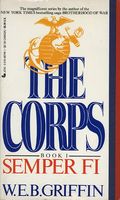
The first book in the series is Semper Fi, published in November 1986.
What genre is the Corps series?
The series primarily falls into the Action Adventure genre.
What is the Corps series about?
The core premise follows a tightly knit ensemble of U.S. Marine Corps officers and enlisted men—primarily from the pre-war China Marines through the Pacific campaigns of World War II and into Korea—as they face combat, espionage, leadership challenges, and the personal toll of war. The narrative tracks their careers, missions, and family lives across decades, highlighting the Marines' role in key operations (Pearl Harbor, Guadalcanal, the Gobi Desert, Inchon, Pusan) while exploring themes of duty, honor, loyalty, and the harsh realities of military service in a time of global upheaval. The series should be read in a particular order—ideally publication sequence, which aligns closely with chronological progression—for the fullest experience, as the books form a continuous multi-generational epic with recurring characters, evolving relationships, and cumulative historical events that build across volumes. While individual novels contain self-contained missions or time periods with their own arcs and resolutions, reading out of order reduces the emotional impact of character development, family legacies, and the interconnected fates of the Marines.
Is the Corps series finished?
The series does not currently have a new book scheduled.
More Series Like Corps
If you enjoyed Corps, here are more action adventure series to explore.