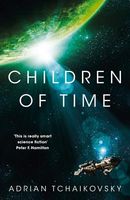

Children of Time Books in Order
#
Title
Date
About the Children of Time series
Series Premise
Humanity, having devastated Earth through environmental collapse and conflict, launches ark ships carrying the last remnants of the species in search of habitable worlds, guided by ancient terraforming projects. One such world—intended for accelerated uplift of primates via a nanovirus designed to spark rapid evolution—goes catastrophically awry, instead elevating an unexpected native species into a sophisticated, technologically advancing civilization over millennia, watched over by a lingering AI guardian. The stories interweave the desperate, generation-spanning journeys of human survivors with the rise of these alien intelligences, culminating in inevitable encounters that force both sides to confront survival, misunderstanding, cooperation, and the true meaning of inheritance.
The series is strongly best read in publication order, as each book builds on the established universe, expands the scope to new worlds and species, introduces ongoing characters or legacies from prior installments, and deepens the overarching exploration of evolution, contact, and galactic history for cumulative impact and thematic resonance. That said, the first book stands powerfully alone as a complete, self-contained story with a satisfying arc and resolution, while later volumes introduce fresh settings and intelligences that allow some jumping in—though readers will miss significant context, callbacks, and the full weight of recurring ideas about legacy and change.
Main Characters
Characters shift across generations and species, with no single human protagonist dominating the entire series; instead, recurring figures and archetypes carry the narrative:
- Avrana Kern — A brilliant, arrogant scientist whose terraforming mission and subsequent upload into an orbital AI guardian define the series' origin; her evolving perspective—from imperious overseer to conflicted mentor—provides continuity and moral complexity.
- Human ark-ship inhabitants and leaders — Such as captains, engineers, and revived sleepers (e.g., figures like Holsten or G Mendelsson in early arcs) who grapple with despair, factionalism, and the weight of humanity's last hope, representing resilience, ingenuity, and human flaws.
- Alien protagonists — Represented through generational lines of evolving non-humans (starting with spider-like beings named in patterns like Portia, Fabian, or Bianca), who develop language, science, philosophy, and society; their viewpoints offer fresh, non-anthropocentric lenses on intelligence, cooperation, and progress.
Setting
The series spans multiple planets and vast interstellar distances, but centers on terraformed or naturally evolving worlds that serve as crucibles for intelligent life. The flagship planet—often called Kern's World or similar—is a lush, oxygen-rich exoplanet where dense forests, web-woven cities, and evolving ecosystems host a civilization built around silk architecture, mathematical understanding, and collective memory. Other settings include derelict human outposts adrift in space, icy ocean worlds teeming with hidden intelligences, frozen tundras preserving ancient signals, and the cold voids between stars where ark ships drift for centuries. Each environment feels vividly realized—harsh yet teeming with possibility—highlighting how biology and environment shape culture, technology, and perception.
Tone & Themes
The tone is thoughtful, wondrous, and occasionally bleak, balancing awe-inspiring scientific extrapolation with moments of quiet beauty, tension-filled encounters, and flashes of wry humor—never descending into despair but unflinching about extinction risks, cultural clashes, and the fragility of civilizations. Tchaikovsky writes with clarity, precision, and empathy, making even the most alien viewpoints feel relatable and poignant.
Themes probe deeply into evolution as both blind force and guided process, the ethics of uplift and intervention, xenophobia versus understanding across irreconcilable differences, the hubris of assuming human centrality in the cosmos, identity and memory across generations, religion and belief systems arising from biology, and the search for meaning in a universe indifferent to individual survival. Cooperation, adaptation, and the potential for mutual growth between disparate minds recur as hopeful counterpoints to conflict and loss.
In the end, Adrian Tchaikovsky's Children of Time series is a breathtaking triumph of speculative fiction—vast in scope yet intimate in its exploration of what it means to think, feel, and endure as part of something greater than oneself. These books challenge readers to expand their empathy beyond humanity, marvel at the ingenuity of evolution, and ponder our place in an uncaring yet wondrous universe. With elegant prose, astonishing imagination, and a rare ability to make the alien feel profoundly familiar, the series lingers long after the final page, inspiring awe, reflection, and hope that even in cosmic darkness, understanding and connection can light the way forward. If you're seeking science fiction that redefines intelligence, contact, and survival, this is essential reading—an intellectual and emotional journey that reshapes how you see the stars.
FAQ
How many books are in the Children of Time series?
4 books
When will the next book in the series be released?
No new book in the series is currently scheduled. The latest book, Children of Strife, was published in March 2026.
When was the most recent book released?
Children of Strife was published in March 2026.
What was the first book in the series?
The first book in the series is Children of Time, published in June 2015.
What genre is the Children of Time series?
The series primarily falls into the Science Fiction genre.
What is the Children of Time series about?
Humanity, having devastated Earth through environmental collapse and conflict, launches ark ships carrying the last remnants of the species in search of habitable worlds, guided by ancient terraforming projects. One such world—intended for accelerated uplift of primates via a nanovirus designed to spark rapid evolution—goes catastrophically awry, instead elevating an unexpected native species into a sophisticated, technologically advancing civilization over millennia, watched over by a lingering AI guardian. The stories interweave the desperate, generation-spanning journeys of human survivors with the rise of these alien intelligences, culminating in inevitable encounters that force both sides to confront survival, misunderstanding, cooperation, and the true meaning of inheritance. The series is strongly best read in publication order, as each book builds on the established universe, expands the scope to new worlds and species, introduces ongoing characters or legacies from prior installments, and deepens the overarching exploration of evolution, contact, and galactic history for cumulative impact and thematic resonance. That said, the first book stands powerfully alone as a complete, self-contained story with a satisfying arc and resolution, while later volumes introduce fresh settings and intelligences that allow some jumping in—though readers will miss significant context, callbacks, and the full weight of recurring ideas about legacy and change.
Is the Children of Time series finished?
The series does not currently have a new book scheduled.
More Series Like Children of Time
If you enjoyed Children of Time, here are more science fiction series to explore.