
Parker Books in Order
About the Parker series
Series Premise
Parker is a freelance heist man who works with small crews on carefully planned jobs—armored-car robberies, bank scores, jewelry thefts, payroll heists, museum jobs. He does not work for organized crime families; he is an independent contractor who assembles teams for specific scores. The typical Parker novel follows one of two structures: 1. The Job: Parker plans and executes a big score. Something goes wrong (betrayal, double-cross, bad luck, police interference), and the book becomes a story of survival, revenge, and getting the money back. 2. The Revenge: Parker has been cheated or double-crossed on a previous job. He methodically tracks down the people who wronged him and takes back what is his—often with lethal efficiency. The books are not morality plays; Parker is amoral. He does not care about right or wrong—he cares about competence, professionalism, and getting paid. He kills when necessary, but never for pleasure or revenge alone. He is a craftsman who wants the job done cleanly. When others violate that code, he becomes a force of nature—calm, relentless, and terrifyingly effective.
Main Characters
Parker (no first name given): The protagonist and viewpoint character in most books. Mid-40s to late 50s across the series, tall, broad-shouldered, calm, and utterly professional. He is not charming or talkative; he is efficient. He has a strict code: never kill unnecessarily, never betray a partner, always finish the job. He is not invincible—he gets hurt, makes mistakes, goes to prison—but he always survives through intelligence and sheer will.
- Claire (later books): Parker’s long-term partner—a beautiful, intelligent woman who lives with him in a quiet house on the New Jersey shore. She is one of the few people he trusts completely.
- Supporting/recurring:
- Grofield: An actor and part-time heister who sometimes works with Parker.
- Dalesia, Handy McKay, Morris, Briggs — recurring heist partners, each with their own specialties.
- Various one-off crews, fences, double-crossers, and marks.
Setting
The primary setting is the United States in the 1960s through the 2000s, with a strong emphasis on urban and semi-rural locations where big scores are possible:
- Big cities: New York, Chicago, Los Angeles, San Francisco, New Orleans—hotels, airports, banks, jewelry districts.
- Small industrial towns and suburbs: places with armored-car depots, payroll offices, or cash-rich businesses.
- Motels, diners, back roads, and anonymous highway exits—Parker is always moving, never staying anywhere long.
- Occasional international locations (Mexico, Caribbean islands, European cities) when a job requires it.
The world feels lived-in and realistic: no high-tech gadgets, no super-criminals—just men with guns, cars, and plans. The era evolves slowly from the early 1960s (pay phones, typewriters, big American cars) to the 2000s (cell phones, surveillance cameras, post-9/11 security), but Parker himself changes very little.
Tone & Themes
The tone is cold, dry, and brutally efficient—hard-boiled noir at its purest. Stark's prose is minimalist: short sentences, no adjectives unless necessary, no introspection unless it serves the plot. There is almost no humor, no sentimentality, no moralizing. Parker does not monologue about his past or his feelings; he acts. The violence is sudden, matter-of-fact, and unsentimental—people die quickly and without fanfare. Sex is present but functional, not romanticized. The books are bleak but never nihilistic—Parker is not a sociopath; he has a code, he keeps his word, he protects those who deserve it. The reader is not asked to approve of him, only to watch him work. The tone is compelling and almost clinical: you are watching a professional at the top of his game, and the tension comes from wondering whether anyone else in the story is as good as he is.
Richard Stark’s (Donald E. Westlake’s) Parker novels are a masterclass in lean, cold, hard-boiled crime fiction—over 24 books that follow one of the most compelling anti-heroes in American literature. Parker is not a detective, not a vigilante, not a good man—he is a professional thief who lives by a simple, brutal code in a world where almost everyone else is dishonest or incompetent. The books are short, sharp, and mercilessly efficient: no wasted words, no moral lectures, no sentimentality. They are pure plot and character in motion—every job is a puzzle, every betrayal a calculation, every shootout a consequence. Yet beneath the ice-cold surface lies a strange kind of integrity: Parker keeps his word, protects those who deserve it, and never pretends to be anything other than what he is. In a genre full of tortured anti-heroes and wisecracking PIs, Parker stands alone—quiet, competent, and utterly believable. The series remains a high-water mark of noir fiction: proof that a man with a gun, a plan, and no illusions can still be one of the most fascinating characters in crime literature.
FAQ
24 books
No new book is currently scheduled. The latest book, Dirty Money, was published in April 2008.
Dirty Money was published in April 2008.
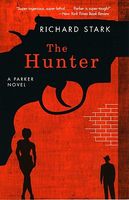
The first book in the series is The Hunter, published in January 1962.
The series primarily falls into the Hard-Boiled genre.
Parker is a freelance heist man who works with small crews on carefully planned jobs—armored-car robberies, bank scores, jewelry thefts, payroll heists, museum jobs. He does not work for organized crime families; he is an independent contractor who assembles teams for specific scores. The typical Parker novel follows one of two structures: 1. The Job: Parker plans and executes a big score. Something goes wrong (betrayal, double-cross, bad luck, police interference), and the book becomes a story of survival, revenge, and getting the money back. 2. The Revenge: Parker has been cheated or double-crossed on a previous job. He methodically tracks down the people who wronged him and takes back what is his—often with lethal efficiency. The books are not morality plays; Parker is amoral. He does not care about right or wrong—he cares about competence, professionalism, and getting paid. He kills when necessary, but never for pleasure or revenge alone. He is a craftsman who wants the job done cleanly. When others violate that code, he becomes a force of nature—calm, relentless, and terrifyingly effective.
The series does not currently have a new book scheduled.