
A Novel of the Change Books in Order
#
Title
Date
How to Read the Novel of the Change series
Must Read in Order
· Start with Book 1
Read in order—each book builds directly on the previous one.
The series is best read in sequential order. It unfolds across distinct generational arcs that build upon one another chronologically. The initial trilogy establishes the immediate aftermath and key survivor communities. Subsequent volumes shift to the children of those survivors as young adults, expanding the world geographically and thematically. Later installments follow the grandchildren, introducing fresh conflicts and resolutions. While some books contain self-contained adventures or battles, overarching plots, character legacies, political developments, and revelations about The Change itself accumulate across the saga. Reading progressively reveals the full depth of ethnogenesis—the birth of new peoples and nations—and the long-term consequences of early choices.
About the Novel of the Change series
Series Premise
The core premise hinges on a mysterious global event called "The Change," which occurs in March 1998. At a precise moment, all high-energy-density technologies—electricity in wires, internal combustion engines, firearms and explosives, steam power, and most advanced machinery—cease functioning permanently. Modern civilization collapses rapidly amid famine, chaos, and mass die-off, though the worst horrors often unfold off-stage. Survivors must rebuild from the ruins using pre-industrial skills, scavenged knowledge, and sheer determination. What emerges is not a simple return to the past but a synthesis: modern minds armed with historical memory, folklore, and innovation forge new societies, cultures, and conflicts across a reshaped North America and beyond. Early tales focus on immediate survival and clashing factions in the Pacific Northwest, while later generations confront larger threats, quests for ancient artifacts, and the rise of kingdoms blending chivalry, pagan traditions, and pragmatic governance.
Main Characters
The ensemble cast evolves across generations, with no single protagonist dominating the entire series. In the early books, standout figures include Mike Havel, a former Marine and bush pilot who forges the Bearkillers, a disciplined warrior band emphasizing honor and self-reliance. Juniper Mackenzie, a folk singer and Wiccan priestess, founds Clan Mackenzie, blending Celtic paganism, community farming, and archery with a strong emphasis on consent and cultural revival. Their uneasy alliance against the tyrannical Portland Protective Association, led by the ambitious and ruthless Norman Arminger, drives much of the initial conflict.
Later arcs center on their children, particularly Rudi Mackenzie (also known as Artos), a charismatic and destined leader whose quest for the Sword of the Lady becomes a mythic journey uniting disparate peoples into the High Kingdom of Montival. Rudi's companions and rivals—including his half-sister Mathilda Arminger, a noblewoman torn between her father's legacy and a better path—add layers of personal and political drama. Supporting characters recur across books, such as the resourceful Ingolf Vogeler, a wandering adventurer; the scholarly and strategic Juniper's daughter Eilir; and a host of clan leaders, warriors, priests, and scouts who embody diverse responses to The Change.
Setting
The primary setting begins in the Willamette Valley of Oregon, particularly around Portland and surrounding farmlands, where the immediate chaos of The Change plays out amid abandoned cars, silent cities, and desperate migrations. This Pacific Northwest landscape—fertile valleys, dense forests, rivers, and mountains—becomes a crucible for new societies, from neo-feudal strongholds to egalitarian clans. As the saga expands, the world broadens dramatically: journeys cross the Rockies into the plains and deserts, reach the eastern seaboard, venture into what was once California or the Midwest, and even touch distant shores through trade, exploration, or conflict. Ruined highways, overgrown suburbs, salvaged castles or longhouses, and hand-built sailing ships dot the terrain. The environment feels palpably altered—horses and bows replace cars and guns, seasons dictate survival, and ancient forests reclaim human spaces—creating a vivid sense of a world both familiar and profoundly strange.
Tone & Themes
Stirling's tone is realistic, expansive, and often gritty, balancing visceral action sequences with thoughtful cultural and logistical detail. The prose is clear and immersive, rich in tactical descriptions, societal observations, and moments of quiet humanity amid hardship. Dark humor surfaces occasionally, but the overall mood leans toward sober optimism rather than nihilism. Central themes include adaptation and resilience in the face of systemic collapse, the interplay of nature and nurture in shaping societies, the role of myth, religion, and ideology in rebuilding identity, the ethics of power and leadership, gender dynamics in changing worlds, and the tension between progress and tradition. Stirling explores how people with contemporary knowledge reinvent feudalism, clan structures, Wiccan-inspired communities, and warrior codes, questioning what elements of modernity—democracy, equality, science—can endure without machines. The series meditates on civilization's fragility while celebrating human ingenuity, community bonds, and the creation of new legends from old materials.
In the end, the Novel of the Change series endures as a towering achievement in speculative fiction, a thoughtful epic that asks what humanity might become when stripped of its crutches and forced to remember its roots while dreaming new futures. S.M. Stirling delivers a saga alive with the clash of steel, the whisper of ancient songs, and the quiet triumph of communities rising from ashes. Through generations of struggle and synthesis, readers witness not mere survival but the forging of legends, the birth of nations, and the resilient spark of hope that technology could never fully contain. Stepping into this changed world feels both harrowing and invigorating—like riding beside armored riders through overgrown ruins toward a horizon bright with possibility. The series lingers long after the final page, reminding us of civilization's delicate balance, the power of shared stories to shape destiny, and the eternal truth that even in the darkest Change, human hearts and hands can craft something enduring, honorable, and profoundly alive. Stirling's creation stands as both cautionary tale and celebration of adaptability, inviting readers to ponder their own world's hidden vulnerabilities and untapped strengths.
FAQ
How many books are in the Novel of the Change series?
12 books
When will the next book in the series be released?
No new book is currently scheduled. The latest book, The Sky-Blue Wolves, was published in November 2018.
When was the most recent book released?
The Sky-Blue Wolves was published in November 2018.
What was the first book in the series?
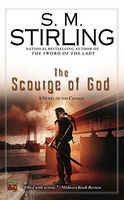
The first book in the series is The Scourge of God, published in September 2008.
What genre is the Novel of the Change series?
The series primarily falls into the Science Fiction genre.
Do you need to read the Novel of the Change series in order?
Yes, the series should be read in order. The books follow a continuous story, starting with The Scourge of God.
What is the Novel of the Change series about?
The core premise hinges on a mysterious global event called "The Change," which occurs in March 1998. At a precise moment, all high-energy-density technologies—electricity in wires, internal combustion engines, firearms and explosives, steam power, and most advanced machinery—cease functioning permanently. Modern civilization collapses rapidly amid famine, chaos, and mass die-off, though the worst horrors often unfold off-stage. Survivors must rebuild from the ruins using pre-industrial skills, scavenged knowledge, and sheer determination. What emerges is not a simple return to the past but a synthesis: modern minds armed with historical memory, folklore, and innovation forge new societies, cultures, and conflicts across a reshaped North America and beyond. Early tales focus on immediate survival and clashing factions in the Pacific Northwest, while later generations confront larger threats, quests for ancient artifacts, and the rise of kingdoms blending chivalry, pagan traditions, and pragmatic governance.
Is the Novel of the Change series finished?
The series does not currently have a new book scheduled.
More Series Like A Novel of the Change
If you enjoyed A Novel of the Change, here are more science fiction series to explore.